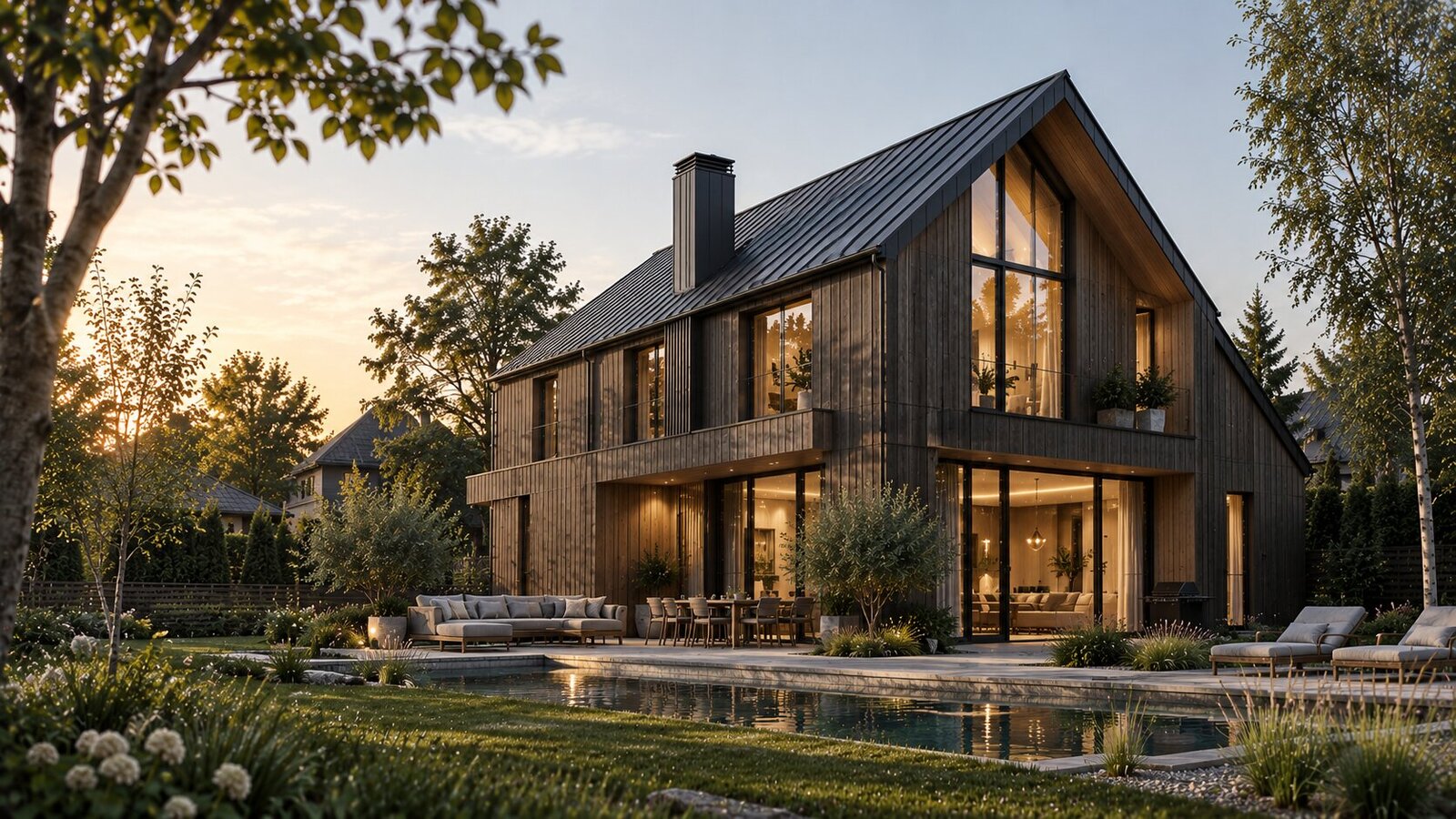
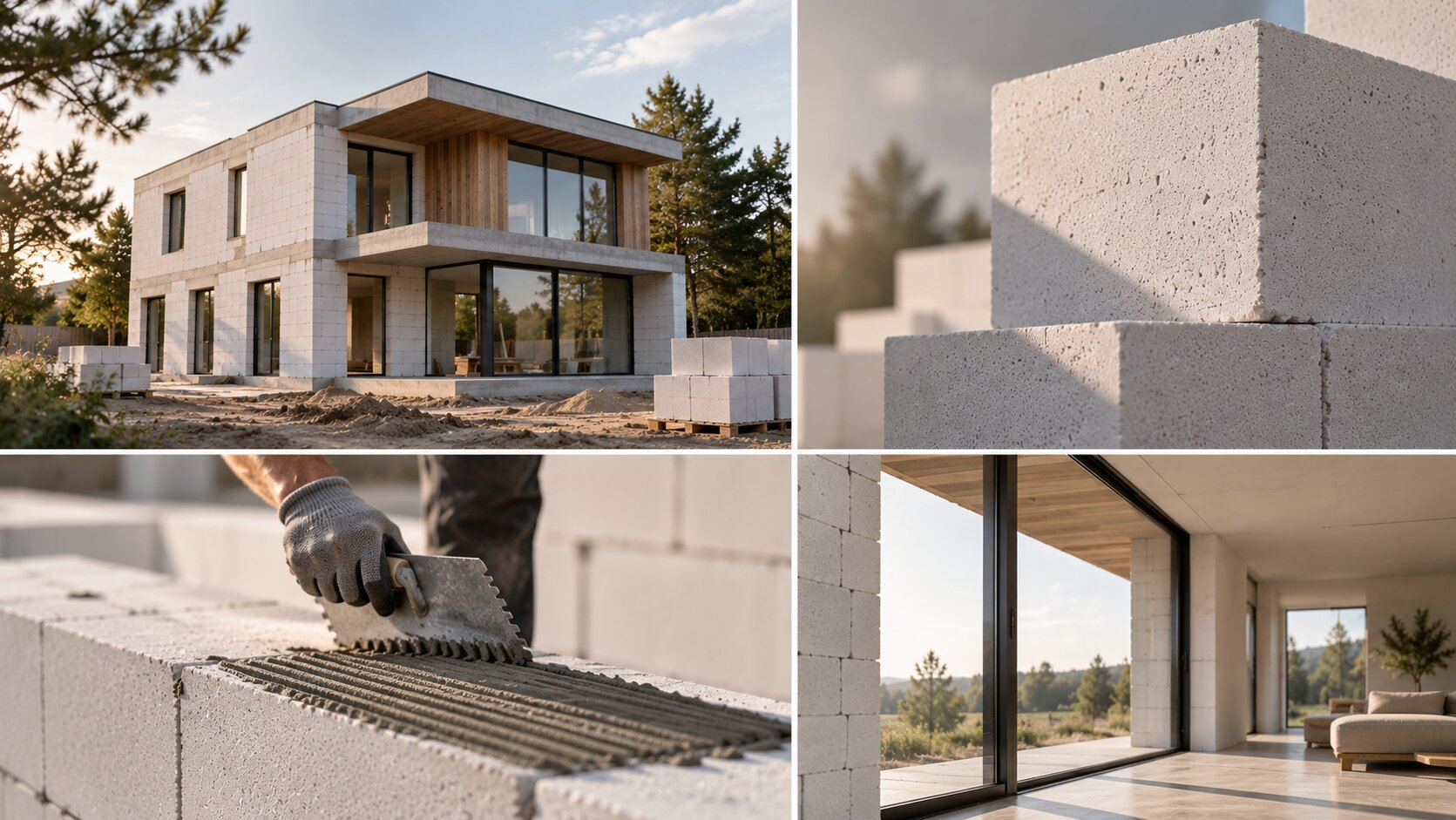
Before 2022, "can a dacha become a house" was a lifestyle question - someone shifted to remote work and wanted fresh air. In 2026, it's a much more practical one: after winters with widespread power and heating outages caused by strikes on energy infrastructure, a house with genuine autonomy - a well, alternative heating, a generator - is often more reliable than a city apartment fully dependent on centralized utility networks.
Many residents of Kharkiv and other Ukrainian cities have a dacha or garden house inherited from parents or grandparents. The main question isn't just money - it's whether a house designed for summer use can genuinely handle year-round living, including a heating season without guaranteed power.
The Legal Procedure: Officially Converting a Dacha to Residential Status
The mechanism for converting dacha and garden houses to residential status is set out in a procedure approved by Cabinet of Ministers of Ukraine Resolution No. 321 of April 29, 2015. The process is free of charge: the local self-government body issues a decision within one month of document submission. The list of grounds for refusal is exhaustive - none of them relate to the designated purpose of the land the house sits on, which was directly confirmed by a Supreme Court ruling of March 30, 2020 in case No. 363/541/16-a.
The key requirement is that the house meets state construction standards (DBN B.2.2-12:2019): the necessary utilities for living (electricity, water, gas, sewage, heating), an appropriate layout, and a foundation - which isn't required for a dacha but is a direct requirement for a residential house. After the decision, changes need to be registered in the State Register of Property Rights to Real Estate. The whole procedure averages one to three months. Conversion grants the right to register a permanent address at that location, the ability to legalize existing or new structures on the plot, and raises the property's status for any future sale.
The Technical Challenges of "Summer House to Year-Round Home"
Three technical points most often determine how realistic it is to turn a specific dacha into permanent housing:
Foundation. Summer dacha houses often sit on a shallow or pier foundation, not designed for frost heave in winter. Before insulating the walls, check whether the foundation is set below the frost depth for your region - otherwise, even good wall insulation won't prevent winter deformation.
Wall insulation. This is the most common source of mistakes. The dew point - where moisture in warm air condenses inside the wall assembly - needs to land outside the insulation layer, not inside the structure itself. Our detailed breakdown of the Triotherm insulation system from Blaugelb and our general piece on insulating a private house cover this technically.
Windows. A single-pane or single-chamber glazing unit, typical for dachas, is built for seasonal use and almost always needs replacing for year-round living. Our breakdown of plastic versus aluminum windows can help you decide based on your actual budget.
Self-Sufficiency Is No Longer a Backup Plan - It's a Necessity
The winter of 2025-2026 was the hardest for Ukraine's energy system since 2011 - a combination of targeted strikes on major energy facilities and abnormally cold weather left hundreds of thousands, and at times millions, of people without power, heating, and water at temperatures of -20°C. Forecasts for the coming heating season remain cautious, with short-term outages from strikes still a realistic scenario.
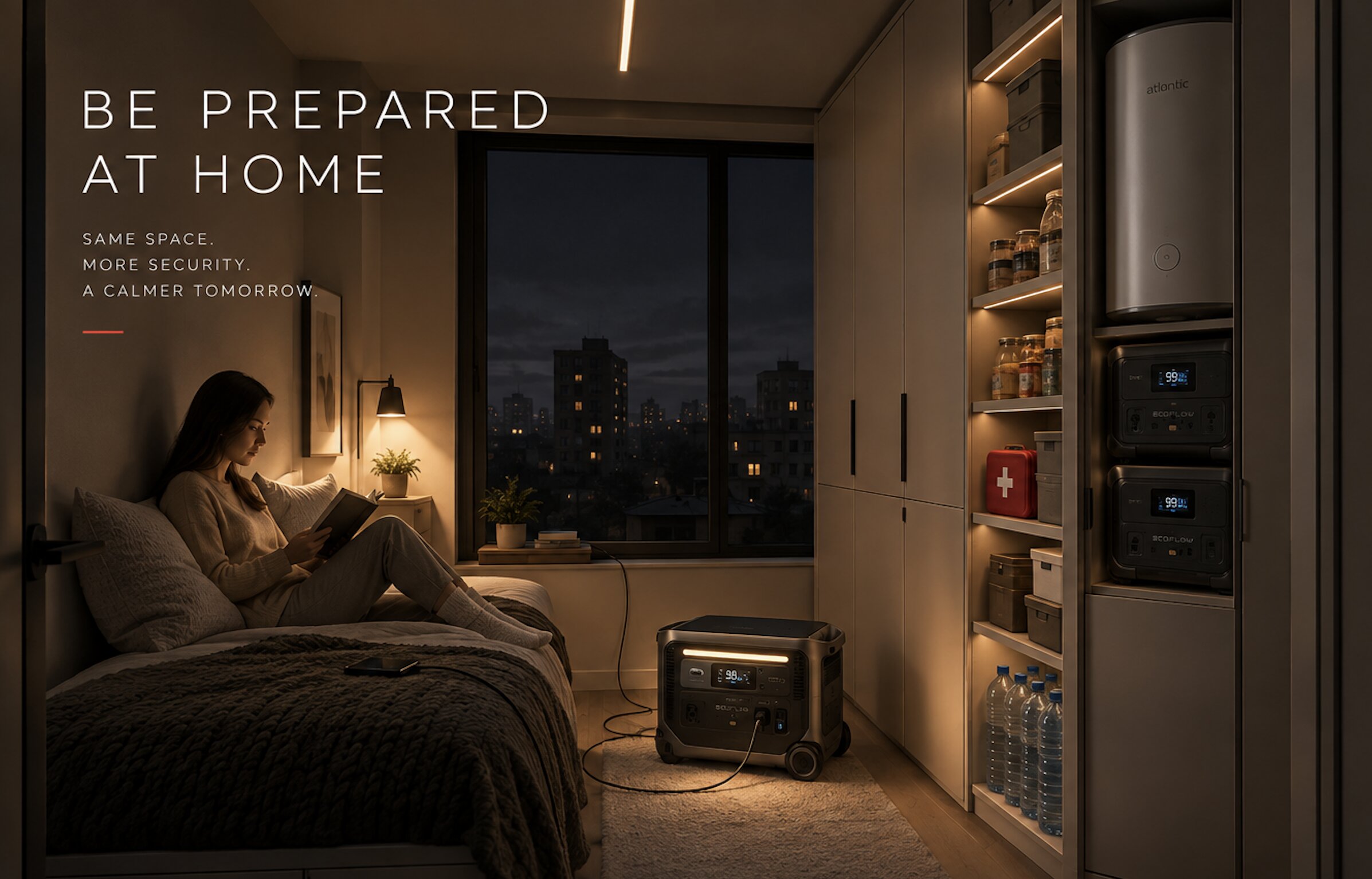
In that context, a water well, a generator, and an alternative heat source (a wood stove, a solid-fuel boiler) aren't a "just in case" backup anymore - they're a real factor in how comfortably and safely a family gets through another difficult heating season. A house outside the city with its own self-sufficiency can, in that sense, end up more reliable than an apartment in a high-rise fully dependent on centralized heating and the grid.
Real DeZZign Experience: The Lisove House
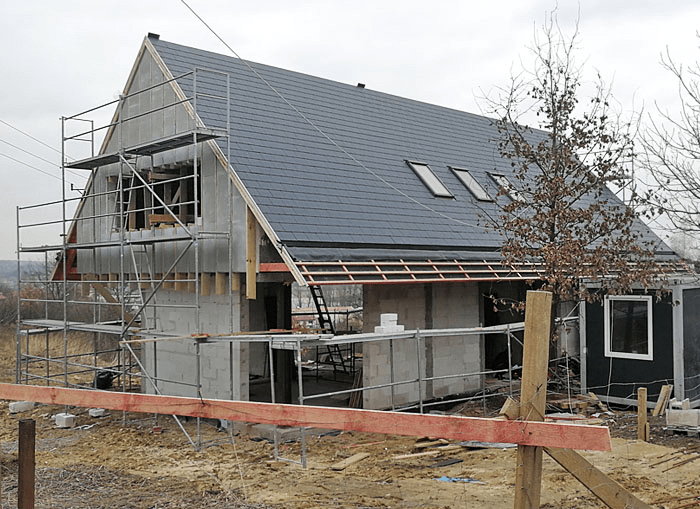
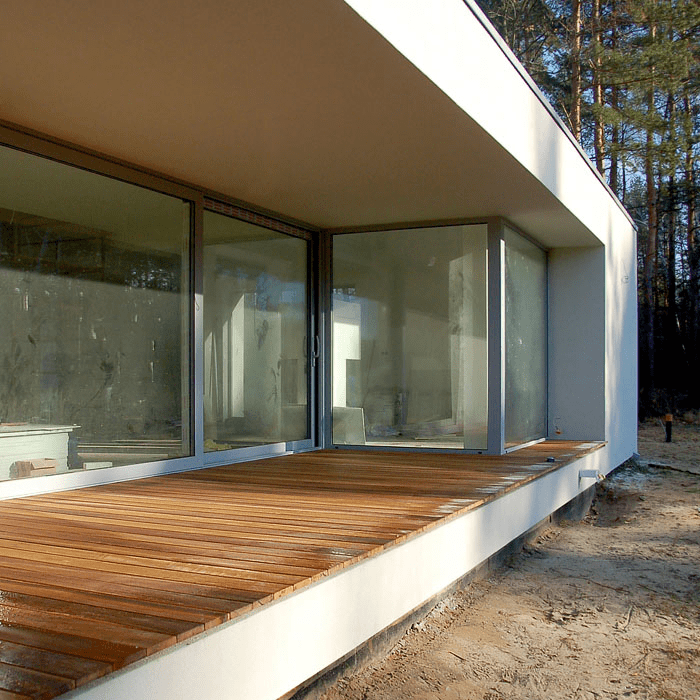
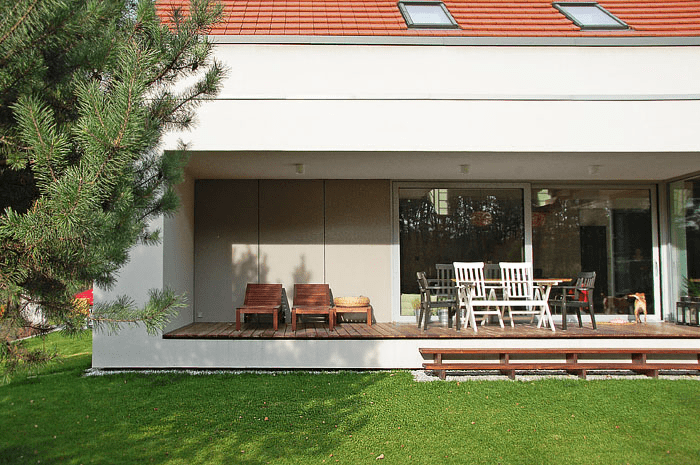
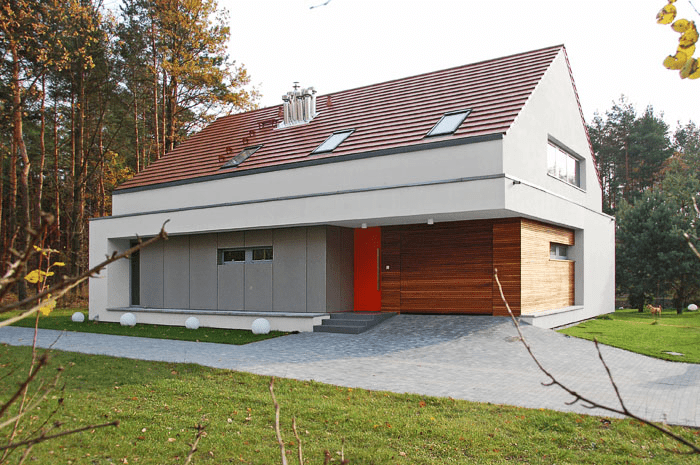
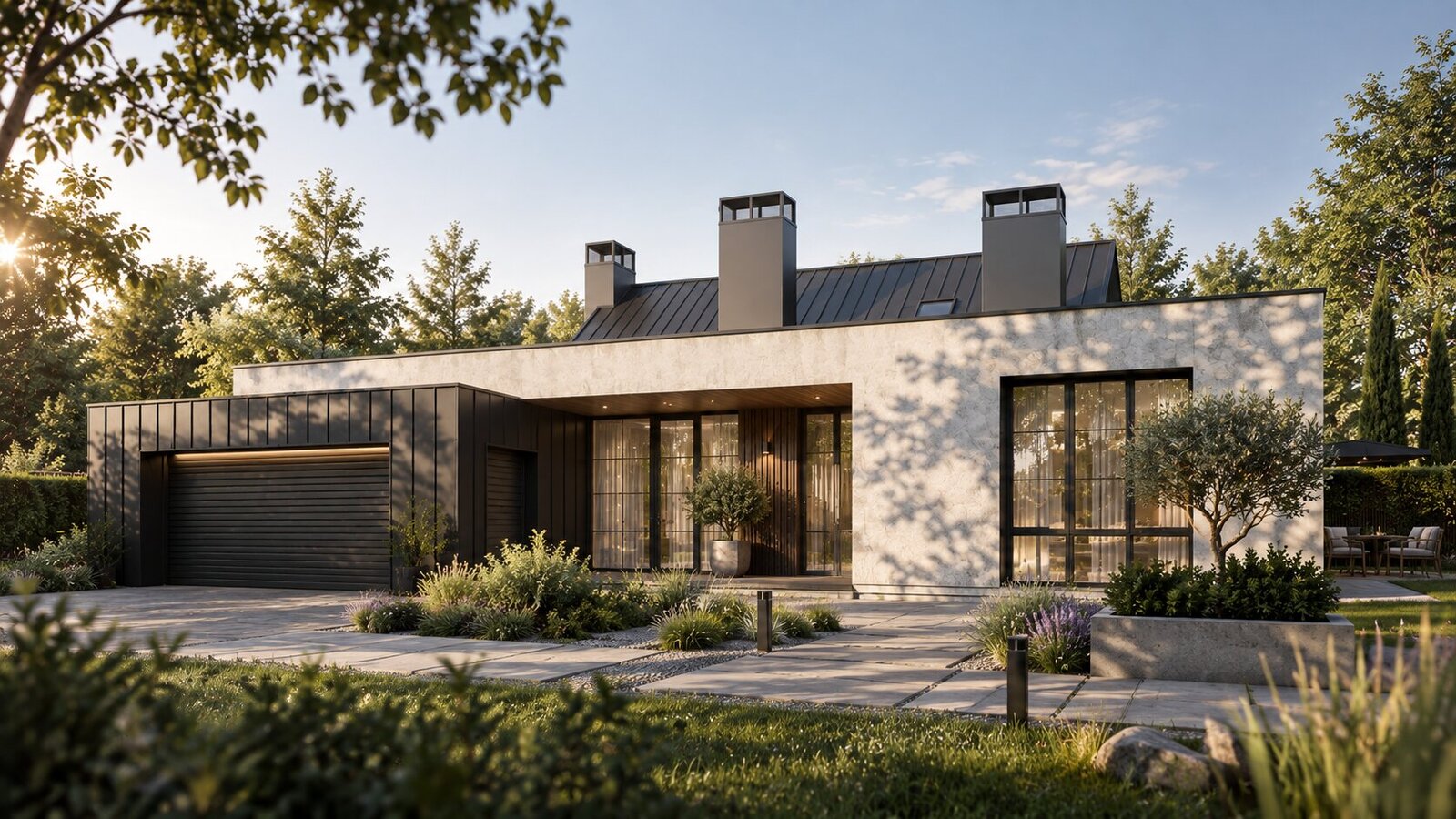
We've dealt with exactly this kind of project firsthand - our Lisove house near Kharkiv, 305 square meters, with a stone facade and a glass-enclosed pergola connecting the house to the garden. Construction was interrupted by the full-scale invasion in 2022, and the house was later damaged during the war - but the design itself remains a good example of how a compact country house can combine contemporary design with practical self-sufficiency.
Where to Start
Don't skip a detailed technical inspection before starting work - a professional assessment of the foundation, walls, and roof will save far more time and money than fixing mistakes during or after the reconstruction. If the assessment shows the scope of work is bigger than expected, it's worth considering the alternative too - a new house project from scratch is sometimes faster and cheaper than a full overhaul of an outdated structure.
How much does it cost to legally convert a dacha to a residential house? The conversion procedure itself under Resolution No. 321 is free - supporting technical documents (like a technical passport) may cost money if you don't already have them.
How long does converting a dacha house to residential status take? On average one to three months, depending on how complete the submitted documents are and how busy the local authority is.
Is a foundation mandatory for residential status conversion? Yes - unlike a dacha, a residential house is required by construction standards to have one.
What most commonly goes wrong when insulating a dacha for year-round living? Getting the dew point in the wrong place in the wall assembly - if insulation is installed without accounting for this, moisture condenses inside the structure instead of outside it, gradually damaging the wall.
Is it worth installing a generator and a well even if the house is already connected to the grid? Given the regular power and heating outages of recent years - yes, it's a matter of genuine readiness for the heating season now, not excessive caution.
The same long-term cost-of-ownership logic applies just as well to building a new house from scratch - more in our piece on a modern energy-efficient house.