
Lake Tapps looks like a natural lake, but it isn't one - and that engineered origin shapes almost everything about how homes around it are built and sited. The reservoir was formed between 1910 and 1911 when Puget Sound Power & Light (the predecessor of today's Puget Sound Energy) built a series of roughly 14 to 15 earthen dikes, joining four separate glacial lakes - Tapps, Church, Kirtley, and Crawford - into one continuous body of water. Water was diverted from the White River through a canal and flume system to fill the reservoir and power the Dieringer hydroelectric plant on the western shore. The name itself is an old acronym: "Tapps" stood for Tacoma and Puget Power Systems.
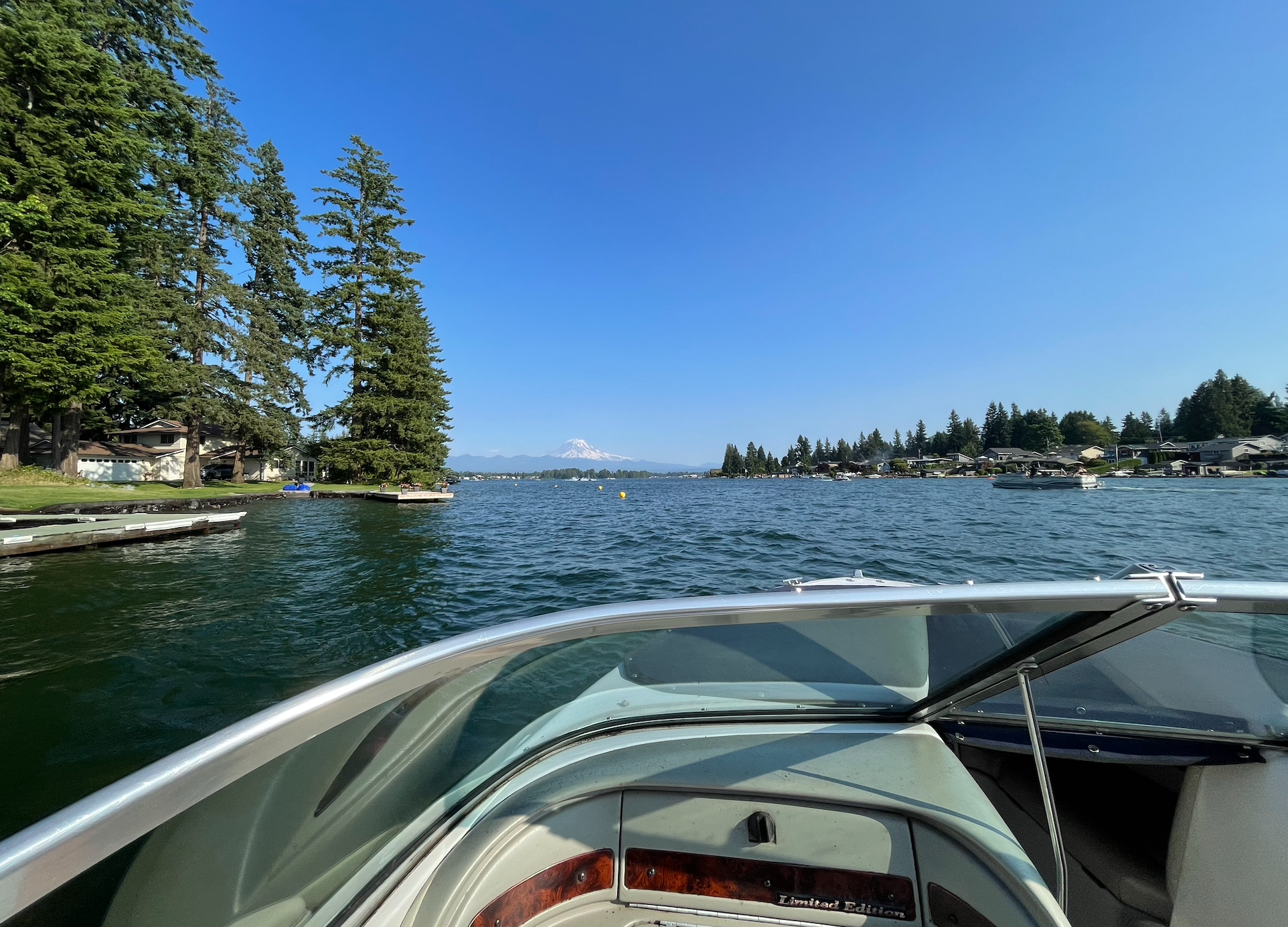
A Working Reservoir Turned Residential Community
The lake generated hydroelectric power for nearly a century before Puget Sound Energy shut down production in 2004, following licensing disputes over fish habitat protection for Chinook salmon. In 2009, PSE sold the reservoir to the Cascade Water Alliance - a consortium including Bellevue, Kirkland, Redmond, Issaquah, and Tukwila - which now manages it primarily as a future municipal drinking water source for more than 350,000 residents, while maintaining an agreement with lakeside homeowners to keep water levels high enough for recreation through the summer.
What This Means for the Architecture Around It
Unlike a natural lake with a fixed shoreline, Lake Tapps is a managed reservoir - roughly 2,700 acres with more than 45 miles of coves, peninsulas, and islands, and water levels that shift seasonally under an agreement between homeowners and the water authority that now owns the lakebed. That reality shapes construction directly: docks, boathouses, and waterfront foundations here are built to accommodate a managed system rather than a static shoreline, and homeowners work within regulations set by a public water utility rather than purely private waterfront rules. It's a genuinely unusual condition for residential lakefront property, and it's part of why homes here tend toward practical, elevated designs with docks engineered for level changes, rather than the fixed-shoreline waterfront architecture found on a natural lake.
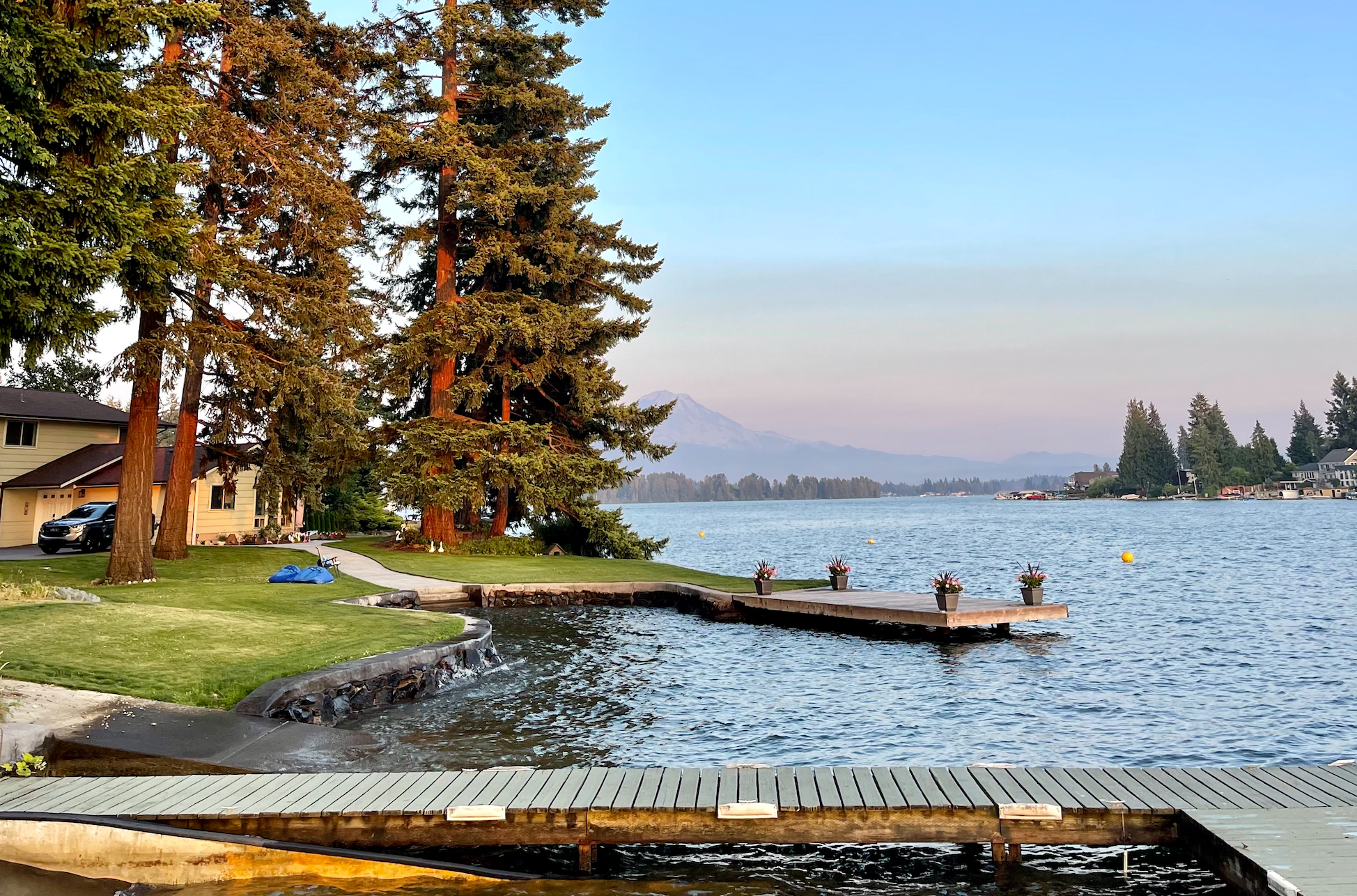
A Community Still Defined by the Dam
Most of the homes surrounding the lake are single-family residences built across the decades since the reservoir's creation, ranging from mid-century cottages to newer construction, generally favoring the wood-and-stone Craftsman vocabulary common across the Pacific Northwest - low-pitched roofs, deep eaves, front porches built to take advantage of lake views. But the real architectural story at Lake Tapps isn't a particular style - it's a century-old piece of hydroelectric infrastructure that quietly still shapes zoning, waterfront rights, and construction decisions for every home built along its 45 miles of engineered shoreline today.
Designing a home for a site like this - where the shoreline itself is managed rather than fixed - is exactly the kind of problem our waterfront home design work is built around.
Seasonal Water Levels in Practice
Under the long-term agreements signed in 2009 between Cascade Water Alliance and the Lake Tapps Community Council, the lake follows a predictable yearly cycle. From mid-April through the end of September, Cascade keeps the reservoir at recreational levels, roughly between elevation 541.5 and 543 feet. In the second half of November the lake is lowered by about two to three feet to protect the dikes from winter wind and waves, and it stays there through winter. Refilling starts in early March, and the full recreational level returns by mid-April. Cascade also raises the lake to the 543-foot maximum at least once a year so homeowners can see exactly where high water reaches.
Building or Remodeling on Lake Tapps
- Design the dock for movement. Floating sections, adjustable gangways, and boat lifts sized for the full range of water levels avoid a dock that sits too high in summer or on mud in winter.
- Respect the high-water mark. Finished floors, decks, and outdoor kitchens near the shore should sit comfortably above the 543-foot maximum, with drainage that works when the lake is full.
- Plan for permits. Shoreline work is regulated by the local jurisdiction (the City of Bonney Lake or Pierce County, depending on the lot), and in-water work such as docks and bulkheads typically also needs state approval. Build that time into the schedule.
- Use the view, manage the light. West-facing lots get beautiful evening light over the water and strong summer sun, so overhangs and the right glazing matter as much as the size of the windows.
- Choose materials for a wet climate. Cedar, fiber cement, and metal roofing hold up well; decking and railings near the water should handle constant moisture.
Our waterfront home design work starts with exactly these questions, and our landscape design team can shape the shoreline garden to handle seasonal change.
FAQ
Is Lake Tapps a natural lake? No. It is a reservoir created in 1910-1911 by joining four smaller lakes with dikes for a hydroelectric project. Today it is owned by Cascade Water Alliance as a future drinking water source.
Why does the water level drop in winter? The lake is lowered by about two to three feet in late November to protect the dikes from winter storms, then refilled from March to reach full level by mid-April.
Can I build a new dock? Usually yes, but docks and other in-water structures need permits from the local jurisdiction and state agencies, and the design has to work with the seasonal level changes.




