Plastic or Aluminum Windows: Which Should You Choose?
When choosing windows, technical specifications should come first, with aesthetics second. Window systems are one of the most expensive parts of any build, and they determine how well a space holds heat and blocks sound. Here's how plastic (PVC, or vinyl as it's usually called in the US) and aluminum windows really compare, where each one works best, and what to look at besides price. The one thing worth remembering: price alone shouldn't be the deciding factor.
Key Differences Between PVC and Aluminum Windows
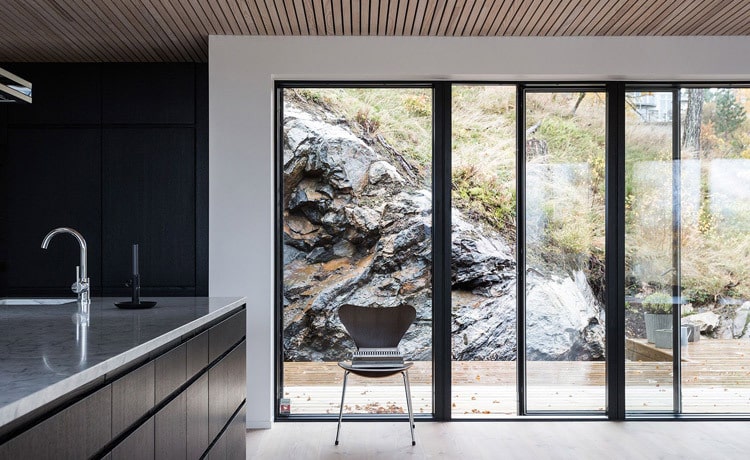
One of the biggest differences is frame size. Aluminum frames are slimmer and more compact, so the window lets in more light. Aluminum is also much stronger for its weight, which allows larger sashes and spans - useful on balconies with weaker structural support, and a factor that ties into safety too.
Another difference is how the components are joined. PVC frames are thermally welded: the corners are heated to a high temperature and fused together. That produces a strong, airtight seam, with one drawback - it can't be taken apart and reassembled later. Aluminum windows use corner cleats and screws instead. That assembly is also solid, and the profile can be disassembled when needed, for instance to replace a damaged part.
As for chamber count, PVC profiles typically have 3 to 8 internal chambers versus 1 to 3 for aluminum. But it's a mistake to judge energy efficiency on that number alone - for aluminum, the width and design of the polymer thermal break matter far more.
Aluminum Windows: Non-Thermally Broken and Thermally Broken
Aluminum systems come in two types. A non-thermally broken ("cold") profile is solid aluminum with no insulating barrier: it's light and inexpensive but conducts heat readily, so it suits only unheated spaces - enclosed porches, storefronts, interior partitions. A thermally broken ("warm") profile splits the frame into outer and inner parts with a polymer thermal break, often with insulating foam in the chambers. That's the type used in living spaces.
Either way, aluminum brings a consistent set of advantages:
Fire resistance: aluminum doesn't burn and only melts at around 660°C (about 1,220°F).
Longevity: the profile doesn't warp or fade and lasts for decades.
Large openings: panoramic glazing, sliding and lift-and-slide doors, concealed-frame systems.
Repairability: individual components can be replaced.
Security: aluminum frames are hard to pry open from outside.
Color: powder coating in virtually any shade.
PVC (Vinyl) Windows: Warmth and Value
The top priority is almost always warmth and good looks, and PVC delivers on both at a noticeably lower price. A few other advantages:
Protection from cold and noise. Multi-chamber profiles and tight seals keep heat in.
Safety. PVC loses to aluminum on fire resistance, but modern profiles are hard to ignite and self-extinguishing.
Design variety. Almost any shape, size and color, including wood-look and metal-look laminates.
There are trade-offs too. Components of a welded frame can't be replaced. Frames are wider, so glass makes up a smaller share of the window. Large sashes need steel reinforcement and get heavy. And dark PVC on a sunny elevation heats up and expands more, which matters for large units.
What Matters More Than the Frame Material
The frame is only part of the window. The glass and the installation shape overall performance just as much.
Glazing. Glass covers most of the window, so its performance often matters more than the profile. Low-e coatings, argon fill and warm-edge spacers noticeably cut heat loss.
Sound control. Depends more on the glass than the frame: an insulated unit with panes of different thickness and laminated glass blocks noise better than a thicker profile.
Installation. Even the best window underperforms if the perimeter leaks air or water. A proper install treats the joint in layers: an air and vapor seal on the inside, insulation in the middle, and a water-resistant, vapor-open membrane on the outside.
At the same budget, PVC usually insulates better. But top-tier thermally broken aluminum systems have nearly closed the gap, and for large glazing aluminum offers what plastic can't: slim frames and big spans. Wood-aluminum windows are another option - warm timber inside, durable aluminum outside.
The Verdict: Plastic or Aluminum?
If large glass areas, slim sightlines, sliding doors to a deck or structural weight are priorities, aluminum wins clearly - and there are genuinely good manufacturers of these systems on the market. For standard windows in bedrooms and secondary rooms on a tighter budget, PVC often delivers comparable thermal performance for less. That's why many of our projects combine the two: aluminum for the living room's panoramic glazing and the patio opening, PVC for ordinary windows elsewhere.
Windows in Seattle and Pacific Northwest Homes
In US residential construction, vinyl is the most common window frame, with fiberglass a popular step up - and several window manufacturers are based right here in the Pacific Northwest, including Milgard in Tacoma. Aluminum is less common in single-family homes because of energy code performance requirements, but thermally broken aluminum systems are increasingly used in modern designs with large openings.
Two local factors matter most. First, the energy code: Washington sets strict limits on how much heat windows can lose, so compare products by their NFRC label - the U-factor (lower is better for heat loss) and the solar heat gain coefficient - rather than by frame material alone. Second, moisture: in our long, damp winters, a cold frame or poorly installed window collects condensation, which leads to mold and rot around the opening. Thermally broken frames, warm-edge spacers and a carefully flashed installation are the best defense.
For houses with large west-facing glass, solar control matters in summer too: a lower solar heat gain coefficient keeps rooms from overheating on long July evenings without giving up the view.
Aluminum Windows in Our Own Projects
Our house in the village of Yuzhny specifies REYNAERS aluminum systems for exactly the reasons this article covers - a real project where the choice between window materials had genuine consequences for glazing size, thermal performance and long-term durability. We covered this Belgian system in more detail in our piece on REYNAERS window systems.
Frequently Asked Questions
Is aluminum always the better choice for large windows? For genuinely large-format or panoramic glazing, yes - aluminum's strength allows slimmer frames and larger spans than PVC can reliably support without sagging or visible reinforcement.
Does PVC ever outperform aluminum? For standard-sized residential windows on a tighter budget, PVC often delivers comparable thermal performance at a lower cost, since the frame matters less once the opening is a normal window rather than a glass wall.
Which option requires less long-term maintenance? Aluminum generally holds up better over decades - it doesn't warp, discolor or degrade under UV the way PVC eventually can, though it costs more upfront.
How do I compare windows in Washington? Use the NFRC label: U-factor for heat loss and solar heat gain coefficient for summer heat. Then check how the installer plans to flash and seal the opening.
Choosing between PVC and aluminum isn't just a budget question - it depends on glazing size, climate and how the building should perform decades from now, which is exactly what our material selection service works through. Windows are just one piece of a house's thermal envelope; for how they fit into the bigger system, see our piece on a modern energy-efficient house.