BACK

Furniture by Paola Lenti

Interior

Furniture by Paola Lenti

In this article, we'd like to introduce the Italian brand Paola Lenti, one of the companies that changed how we think about outdoor furniture.

First, a few words about its founder. Paola Lenti was born in 1958 in Alessandria, in Piedmont in northwestern Italy. She studied graphic design in Milan, worked as a graphic designer and art director for fashion companies, and then decided to start her own business. Since 1994, she has been doing what she loves most - creating textiles and furniture. She draws inspiration from nature, and the colors and textures of her collections come from the natural world. For Paola, luxury is not simply an expensive object but something hard-won, and valuable for exactly that reason.

The company started in Meda, one of the centers of the Brianza furniture district north of Milan. Its first products were handmade rugs in wool felt, a material almost nobody was using at the time. The success of those first collections allowed the business to grow, and rugs remain an important part of the brand's range today.
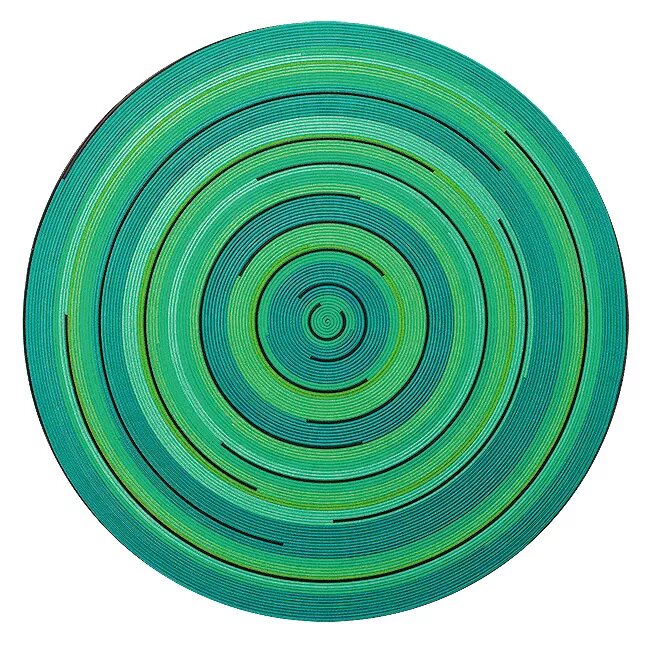
Paola Lenti round rug of concentric rope rings in green and turquoise tones

In 1997, designer and architect Francesco Rota joined the team. His first task was to make felt "three-dimensional" - to turn a rug material into upholstered furniture - which led to the Linea chaise longue and the Atollo modular seating system. Rota has been the brand's main source of ideas ever since; together they have created some 70 collections.

In 2000, the company bet on outdoor furniture, then seen as a second-tier market, and Paola's sister Anna, an engineer by training, became managing director. In 2003, after three years of research, the brand introduced Rope, a high-performance yarn that became the basis of the Aqua outdoor collection. Textiles made from it are water-repellent and resistant to mildew, UV, salt, and chlorine. Later came Twiggy, a fully recyclable thread.

Paola Lenti has received a number of major design awards, including the German Design Award (won in 2015 by the Bistrò parasol) and the Red Dot. We're confident the list will keep growing.
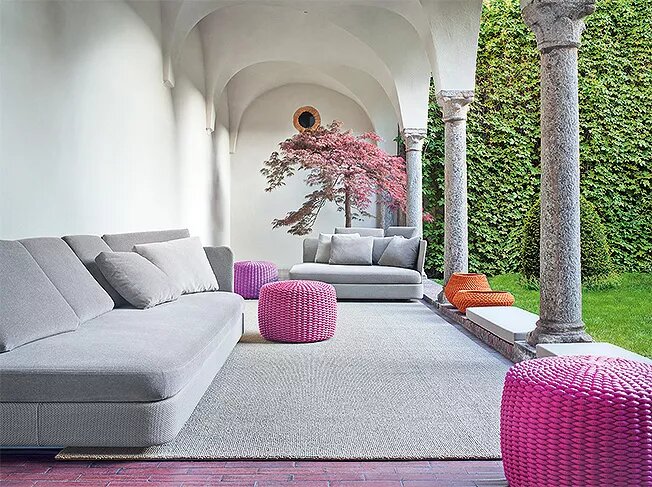
Arcaded loggia with grey Paola Lenti sofas and pink and orange knitted poufs

Today, Paola Lenti is associated with a culture of relaxation. The company makes furniture for both home and garden, and its indoor/outdoor approach - furniture that looks equally at home in a living room and on a terrace - keeps demand high in Europe and the Americas. Treating the terrace as an extension of the living room has become one of the most popular design moves.

Paola Lenti's outdoor furniture is as technical as it is beautiful. It is made from high-performance yarns that resist UV and weather, and its cushions use quick-drying fillings. Some poufs and soft lounge chairs are filled with polystyrene beads, so they take the shape of the body.
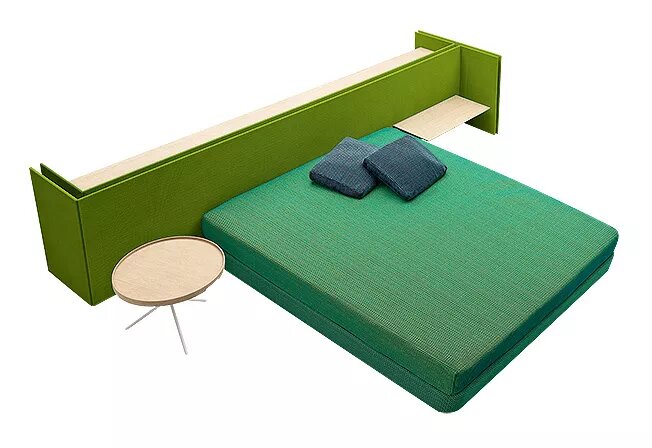
Green Paola Lenti bed with a long low headboard and a round side table

The company has grown from a handful of people to around 100 employees, with annual turnover of roughly 30 million euros according to industry press. Most production stays in Italy, and since 2020 the brand has opened its own showrooms in Los Angeles, Johannesburg, São Paulo, and Tokyo.
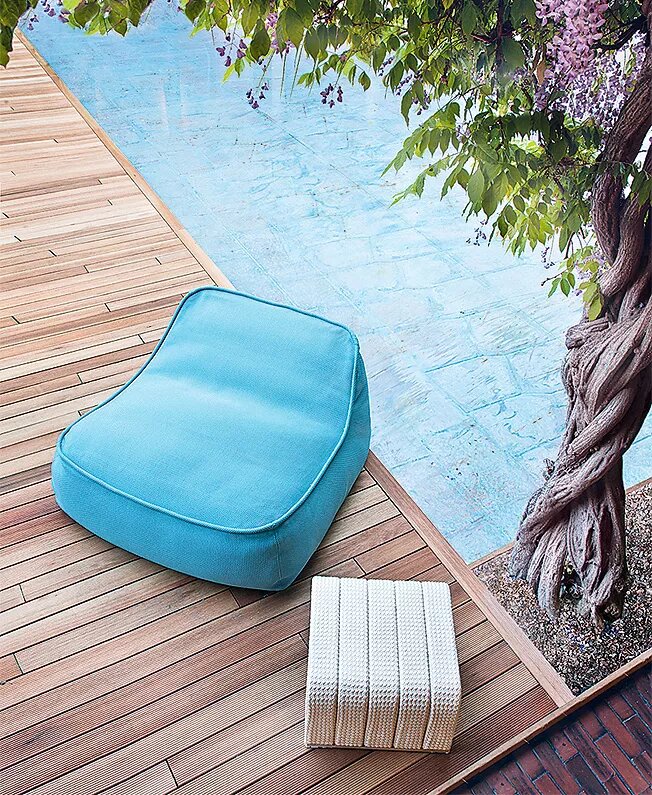
Turquoise soft lounge chair and white woven side table by Paola Lenti on a wooden deck by a pool

Why the Indoor/Outdoor Line Matters

Paola Lenti's clearest contribution to contemporary furniture design isn't a single collection - it's the erosion of the line between indoor and outdoor furniture altogether. Before this approach became mainstream, outdoor furniture was treated as a separate, lower-priority category: less refined materials, simpler forms, built to be replaced every few seasons. Paola Lenti's UV-resistant, weather-tested yarns and quick-drying fillings made it possible to specify a single aesthetic language across a terrace and the living room it opens onto, rather than switching registers at the threshold.

Specifying furniture that genuinely performs outdoors - not just furniture that looks acceptable in a catalog photo - is exactly the kind of decision our furniture selection service is built to get right, matched to your specific climate and site conditions.

Paola Lenti in Our Own Work

Our house near the village of Yuzhny uses Paola Lenti's SURF sun loungers on the outdoor terrace - a direct example of the indoor/outdoor continuity described above. The house's interior was built around panoramic Reynaers glazing specifically to dissolve the boundary between the living room and the garden, and the terrace furniture had to hold up its end of that idea: SURF's restrained, light-filled design doesn't compete with the view or the glazing, it extends the same visual language outside.

We also used Paola Lenti pieces in the Ascetic House interior, where they bring softness and color to its strict minimalist architecture.

Outdoor Furniture in the Pacific Northwest

Around Seattle, the challenge is less sun than moisture: long wet seasons, mildew, and moss on anything left in the shade. Mildew-resistant technical yarns and quick-drying cushions are exactly what this climate calls for, but they still need air. Keep furniture where it can dry between showers, ideally under a covered patio or pergola that extends the outdoor season, and store cushions or use breathable (not plastic) covers through the wettest months. Rinse off pollen and grime in spring, clean spots with mild soap and water, and let everything dry fully before covering it again. Choosing pieces that will actually hold up on a particular deck or patio is part of our landscape design and interior work.

Frequently Asked Questions

Does Paola Lenti furniture require special maintenance compared to standard outdoor furniture? Less than most alternatives - the UV-resistant, weather-tested materials are specifically engineered to be left outside through changing seasons without the fading or degradation that affects lower-grade outdoor fabrics.

Can Paola Lenti pieces work in an interior-only setting? Yes - while the brand is best known for outdoor and indoor/outdoor applications, the same material and design language works equally well as interior furniture, particularly in spaces designed around a connection to a terrace or garden.

Is Paola Lenti furniture suited to a specific architectural style? It tends to work best with contemporary, restrained architecture where large glazing already blurs the line between inside and outside - the furniture's role is to reinforce that continuity rather than introduce a competing visual language.

Where is Paola Lenti furniture made? Most production is in Italy, around Meda, where the company has been based since 1994.

Have Questions?

Your Nameis required

Preferred contact method

  • Phone
  • Email
  • Telegram
is required
is required
is required