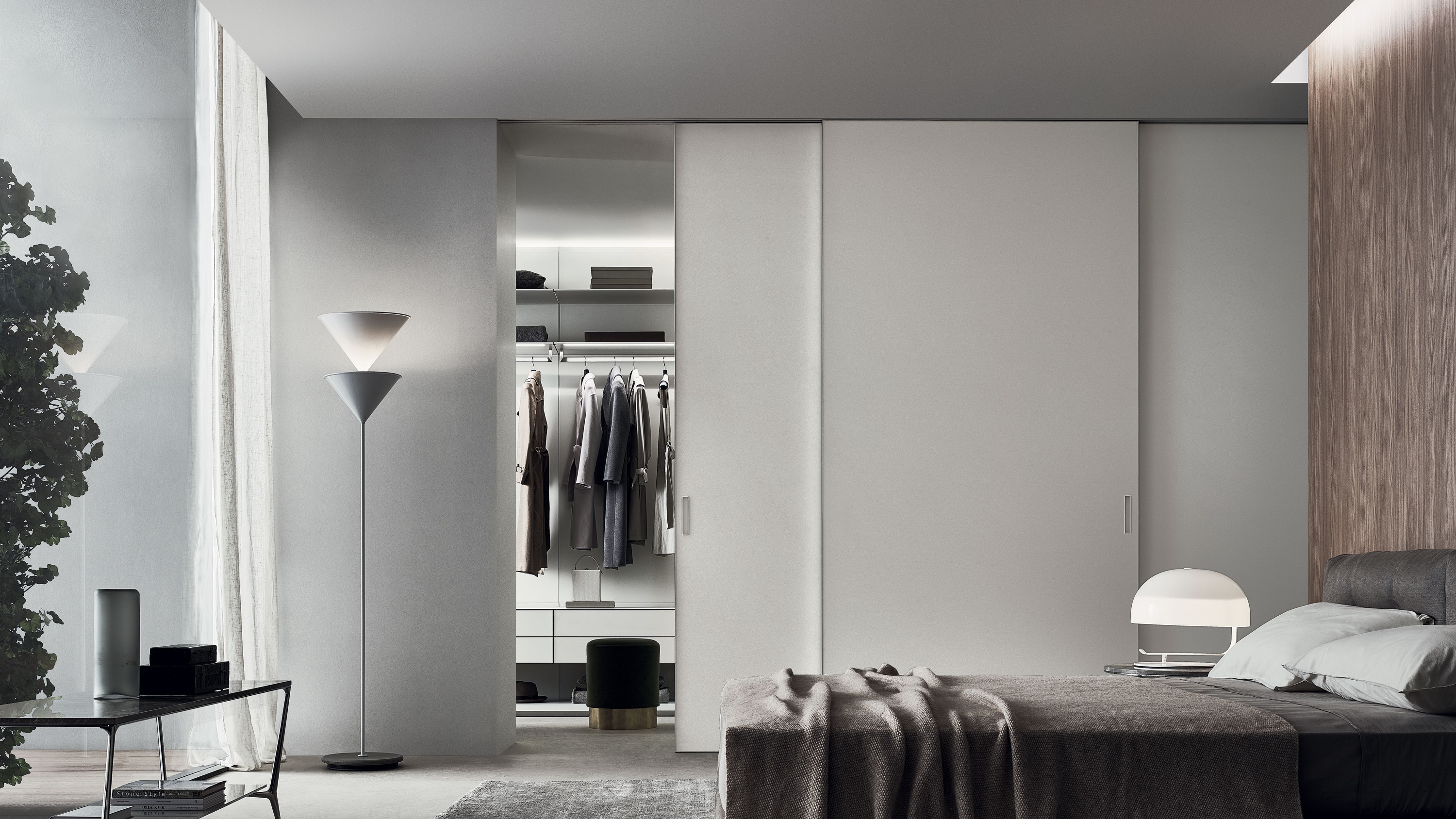
Doors are one of the most important elements of an interior, and when a designer works in a minimalist style, that usually means flush-mounted doors with concealed frames. In Ukraine this type of door only began to gain ground a few years ago, but everything points to it becoming the norm in the coming decades.
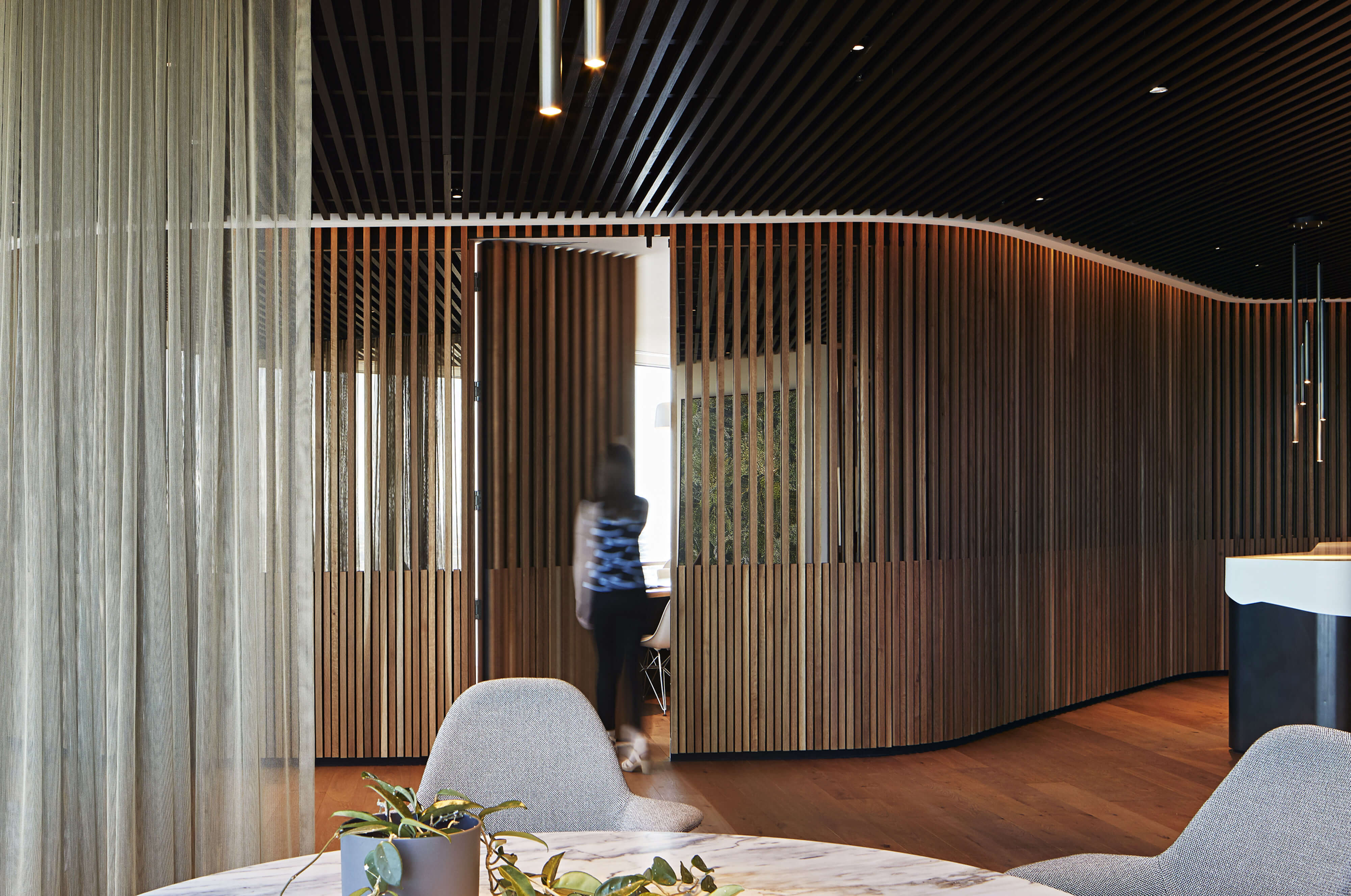
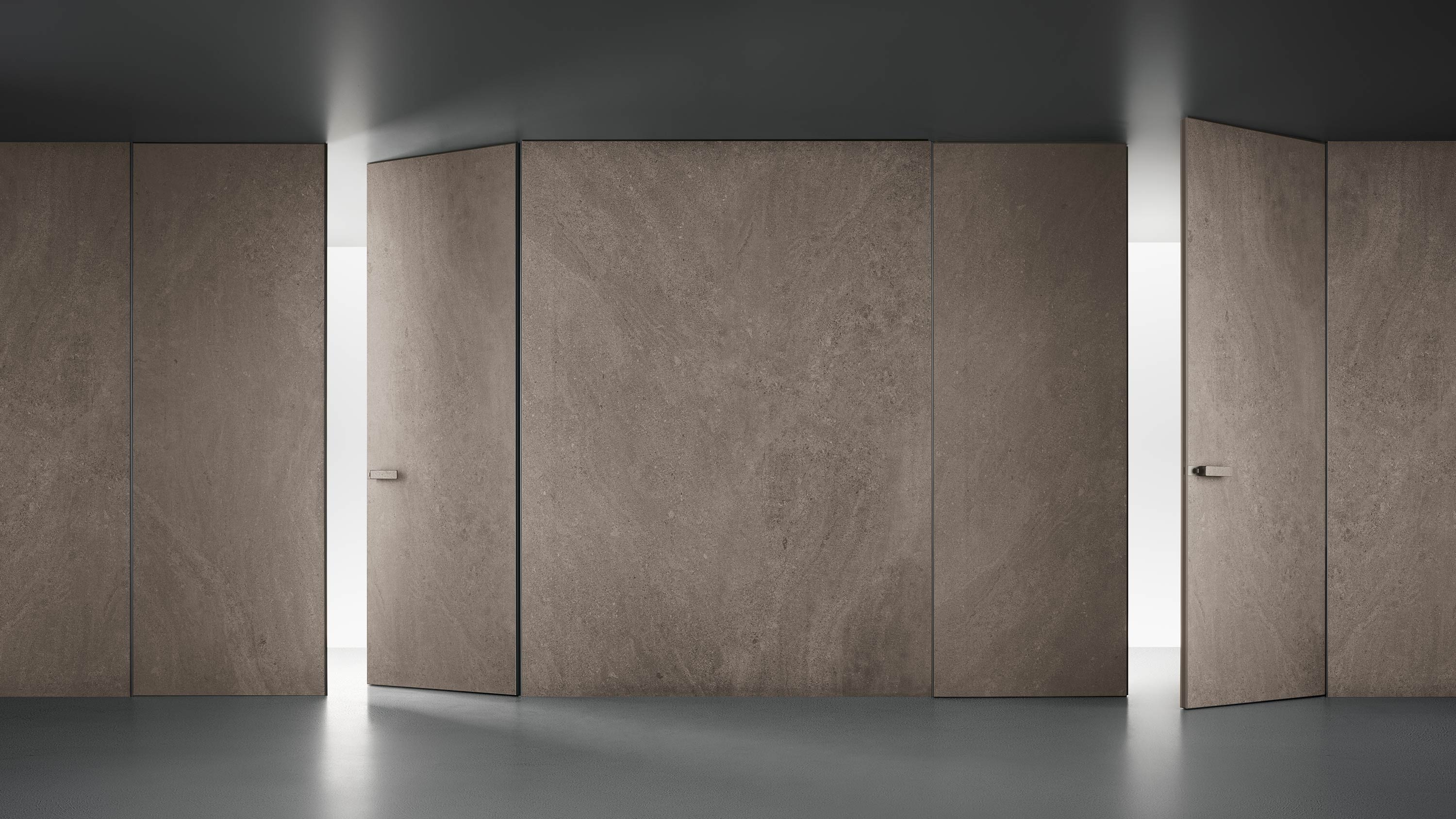
The defining feature of a flush door is that it continues the surface of the wall and practically disappears into it. Such doors blend into the room and create a complete, uncluttered look without drawing attention to themselves. With no visible casing, they make an interior feel lighter and larger, and they are the obvious choice when you want a hidden room.
Their main advantages are saving space, allowing non-standard openings (including taller openings that bring in more light), fully custom sizes defined at the design stage, and the widest choice of finishes - from simple paint to expensive exotic veneers. A full-height door from floor to ceiling can fool even the most attentive guest.
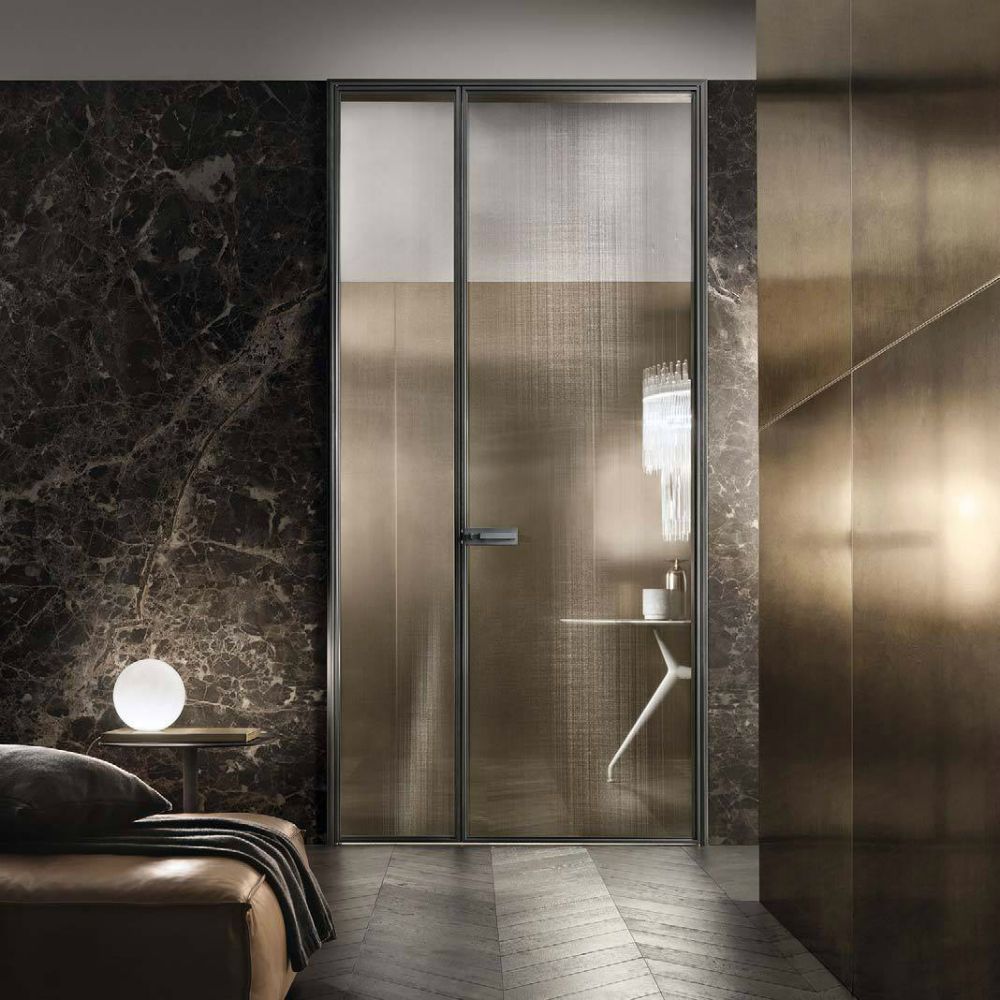
The system is built around an aluminum frame set into the wall while the wall is being built, plus a flat door leaf hung on concealed hinges sized to its height. Because the frame is hidden inside the wall and the leaf sits flush with it, the door can be finished in the same material as the wall: stone, glass, veneer, paint, plaster, and more. Discreet concealed handles complete the impression that the door is part of the wall.
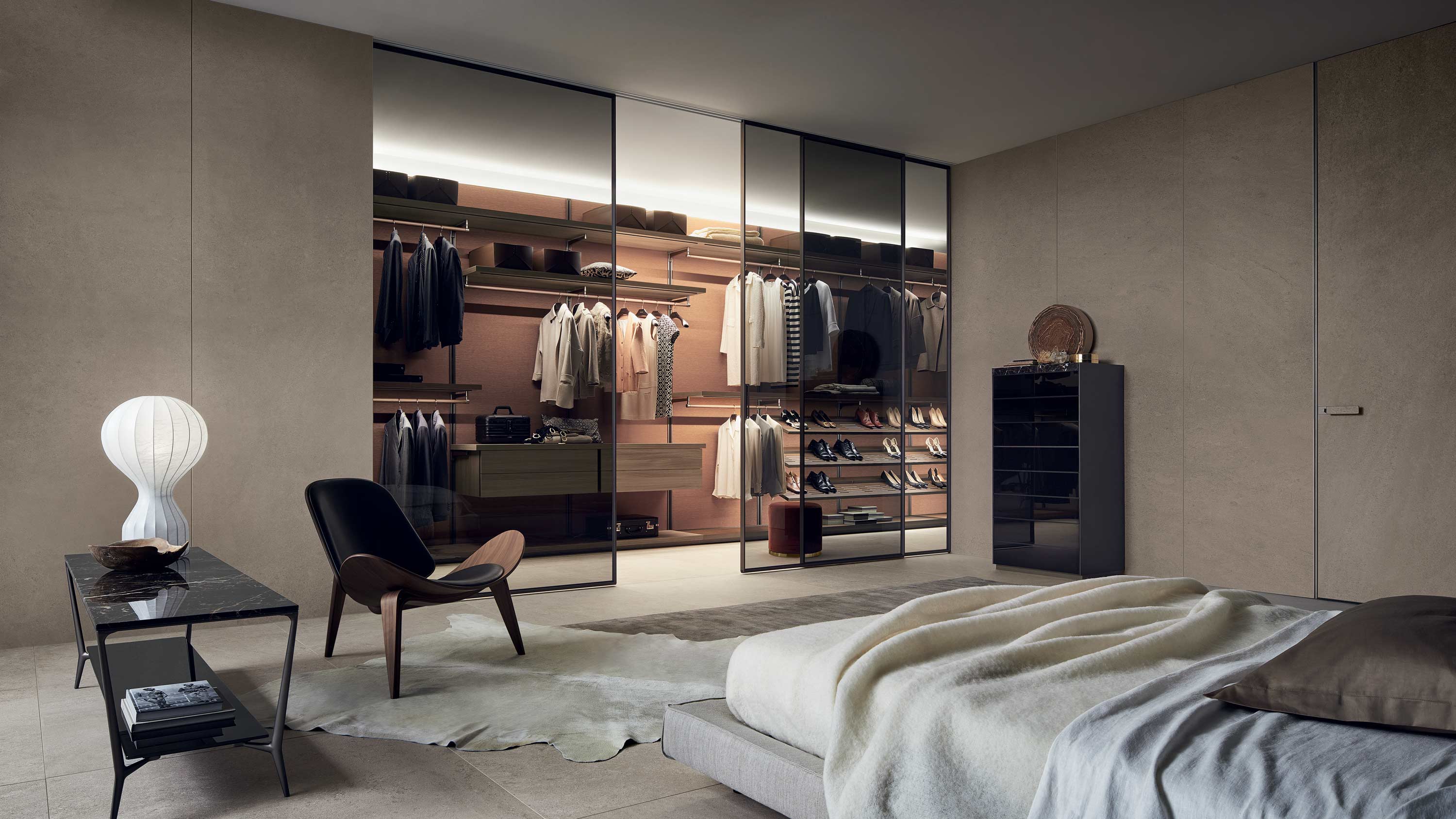
There are four main types: hinged, double-acting (pendulum), pivot, and concealed sliding doors. Hinged doors are the most common: simple to use, reliable, and suitable for any interior. Sliding systems are used where space is tight or where you want to divide a large volume while keeping a sense of openness.
The Brands We Actually Specify
Everything described above is the general category of flush-mounted, hidden-installation doors - but which specific manufacturer we specify depends entirely on the interior style. For minimalist interiors with concealed hardware and a completely wall-integrated look, we work with Rimadesio, the Italian manufacturer founded in 1956 and based in a 32,000-square-meter factory in Giussano, where the company has produced its own glass components in-house for over 50 years. Rimadesio's sliding door programs - Velaria, Graphis, Moon, and Siparium - along with the Moon coplanar swing door, are specification standards for exactly the kind of clean, uninterrupted wall surface this article describes, and the brand has worked with designers including Carlo Bartoli and Martino Perego, while most of its current collections are designed by its art director, Giuseppe Bavuso.
For classic-style interiors, where the door itself is meant to be a visible architectural element rather than disappear into the wall, we specify SV Group instead - a different design language entirely, built around traditional proportions and detailing rather than concealment. You can read more about SV Group's work in our separate SV-GROUP overview.
Hardware, Sound, and Durability
Concealed hinges must match the weight and height of the leaf, especially for full-height doors, and magnetic latches keep the surface clean and quiet. Because a flush leaf has no stops or casings to hide gaps, acoustic seals and a drop-down threshold seal are worth specifying for bedrooms and offices. Edges take more wear than on a cased door, so painted finishes should be durable and touch-up friendly.
Planning Flush Doors in a Seattle Home
In US construction, concealed-frame doors are installed during framing and drywall, so the door schedule - heights, swings, hardware, and fire ratings where required - has to be finalized early. Full-height doors look cleanest but demand flat ceilings and precise installation, and the leaf is usually painted with the wall so the door truly disappears. See our article 8 interesting design solutions and our piece on minimalism in the interior.
Frequently Asked Questions
How do I know whether my project should use Rimadesio or SV Group doors? It comes down to the overall interior style: minimalist and contemporary interiors call for Rimadesio's concealed, flush systems, while interiors with a classic or traditional design language are usually better served by SV Group's more architectural door presence.
Is a hidden-installation door harder to install than a standard door? Yes - the aluminum box needs to be set into the wall during the wall construction phase itself, which means the door specification has to be finalized much earlier in the project timeline than a standard door would require.
Choosing between door systems, and coordinating the installation timeline with the rest of construction, is exactly the kind of decision our material selection service is built around.