A modern city is a system of many interconnected layers. With time and experience it has become clear which of those layers work well and which need to be improved or replaced entirely. The discipline that studies this experience is called urbanism.
What Makes a City Work
- How people interact in the city: where residents prefer to spend their free time and whether they feel safe in different neighborhoods.
- Transport: where traffic jams form and why, which routes are most popular, how clear the schedules are, and why people choose one mode of transport over another.
- Historic buildings: their condition and what is being done to preserve architectural heritage.
- Visual pollution: how much advertising fills the streets, how it looks, and how much information people absorb involuntarily walking through the center.
By answering these questions, urbanists propose measures that improve quality of life. One example is a design code for shop signs and advertising, which cuts visual clutter.
Why It Matters
Our surroundings shape us. Social well-being, the economy, and the way people interact all depend on the conditions a city provides. Where those conditions are good, crime tends to fall, new businesses open, and more visitors arrive. Many countries now involve urban planners directly in public administration and train specialists in urban studies. Beyond everyday issues such as utility bills, residents care about landmarks, culture, aesthetics, and how public space is organized, and surveys consistently show that the urban environment affects people's mood.
Who Changes Cities
Urbanists are often socially active residents and members of what the American economist Richard Florida called the "creative class". In his work, Florida describes a productive partnership between city officials and the creative class: officials create the conditions, and creative people use their abilities to transform urban space. Tolerance, technology, and talent - the "three T's" - sum up, in his view, what that class brings. The key idea of urbanism is that anyone can take part in improving a city; activists often come together around a specific issue.
Ideas That Changed Cities
Jane Jacobs showed in "The Death and Life of Great American Cities" (1961) that lively, mixed-use streets are safer than isolated districts. The Danish architect Jan Gehl spent decades arguing that cities should be designed at eye level for pedestrians, and helped transform central Copenhagen. Carlos Moreno's "15-minute city", taken up by Paris, proposes that schools, shops, doctors, and parks should be within a 15-minute walk or bike ride of home.
Urbanism in Seattle
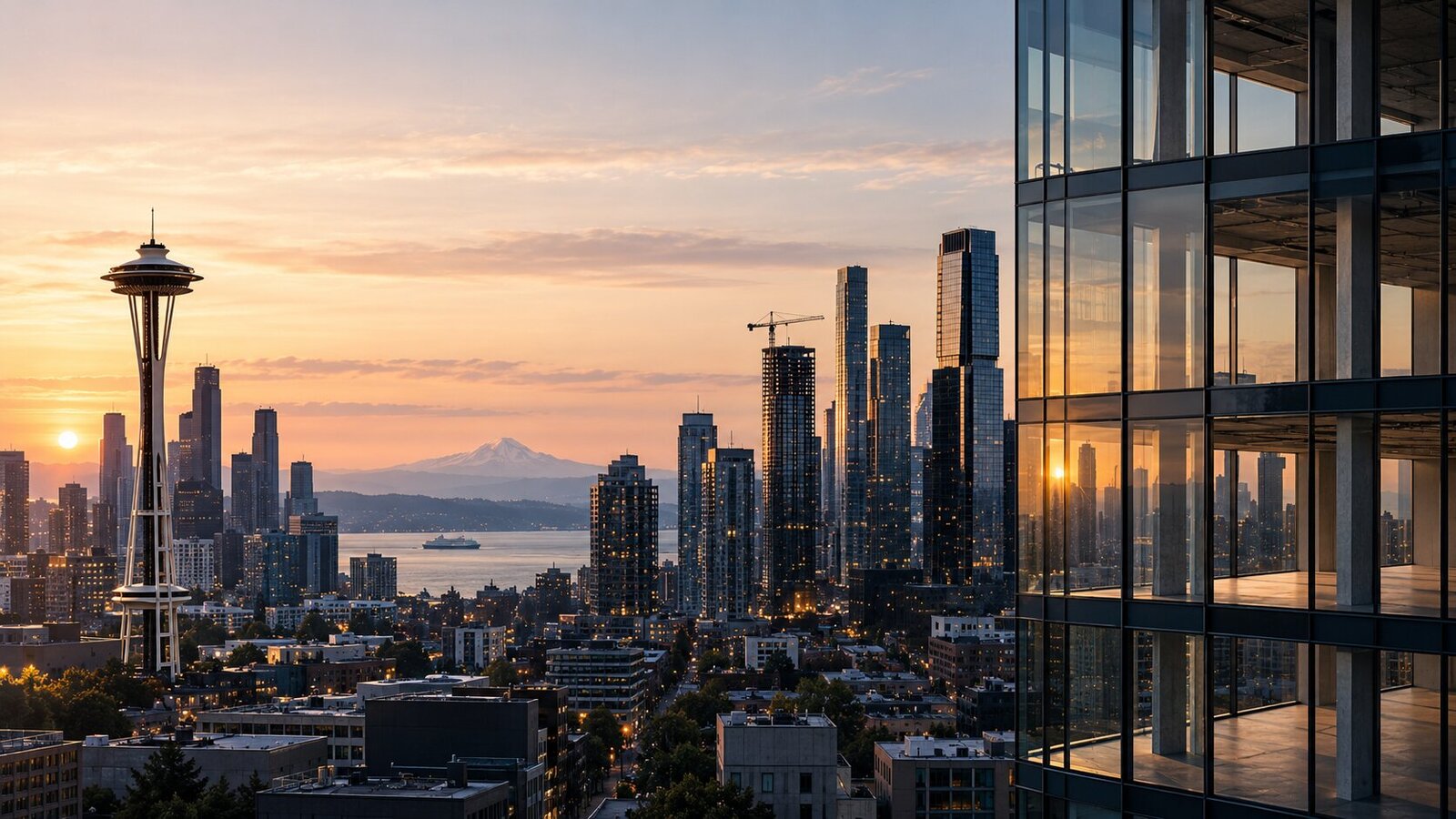
Seattle is in the middle of its own shift: light rail is expanding across the region, the city's comprehensive plan update (the One Seattle Plan) and state housing laws are allowing more homes near transit and in residential neighborhoods, and downtown is looking for new uses for empty offices. For homeowners, these changes shape what can be built on a lot and how neighborhoods will feel in ten years. Read more in our pieces on Seattle's office vacancy and conversion, Bellevue's skyline, and a bus stop designed around how people really wait.
FAQ
What does an urbanist do? Studies how people use a city - its transport, streets, and parks - and proposes changes that make urban life easier and safer.
What is a 15-minute city? A model in which most daily needs can be met within a 15-minute walk or bike ride from home.