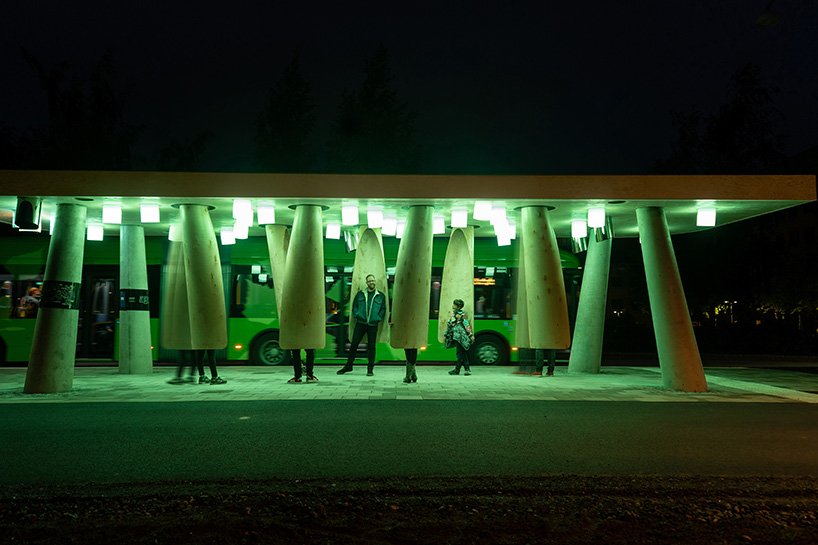
In the Swedish city of Umeå, designers built an experimental bus stop specifically for the Arctic region - a type of shelter relevant to Norway, Sweden, Finland, Canada, and Alaska alike. The prototype opened on 2 October 2019 during the EU Arctic Forum in Umeå and quickly drew attention as an attempt to make public transport more appealing in winter, exactly when people are most tempted to drive.
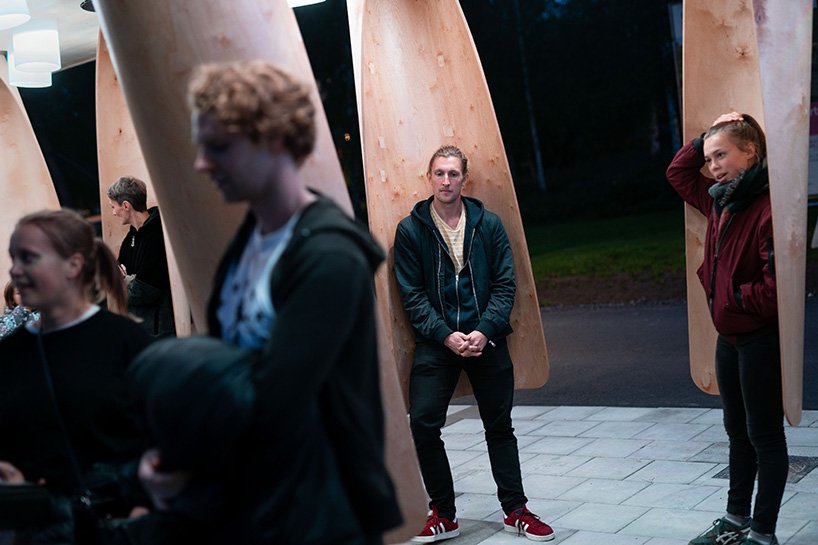
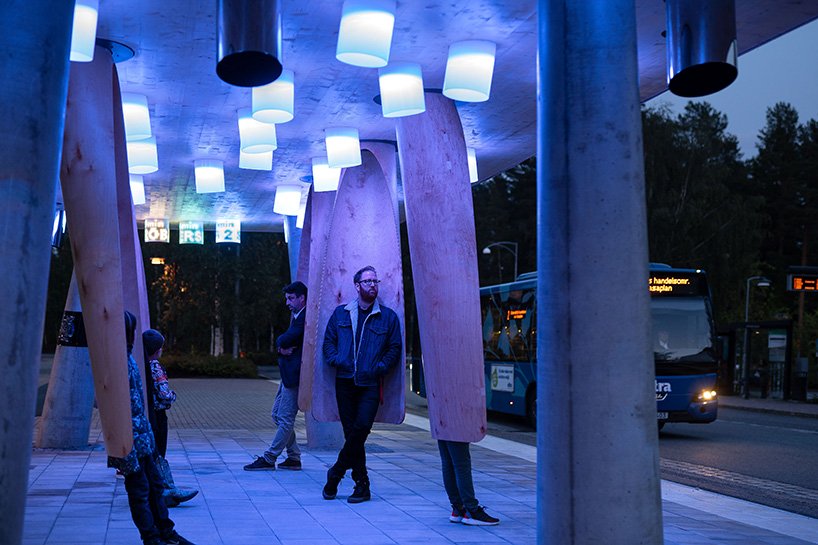
The Eindhoven-based studio Rombout Frieling Lab created the stop together with RISE, the Research Institutes of Sweden, for a cold and windy climate. The design of the stop, called A Station of Being, does not rely on artificial heating; it starts from how people actually behave while waiting. The designers noticed that in winter passengers prefer to stand rather than sit, so instead of benches they designed individual pods of natural wood to lean against. The pods shelter people from snow and rotate, so each person can turn their back to the wind.
The researchers also found an interesting pattern. In their words, one reason people prefer their own car to public transport is the need for personal space, which is why they designed wooden pods that hang from the roof and let each person settle into a cocoon of their own. They also argued that constantly peering into the distance for the bus is an emotional burden. So in the new shelter you can relax and even close your eyes: light and a sound cue in the roof tell you when your bus is approaching, and each route has its own light and sound signature thanks to smart sensors. The stop was commissioned by the city of Umeå, and it was shortlisted for the Design Museum's Beazley Designs of the Year.
At deZZign we hope more public spaces will be designed around what people actually need rather than to tick a box. Projects like this move the world forward by creating ergonomics that suit their climate and context.
The Bigger Lesson
What makes Station of Being worth talking about isn't the technology - it's the method. The team started from observed behavior instead of assumptions about what a bus shelter is supposed to look like, and let that behavior dictate the design. That's a transferable principle for any human-centered space, public or private: watch how people actually use a place before deciding how it should be built, rather than defaulting to the familiar solution.
What Seattle Could Take From It
Seattle's challenge is rain and wind rather than Arctic cold, but the same approach applies: deeper, better-oriented roofs that actually keep rain off, real-time arrival information so riders don't have to stare down the street, good lighting for dark winter afternoons, and space to lean or stand rather than only benches. The same thinking shapes good homes, too - entries, porches, and mudrooms work when they are designed around how people arrive in the rain. Read more in our articles on urbanism and giving industrial buildings a second life.
FAQ
Where is Station of Being? In Umeå, Sweden; the prototype opened in 2019.
Who designed it? The Dutch studio Rombout Frieling Lab together with RISE, the Research Institutes of Sweden.