Building beautiful green spaces is far from a new pursuit. The Hanging Gardens of Babylon are the most famous early example, although archaeologists have never found conclusive proof that they existed, and legend links them to King Nebuchadnezzar II rather than to Semiramis. The name of the profession came much later: the phrase "landscape architecture" was first used by the Scottish writer Gilbert Laing Meason in 1828, and it became a profession thanks to Frederick Law Olmsted and Calvert Vaux, the designers of New York's Central Park. Before that, the people doing this work were simply gardeners or "garden and park builders," and the field was known as garden art. For a fuller history, from Persian paradise gardens to Versailles, see our article Let's Talk About Landscape Design.
Practicality came first. A garden had to feed people: fruit, vegetables, and medicinal herbs mattered far more than looks, and aesthetics were an afterthought. Decorative flowers and purely ornamental gardens came later, first in palaces and monasteries and eventually around ordinary homes.
Today, the core goal of landscape design is to bring the built environment and nature into agreement, so a space feels like harmony rather than conflict. Some people use "landscape design" loosely for any decoration of outdoor space, and that is a fair reading too. For us, it is above all the continuation of a house's architecture outdoors.
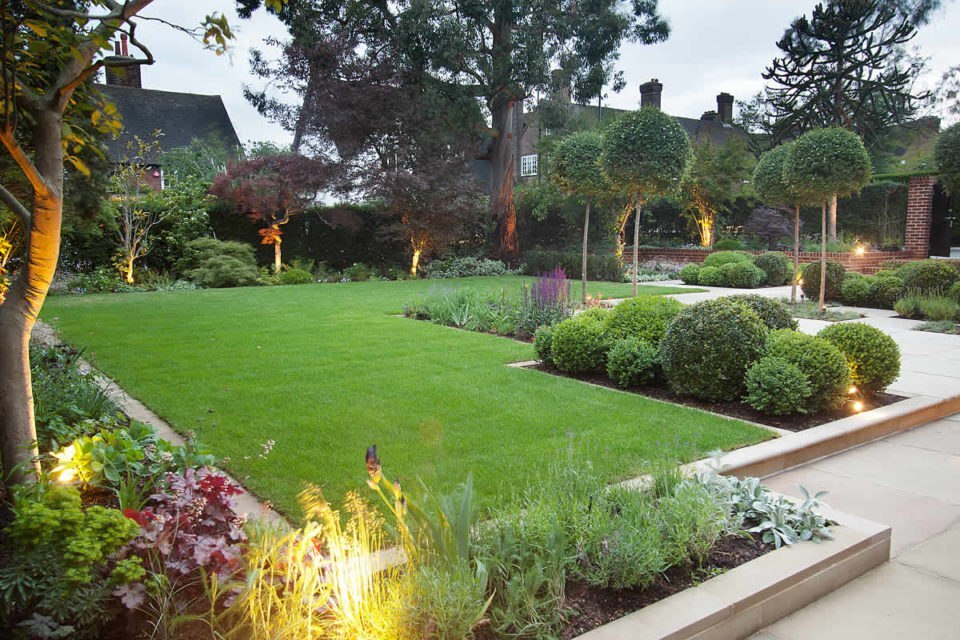
At deZZign, landscape design breaks down into three core components.
1. Planning and Architecture
As with any design discipline, it starts with a concept and a preliminary sketch. That is followed by the actual layout and by working through the details and risks that could come up during construction.
It is not about placing elements wherever they fit. A clear understanding of style and composition is required: nothing should look artificial, and the climate zone and future maintenance have to be considered from the start.
Beyond composition, planning covers the technical work that makes a landscape function as well as look good: drainage, irrigation, lighting, and utilities, without which plants will not thrive and paths and terraces will not last.
2. Horticulture and Botany
This is how we understand which plants will actually thrive on a given site, and it should never be left to guesswork. We look at soil, topography, groundwater, sun and shade, and climate, and only then choose the plantings. A plant that looks great at the nursery can fail within a season if it does not suit the site's moisture, light, and hardiness zone.
3. Cultural History and Philosophy
This matters most for anyone who wants a garden in a specific style, which is exactly our specialty. A Japanese garden cannot be done right without understanding its history and meaning: stones, water, and plants each carry a role. Staying true to the philosophy of the chosen style is what separates a garden from a collection of decorative objects.
The key idea: landscape design is the art of bringing these three very different disciplines together in one real project.
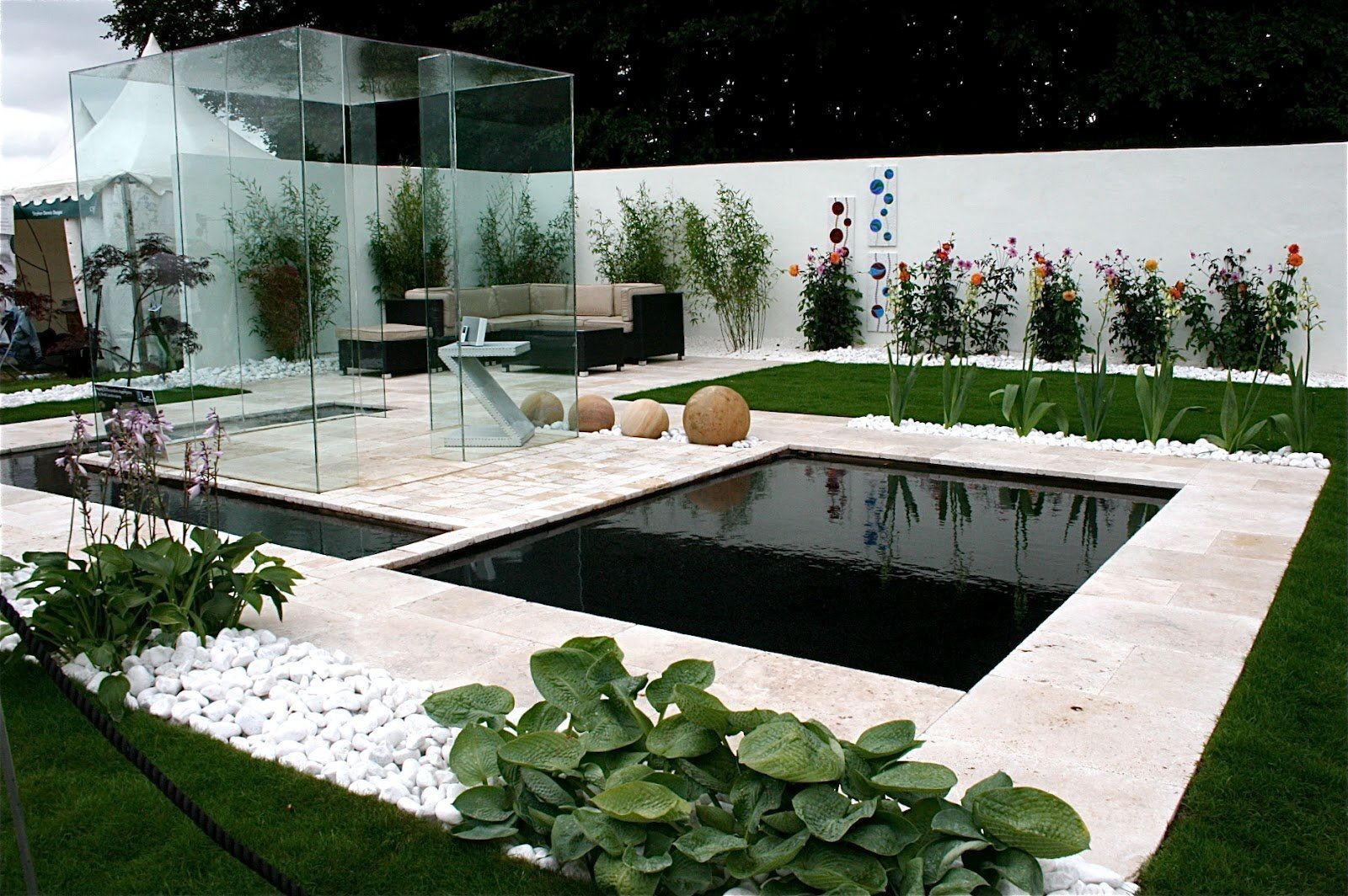
Core Elements
Landscape design draws on many elements, usually grouped into a standard "toolkit" that designers and architects work from:
- Buildings - the anchor of the project and its composition;
- Lawn - usually a blend of several grass varieties;
- Plantings - trees, shrubs, and flowers, everything that brings the space to life;
- Water - streams, ponds, fountains, and in some projects even small waterfalls;
- Paths, driveways, and terraces - design always has to work comfortably for the people using it;
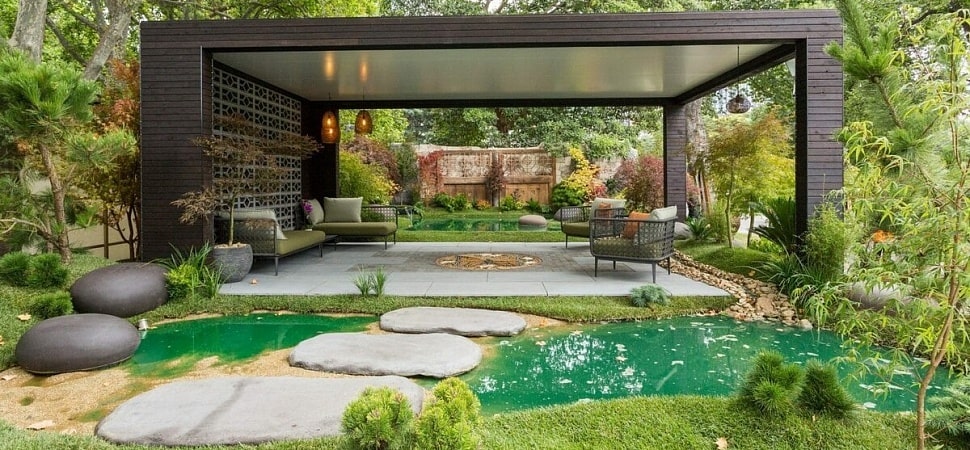
- Garden structures - gazebos, benches, arches, pergolas, and other forms made for rest and taking in the view;
- Decor - the small details that create atmosphere;
- Technical systems - lighting, irrigation, and drainage, without which a garden does not work.
What a Landscape Plan Includes
In practice, a landscape design is a set of drawings that lets the garden be built and maintained: a site plan with the house, paths, and zones; grading and drainage; a tree and shrub layout; planting plans for beds; irrigation and lighting layouts; and plant and material schedules. A complete set lets you build the garden in phases without redoing finished work. Terraces and outdoor living areas deserve their own attention to surfaces and drainage - see our article on terraces.
Styles and Directions
Landscape design has roots long predating its modern form. Over the centuries, three clear traditions emerged:
- Formal (classical). Symmetry, axes, and clipped geometric plants. Its roots are the gardens of Renaissance Italian villas and the French formal garden, culminating in André Le Nôtre's Versailles.
- Landscape (naturalistic). The opposite of formal: the measure of success is how natural it looks. Elements are placed freely, each with its own form. The style was born in 18th-century England (William Kent, Lancelot "Capability" Brown) and, through Olmsted's urban parks, became the foundation of the American park tradition.
- Thematic. Built around a specific theme or style, with every element supporting it.

The thematic group splits into recognizable styles. The best known are the Asian ones, Chinese and Japanese, followed closely in popularity by Italian design. Moorish gardens, with water channels and courtyards like those of the Alhambra, and Mediterranean gardens also appear often. For clients who cannot settle on just one, which describes most of ours, there is the mixed style; it works best when the styles come from the same family, so the composition stays coherent. And last on the list but not in importance: country style, with flower borders, fruit trees, and natural materials.
Choosing a Garden Style in the Seattle Area
The naturalistic style is the most natural fit for the Pacific Northwest, where a garden can borrow from the surrounding forest: layered conifers, ferns, mosses, and native shrubs. Japanese gardens also have deep roots here. Kubota Garden in south Seattle was started by Fujitaro Kubota in 1927, and the Seattle Japanese Garden in the Washington Park Arboretum, designed by Juki Iida, opened in 1960. Both show how well the style suits a mild, wet climate. A formal garden is possible too, but clipped hedges and big lawns need regular care and summer irrigation, since dry summers are the norm. Whatever the style, match it to the architecture: a contemporary home pairs well with a restrained geometric or meadow-like garden, a traditional house with a more formal layout. See how we work on our landscape design page and in projects like Lesnoe.
Frequently Asked Questions
When should a landscape project start? Ideally together with the house design, so grading, drainage, utilities, and entry areas are planned at once and the site does not have to be dug up again after construction.
Can garden styles be mixed? Yes, within one family - for example, Mediterranean with Italian. A Japanese garden next to an English landscape garden without a transition zone will look accidental.
How much maintenance does a garden need? It depends on the design. A formal garden with clipped shapes needs the most work, while a naturalistic garden with perennials and grasses needs far less. Agree on the maintenance level before choosing plants.
We hope this gives you a clearer picture of what landscape design involves.