Hello! Today we want to explain what a pergola is and why we love using one when designing terraces and outdoor spaces.
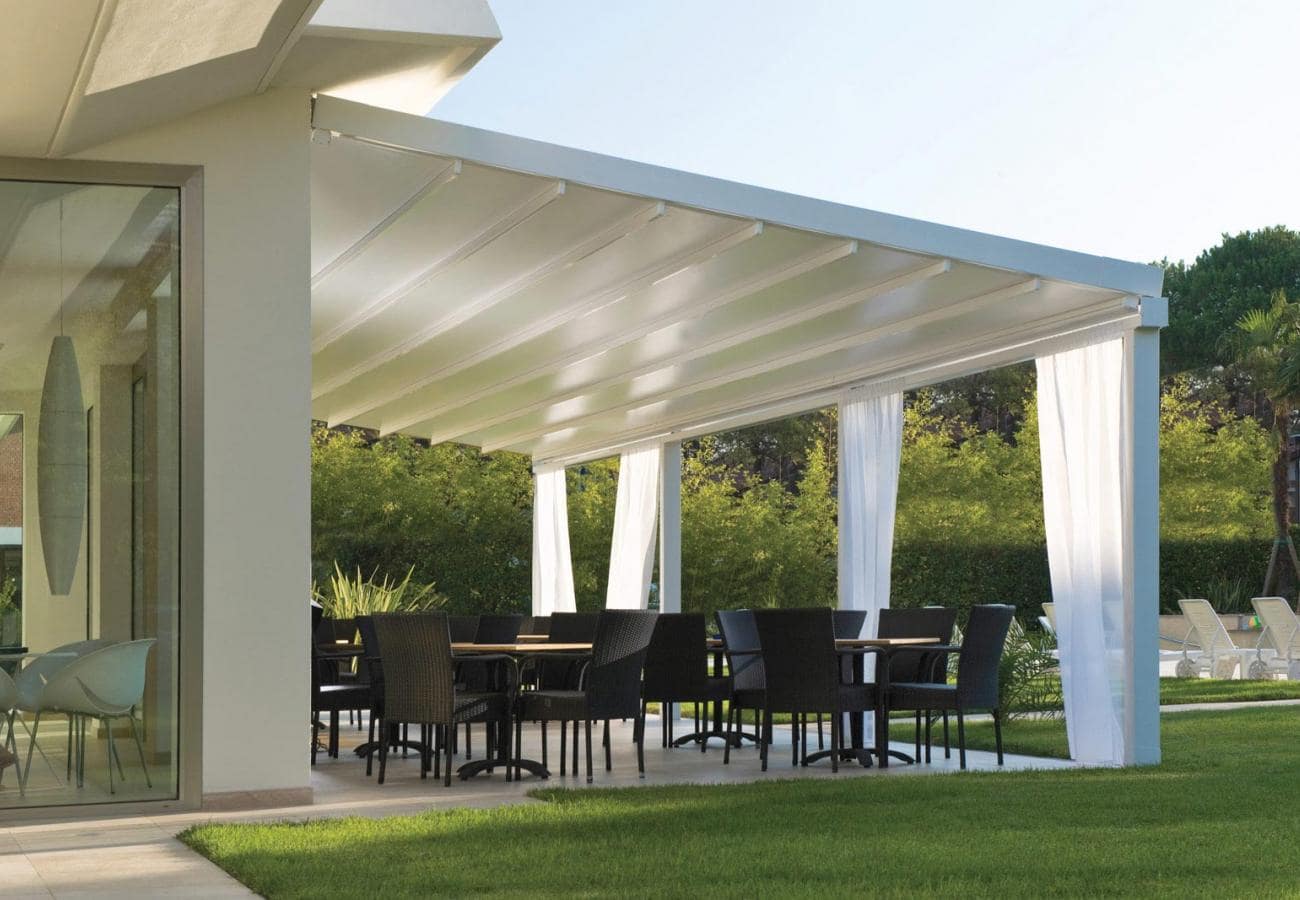
The word comes from the Latin pergula, which meant a projecting roof or lean-to attached to a building, and later a vine-covered arbor. A pergola started as a simple frame for climbing plants that gave natural shade and kept a terrace cool. Today it is usually built from metal or wood posts connected by crossbeams or rafters. It doesn't have to be part of the house: a pergola can be attached or stand on its own as an independent architectural element. Put simply, it's an open gallery with a light horizontal roof.
Pergolas range from the simplest timber frames to stone and marble colonnades in Italian villa gardens and 19th-century estates, all the way to modern aluminum systems with rotating louvers, glazing, automation, and lighting. One of the most beautiful things about a pergola is the pattern of light and shadow it casts. It's especially striking at sunset and feels as warm and comforting as sitting by a fireplace.
Types of Pergolas
Classic - wood or metal posts and beams, often with climbing plants. It gives dappled shade but doesn't keep out rain.
Louvered (bioclimatic) - an aluminum roof of rotating louvers that open for air and light or close against sun and rain. Water drains through gutters and posts, and rain and wind sensors can operate the louvers automatically.
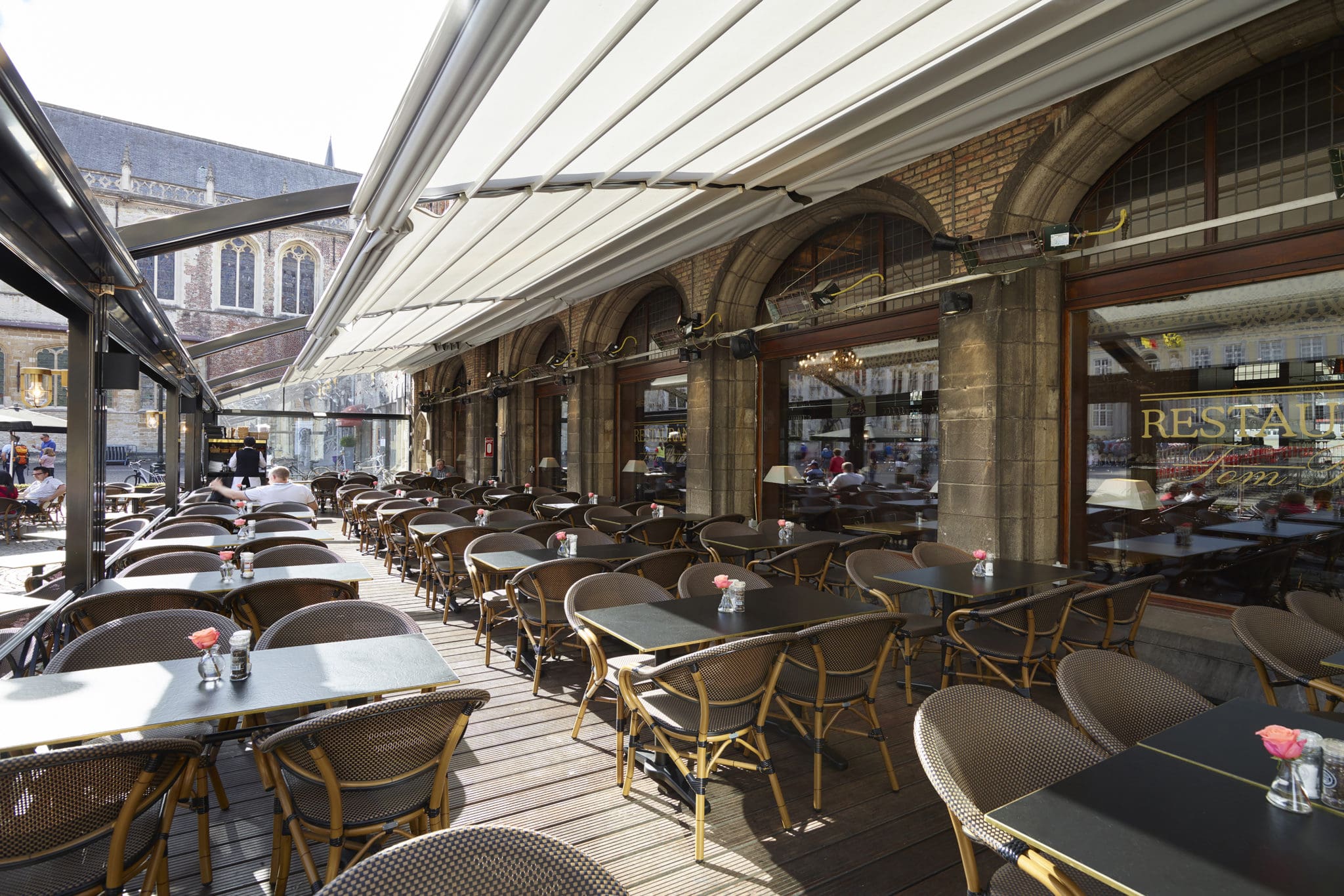
Retractable canopy - a waterproof fabric roof that folds back like an accordion. Lighter and less expensive than a louvered roof.
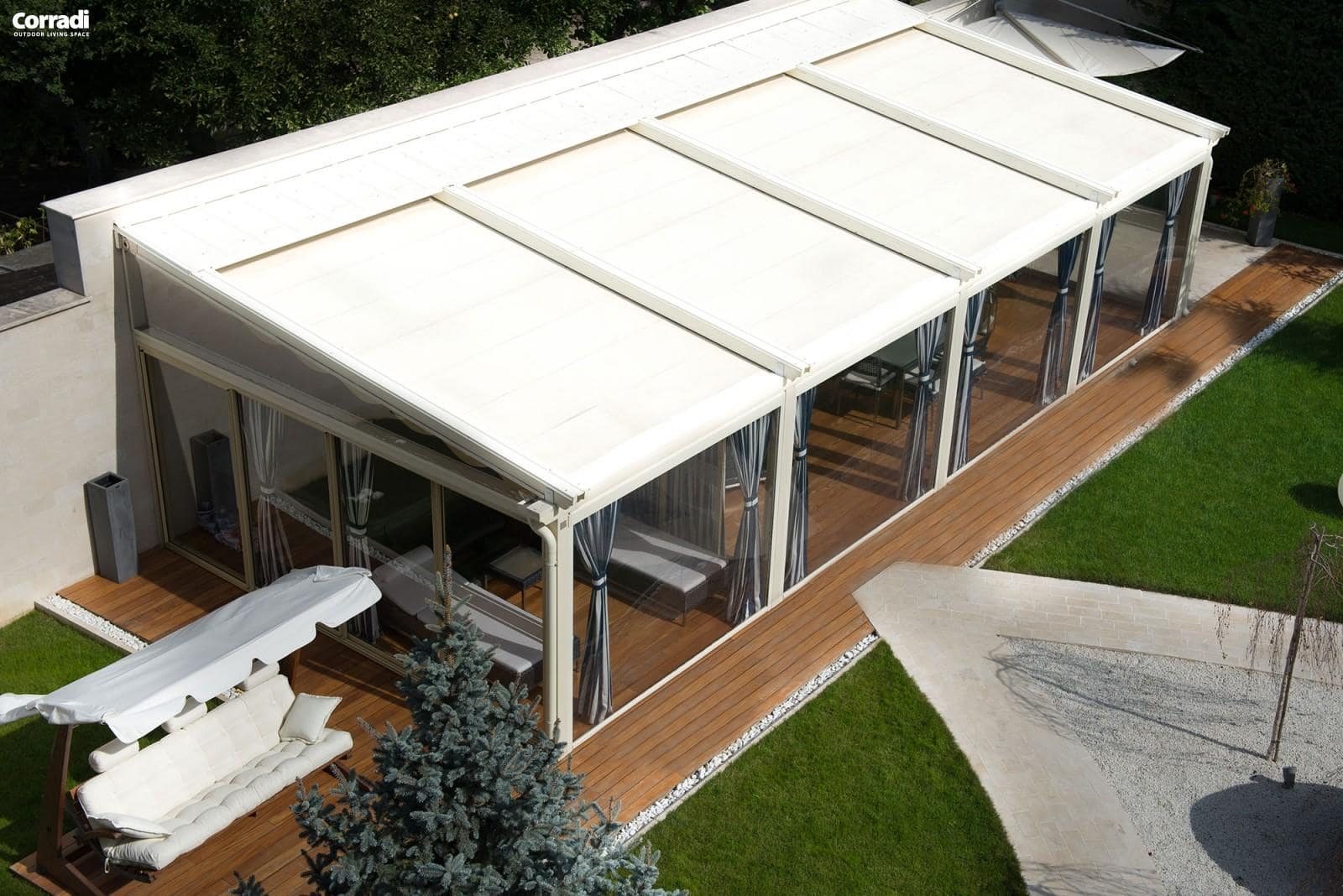
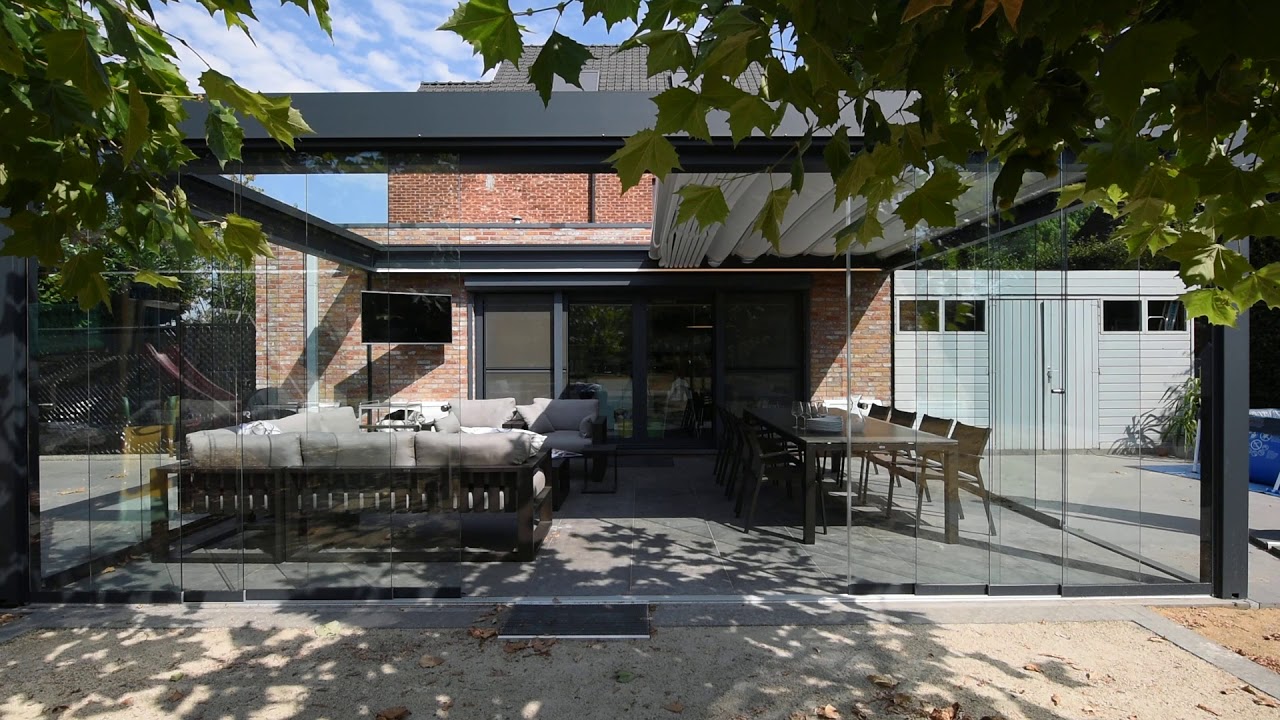
Enclosed - a pergola with sliding glass walls or vertical zip screens that turns into an outdoor living room.
What to Plan For
Orientation decides when the pergola will actually shade the terrace. The structure has to be designed for local wind and snow loads, footings and drainage have to be sized properly, and wiring for motors, lighting, and heaters should go in before the patio is paved. Many attached pergolas and larger freestanding structures need a building permit, so check local rules early (in Seattle, with the Seattle Department of Construction and Inspections). Most of all, a pergola should continue the architecture of the house in its proportions and color rather than look like a catalog add-on. For more on the space around a home, see our articles on terraces and landscape design.
One of Ukraine's most advanced companies in pergolas and sun protection is MANEZH. The company manufactures the full range of shading systems: pergolas, awnings, external blinds, and zip screens. According to the company, it has been in business for 28 years, has completed around 7,500 projects, holds more than 10 patents on components and technologies, and exports to the United States, France, Switzerland, Spain, Canada, Austria, and other countries. Its mission is to work with architects on complete "out-home" solutions, combining the best international practice with its own engineering, its own production, and lean manufacturing.
We recommend this company with full confidence! On a project with them, you get not only a system of the highest quality, worked out down to the smallest detail, but also the pleasure of working with MANEZH's energetic professionals.
Among the world leaders, we also want to mention the Italian company Corradi, which has been making outdoor living systems since 1978 and is represented in the United States. Its patented Pergotenda sliding cover system has become almost a generic name for retractable-canopy pergolas. Corradi's main strengths are reliability, wind resistance, functionality, and refined design - and, to be fair, the price reflects all of that.
To sum up: a pergola is a great way not only to escape the harsh sun, but also to enjoy the play of light, complement the architecture of the house, and extend outdoor living across much more of the year.
Wood in the Pacific Northwest, Aluminum in Ukraine
Pergola material choice tends to follow climate and building culture more than personal taste, and the difference between our Seattle-area and Ukrainian projects makes that clear. In the Pacific Northwest, cedar and pressure-treated lumber remain the default choice for pergolas - both hold up well against the region's persistent moisture, cedar in particular resists rot and insects naturally without chemical treatment, and the material reads as consistent with the area's broader wood-forward residential architecture.
In Ukraine, by contrast, aluminum pergola systems dominate the premium segment. Aluminum doesn't warp, doesn't require repainting or resealing, and holds tight tolerances that matter for motorized components - which is important, because Ukrainian and European pergolas tend to be considerably more technologically advanced than the simple fixed structures still common in North America.
Retractable Roofs, Glazing, and Motorized Control
A modern Ukrainian or European pergola is often closer to a piece of outdoor engineering than a garden structure. Retractable roof slats that rotate open or closed, motorized or manually operated, let the same structure function as full shade, full sun, or anything between. Some systems add sliding glass walls, turning the pergola into a genuinely enclosed, heated space usable through cooler months rather than a purely fair-weather feature. Others stay fully open, prioritizing airflow and a lighter visual footprint.
This level of engineering is part of why aluminum makes sense as the base material in that market: the moving parts, motors, and glazing tracks need dimensional stability that timber - which expands, contracts, and moves with humidity - cannot reliably provide over years of use.
A Pergola in Our Own Work
Our Lesnoe House project used a transparent attached pergola specifically to create a genuine transitional space between the house and the surrounding landscape - not a bolted-on afterthought, but a structural extension of the living environment, protected when needed and visually open to the garden the rest of the time.
Frequently Asked Questions
Is a motorized retractable pergola worth the added cost over a fixed structure? For a climate with real seasonal variation, yes - the ability to fully open the roof on a clear day and close it during rain or intense sun turns a single structure into something usable across far more of the year than a fixed canopy allows.
Does a glazed pergola need to be heated to be usable in cooler months? Not necessarily - even unheated, enclosing a pergola with sliding glass walls blocks wind chill and extends comfortable use well beyond what an open structure allows, though adding heating extends that further.
How do you decide between wood and aluminum for a specific project? It comes down to climate, maintenance expectations, and whether the pergola needs to support motorized components - a decision we make project by project rather than defaulting to one material everywhere.
Choosing the right pergola material and technology for a specific climate and use case is exactly the kind of decision our material selection and home design services are built around.
Do I need a permit for a pergola? Often, yes, especially for attached pergolas, larger structures, or anything with electrical work. Requirements vary by city, so confirm with your local building department (in Seattle, SDCI) before construction.