The most important question when planning your house is the land. In this article we briefly explain how to choose a site.
Two decisions here involve money and responsibility. Most people have one budget for the land and another for building their dream home. Sometimes buyers decide to save on the land to spend more on the house, and that is usually a costly mistake: a house can be renovated later, but a poor location, difficult soil, or a lot with no utilities stays with you for good.
Lot size is the first parameter to settle. It depends on how you like to live: some families want and can afford a 10,000-square-foot house, while for others 1,100 to 1,600 square feet is plenty. From our practice in Ukraine, a house of 100 to 150 m² (about 1,100 to 1,600 sq ft) fits on a plot of around 400 m² (about 4,300 sq ft). If you plan a larger house of 200 to 250 m² (2,150 to 2,700 sq ft) and want a real garden, look at 1,000 to 1,500 m² (roughly a quarter to a third of an acre). In the US, minimum lot sizes and coverage limits come from local zoning, so check them before you fall in love with a site.
After size comes the setting. Choose surroundings that are comfortable for you: the neighborhood, available infrastructure, and how good the roads and access are. When you visit a site, meet the neighbors and ask how they like living there. Check cell coverage and internet options, and the reliability of the power supply. Find out how much electrical capacity you can get and what it will cost to bring service to the house: in Ukraine, a small house of 100 to 150 m² typically needs about 10 kW of allocated capacity.
Next, deZZign specialists recommend learning the groundwater level. It is a key factor in choosing the type of foundation and in deciding whether a basement or lower level is possible.
What "Good Site Geometry" Actually Looks Like
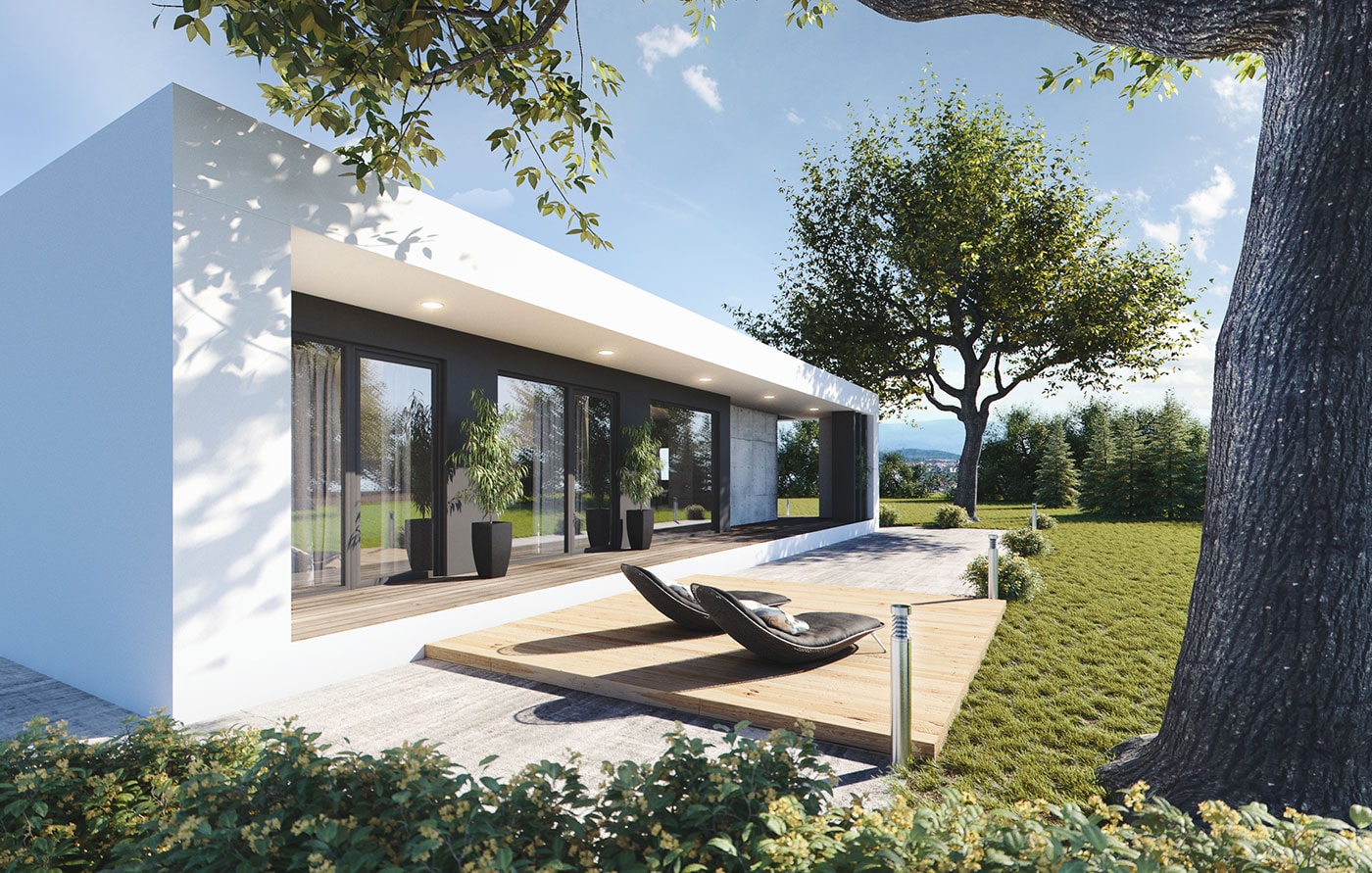
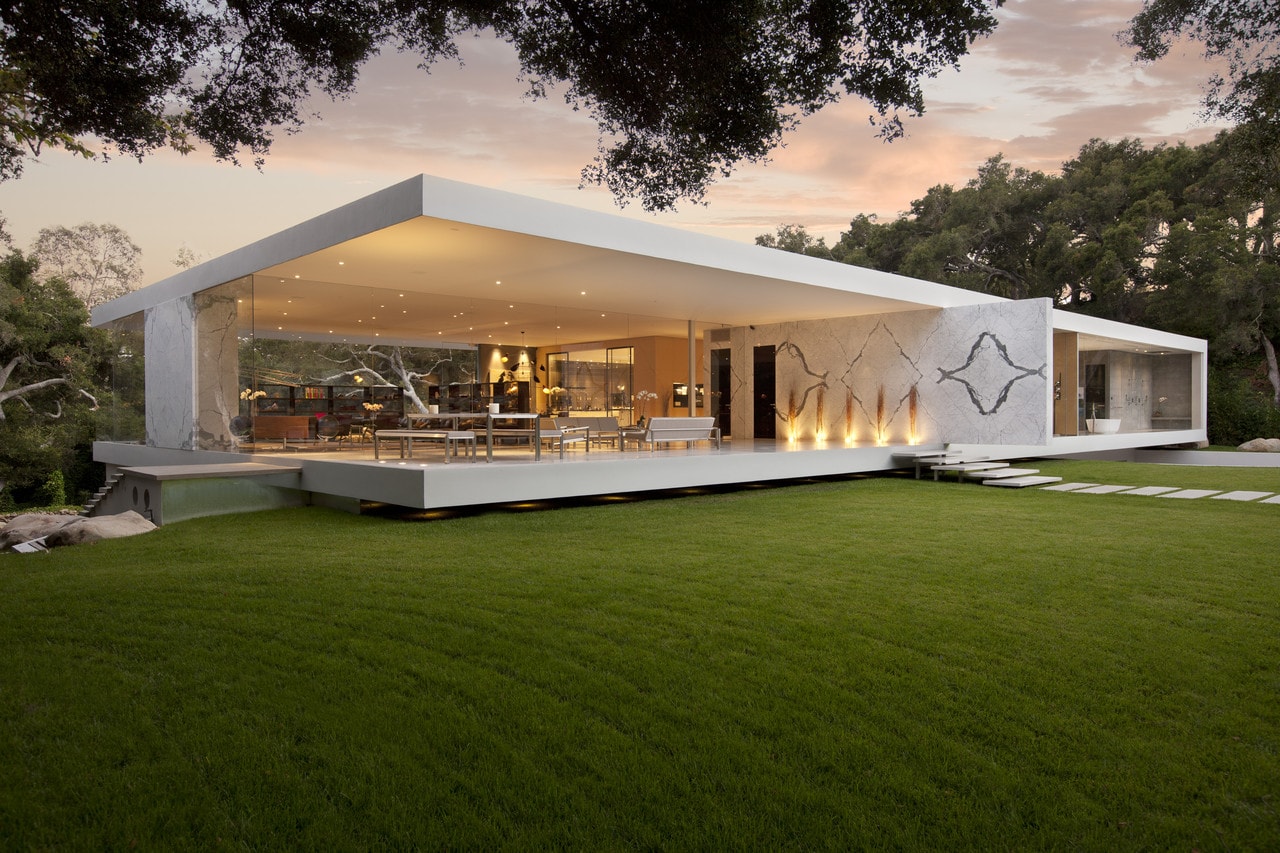
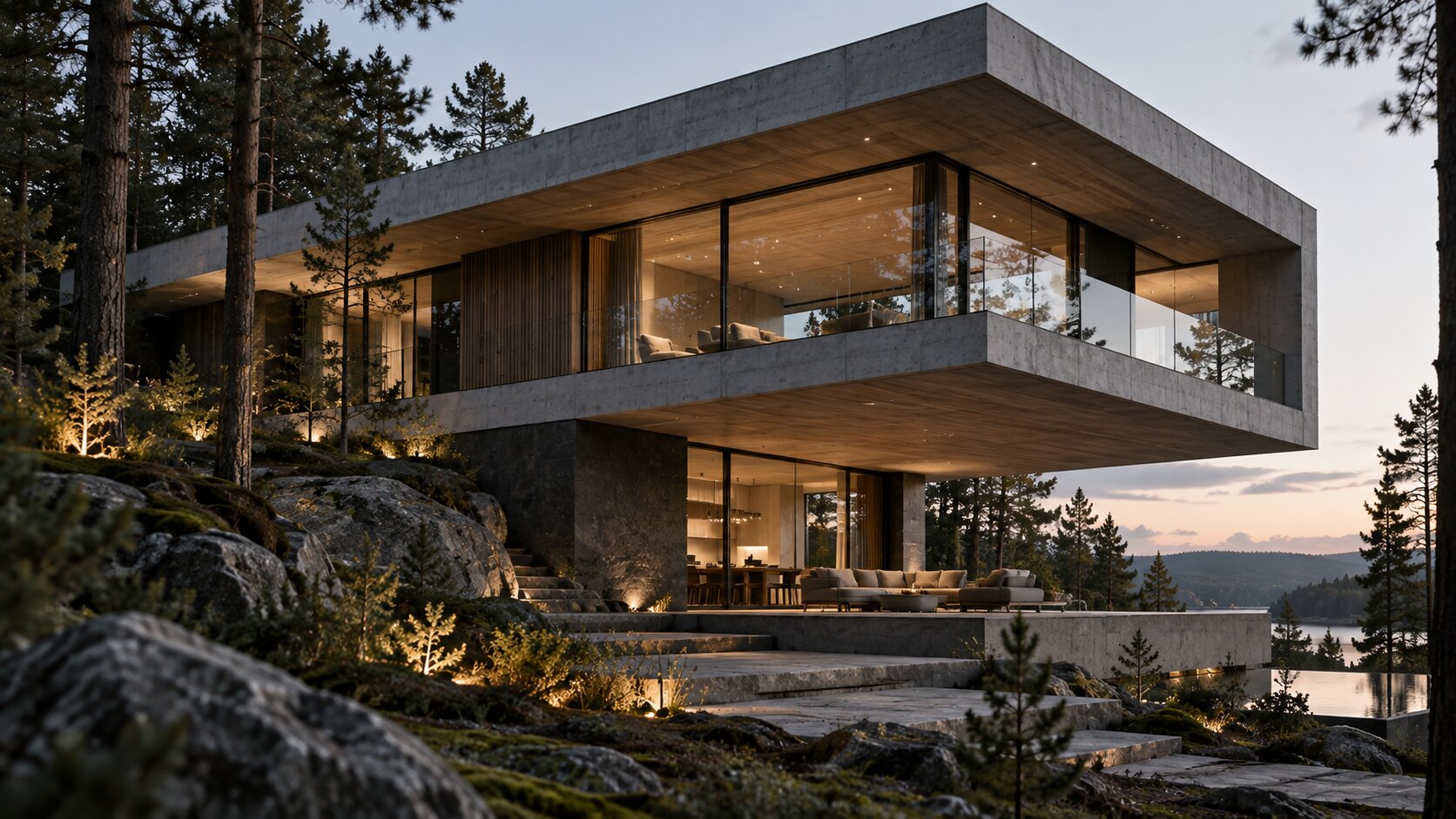
Site selection guidance often stays abstract - orientation, drainage, access - without showing what a good outcome looks like. Our House for Cosmopolitan project is a real example.
The site sits near a pine forest, close to the Saltovske reservoir in the Kharkiv region. Besides the view, it was flat, clean, with minimal elevation change - a rare combination in that region, where most available sites carry irregular grades, awkward proportions, or terrain that fights a clean architectural concept.
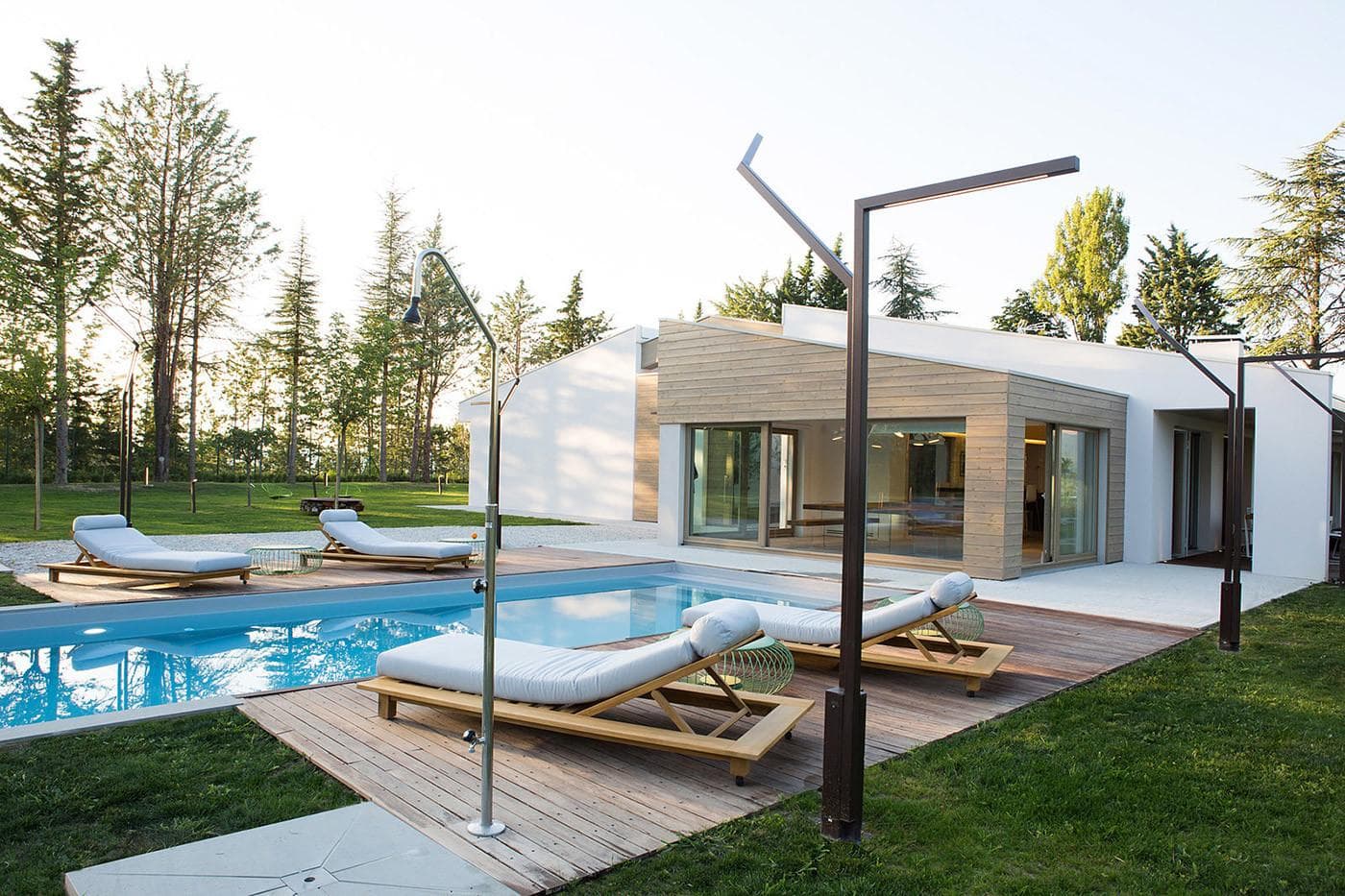
That flat, regular geometry meant the house design didn't have to compromise around the land - the concept and the site fit together almost immediately, and the house settled onto the plot rather than being forced onto it. The same clean geometry also left enough usable space for a tennis court, a pool, and a separate zone for walking, picnics, and sunbathing - amenities that would have been harder to fit, or would have required extensive grading and retaining work, on a less regular site.
Finding it took time and a long look through many sites in the region, but the result justified the search.
Due Diligence on a Lot in the Seattle Area
Before you make an offer, check what you can build. Zoning sets the allowed use, height, lot coverage, and setbacks, and Seattle and its neighbors have been changing residential zoning to allow more units per lot, so confirm the current rules with the city. Look up whether any part of the lot falls into an environmentally critical area - steep slopes, landslide-prone areas, wetlands, or shoreline - because that can mean geotechnical reports, buffers, and a longer permit timeline. Order a boundary survey and a title report to catch easements, encroachments, and covenants.
Utilities, Soils, and Water
Confirm whether the lot can connect to public water and sewer. Outside sewer service areas you will need an on-site septic system, which depends on a soil evaluation and health-district approval, and some rural lots rely on a private well. Ask the utility about the cost and timeline of a new electrical service. A geotechnical investigation tells you about soil type, bearing capacity, and groundwater, which decide the foundation and the budget for site work. Visit after heavy rain: standing water and soggy neighboring yards say more than any listing.
Orientation, Views, and Neighbors
The way the lot faces decides where the living room and bedrooms look, how much sun the garden gets, and how well the house can use winter sun. In the Pacific Northwest, protected views of water or mountains add value, but a view lot on a slope usually costs more to build on. Look at what could be built next door under current zoning - a taller neighbor can take your light or view. Distance to schools, transit, and daily errands matters as much as the lot itself.
Frequently Asked Questions
Is a flat site always better than a sloped one? Not always - a sloped site can create dramatic architecture and natural level separation between spaces - but a flat, regular site is easier and cheaper to build on and gives the architectural concept more freedom.
How much time should I expect to spend searching for the right site? More than most buyers expect - well-proportioned, regular sites are less common than listings suggest, and finding one worth building on takes much longer than finding a site that meets the minimum requirements.
What amenities should influence site selection beyond the house itself? Anything that needs meaningful flat area - a pool, sport court, or dedicated outdoor living zone - should be part of the site evaluation from the start, since adding them later on an irregular or steep site costs far more than choosing a site that already fits them.
Judging a site's potential beyond its address or price is what our luxury home design and house planning services are built around.
The orientation of the site shapes how energy-efficient the future house can be - details in our piece on a modern energy-efficient house.
If you're considering frame construction, our piece on frame construction explains how it aligns with site selection.
If your site or project involves underground spaces or heavy loads, our piece on a monolithic reinforced concrete house is worth a look.