
A decade ago, Ukraine had relatively few architecture projects worth talking about on the international stage - a ranking from one of the country's more forward-looking media outlets confirmed as much at the time, with embassy buildings taking most of the top spots. Enough time has passed since then that new buildings and projects have started reshaping how Ukrainian cities look and feel.
Drawing on a more recent ranking from a Ukrainian media outlet, we pulled together five genuinely innovative architectural projects from around the country: Kyiv's Unit City innovation space, Dnipro's newly reimagined Katerynoslavskyi Boulevard, an unusual zoo exhibit in Cherkasy, Lviv's memorial to the Heavenly Hundred, and the redeveloped Roshen factory grounds. A jury of respected voices in Ukrainian architecture evaluated the list: Yulian Chaplinsky, Lviv's chief architect from 2015 to 2019; Oleg Drozdov, founder of the Kharkiv-based studio Drozdov&Partners; Kyiv architect Oleg Grechukh; and Dmytro Makagon of Buro-o.
The jury built their selection around what they saw as the defining traits of contemporary architecture - projects that carry real weight for both their city and the broader architectural community. According to Chaplinsky, all five projects were completed within the last five years, a window that coincided with genuine, necessary change and a real surge in Ukrainian architecture's development.
The selected projects span social, cultural, and business use - each pushing toward a new set of values. In business-focused spaces specifically, the trend mirrors what's happening across Europe, where architects increasingly favor restraint and work in close dialogue with context. As Makagon puts it, functionality, convenience, and comfort now come first - echoed in a kind of new constructivism and modernism. Grechukh frames the shift slightly differently: today's architecture isn't limited by a material's physical properties anymore - what matters more is achieving real synthesis between technology and historical context.
Memorial to the Heavenly Hundred, Lviv
Maksyma Kryvonosa Street · Guess Line Architects - Andriy Lesiuk, Maria Yastrubchak, Kristina Pundak · 2018-2020

The memorial is built from two parts: a plaza with a stele on the upper terrace, and a pedestrian bridge connecting two hills along Kryvonosa Street. Crossing the bridge leads out onto the terrace and the stele itself, dedicated to the Heroes of the Heavenly Hundred. Their names are cut directly into the bridge's roof - rain runs through the lettering, and on sunny days, natural light illuminates the names from within.
For Ukraine, this is a genuinely significant project. It doesn't just mark an important historical moment and preserve the memory of those it honors - it also functions as part of the city's physical landscape, tying the surrounding area together. The project cost roughly 20 million hryvnia.
The Former Roshen Factory Grounds, Kyiv
1 Prospekt Nauky · In-Situ, Maass architecture studio, AER, Kotsiuba Landscape Architecture, Project 7 · 2014-2018
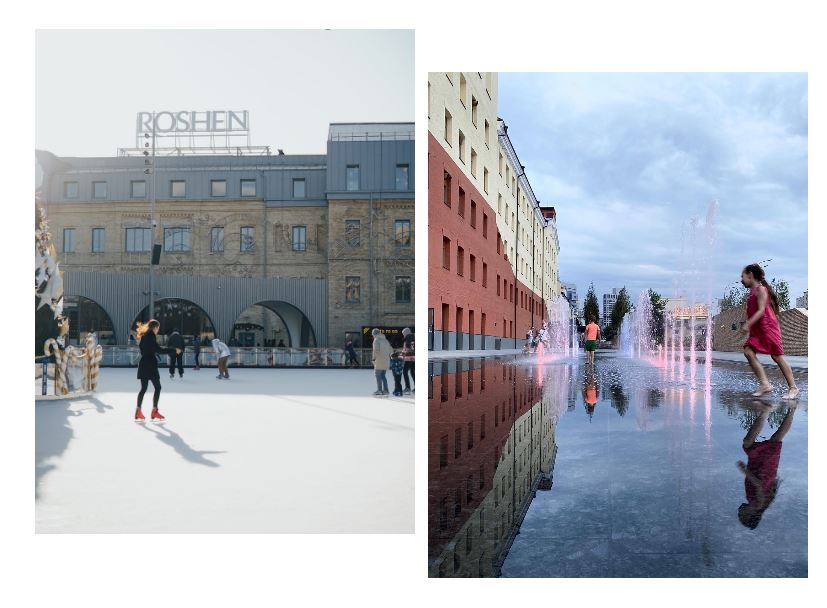
In 2014, work began on converting the former Roshen confectionery factory into Roshen Plaza. That transformation is a strong example of an industrial zone shifting into a more intelligent kind of business use. What makes the project distinctive is the range of public space it holds - open plazas, a chocolate museum, a children's entertainment center, an active confectionery production line, and offices, all connected cleanly into the surrounding city fabric.
The project also carries a genuinely thoughtful architectural program: the large public plaza becomes an ice rink in winter and a concert and events space in summer, and the grounds overall include a substantial amount of green space for rest and recreation.
"Land of Wolves and Bears" Zoo Exhibit, Cherkasy
132 Smilianska Street · Project 7 · 2016-2017
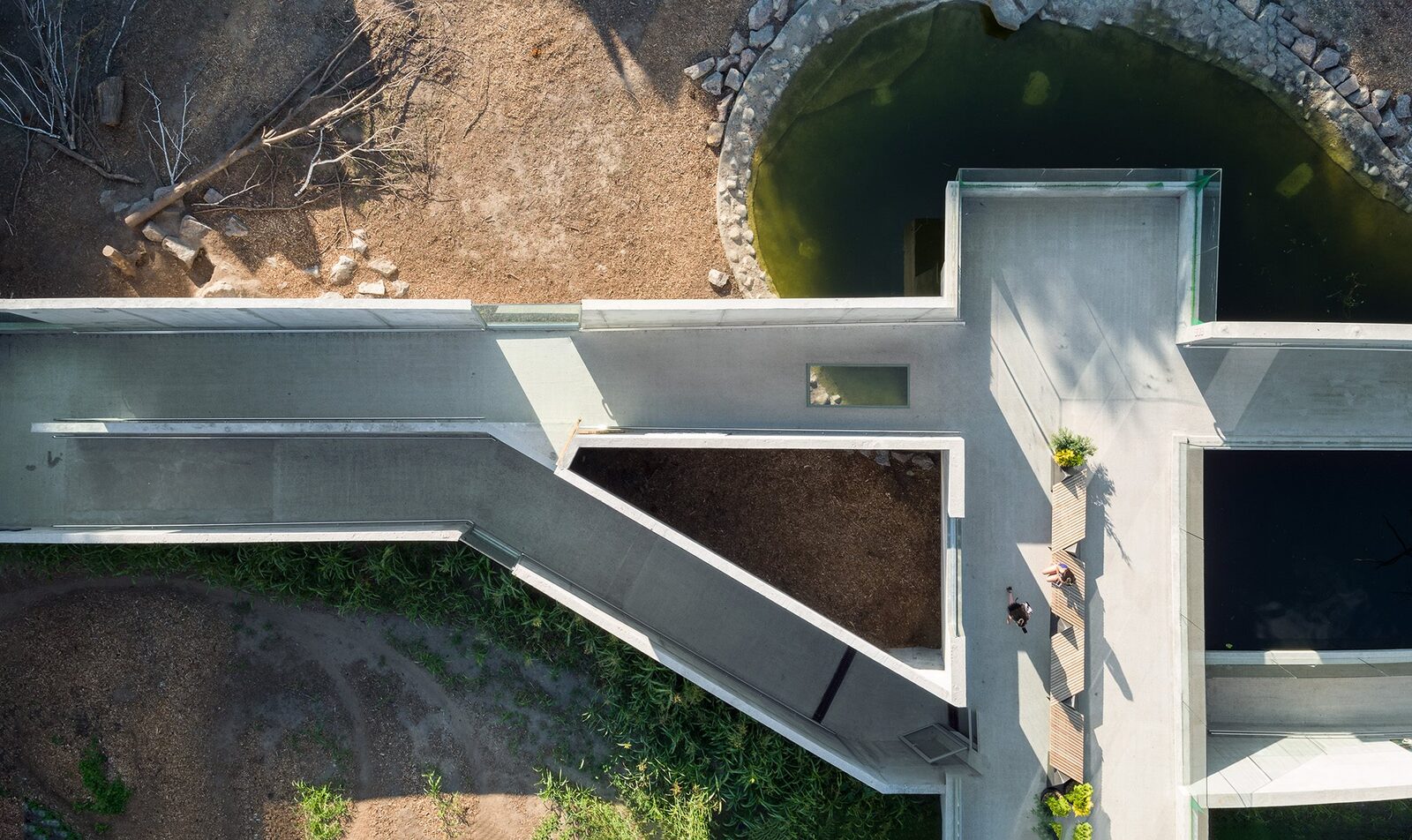
According to the project's own team, the new exhibit is built around a principle of immersion - visitors entering this part of the zoo can experience something close to the animals' actual natural habitat, without any real safety concerns. The architects designed the space as a single continuous route through the zoo grounds, made up of three zones: a gallery holding themed exhibits, enclosed animal habitats, and technical support space.
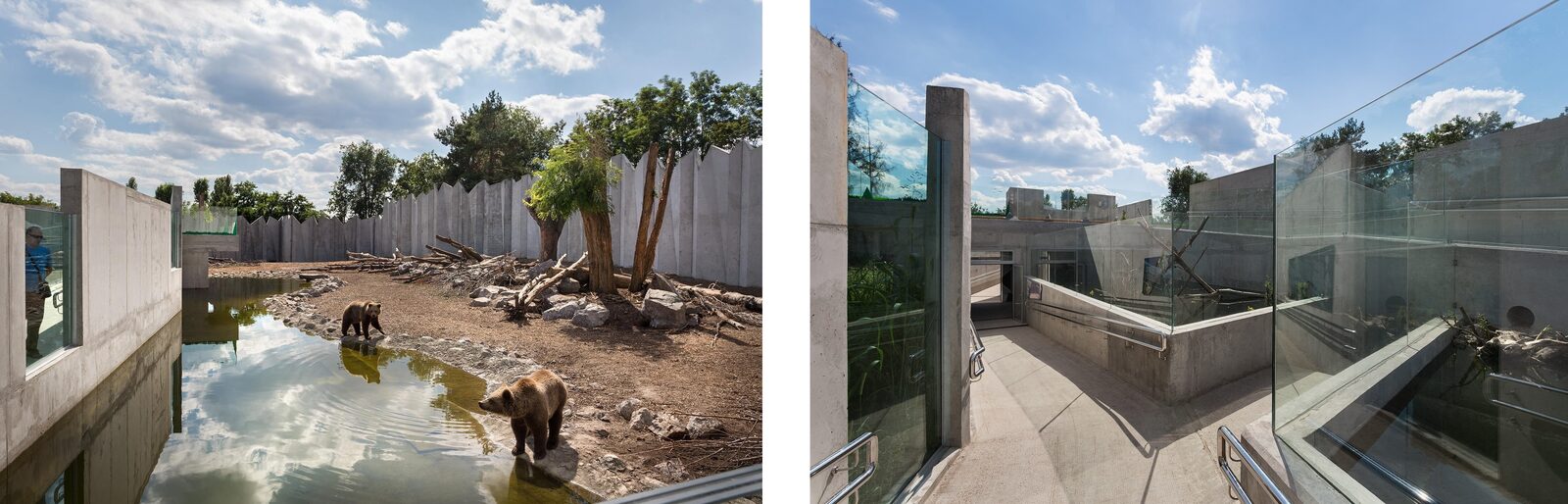
The route runs across varied terrain, letting visitors take in the project from both its upper level and a lower level, where a glass wall opens onto an underwater viewing area.
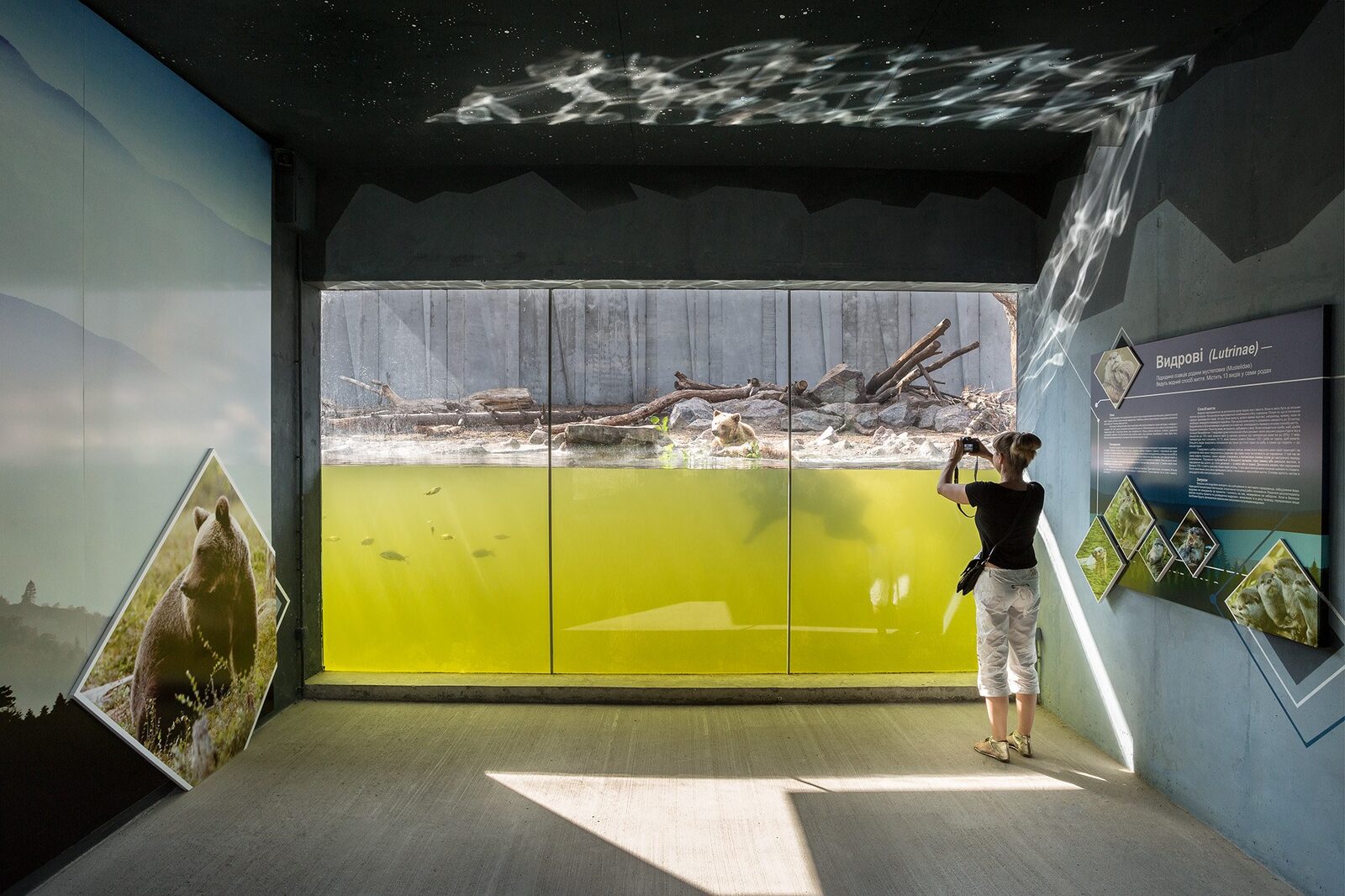
"Land of Wolves and Bears" represents a genuinely new direction for Ukrainian architecture - one that Grechukh believes future projects will look to as a reference point. It brings together everything that defines contemporary architecture at its best: functionality, simplicity, real dialogue with its surroundings, and restraint.
Katerynoslavskyi Boulevard, Dnipro
Katerynoslavskyi Boulevard · Filimonov & Kashirina Architects · 2018-ongoing
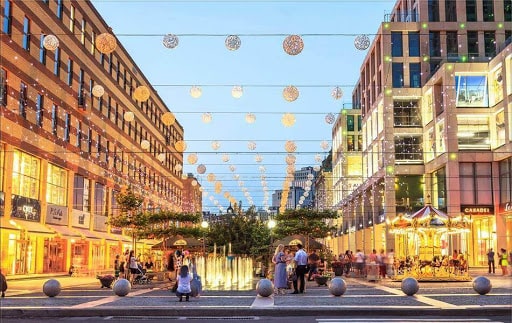
Katerynoslavskyi Boulevard is a new pedestrian zone in central Dnipro - locals have taken to calling it the city's "New Arbat." The street holds shopping centers, a fountain-lined alley, and no shortage of cafes and restaurants - everything you'd want for an unhurried walk through the city center.
The boulevard splits into three sections: two pedestrian zones running along its edges, and a central plaza built for events of all kinds. According to the designers, the street's centerpiece will eventually be a 200-meter artificial stream - a nod to the nearby Polovytsia River - with lighting that shifts along with the seasons.
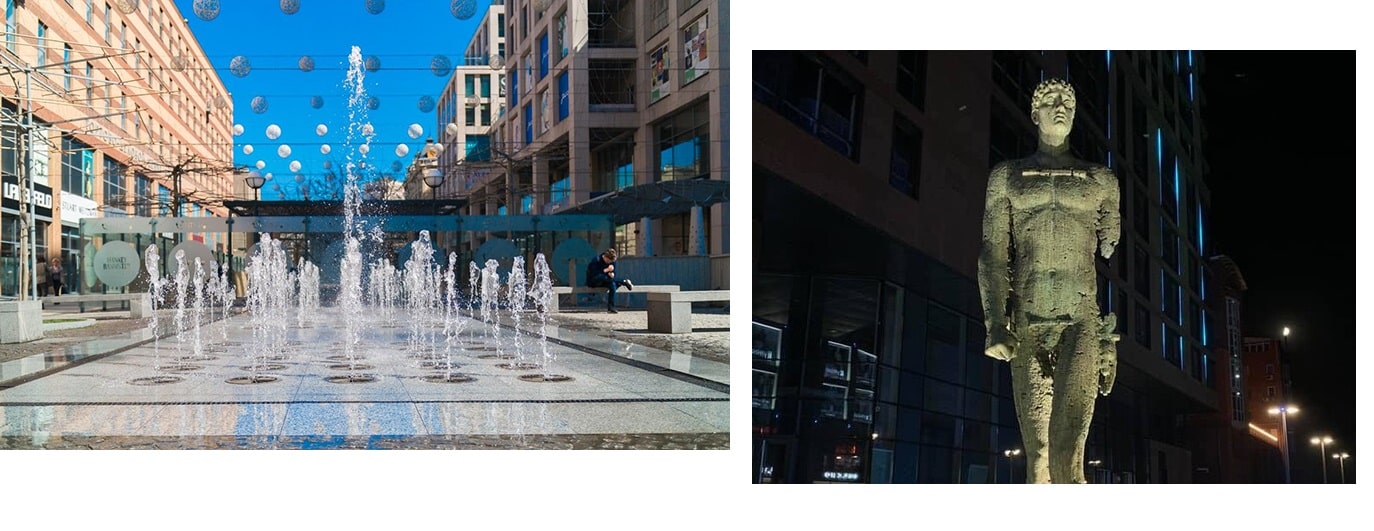
That's still a work in progress, but there's plenty to see on the boulevard already. In 2021, a seven-meter statue of Atlas went up, and the boulevard draws attention now for its abundance of mosaics and thoughtful lighting design. Grechukh considers the project, positioned right in the city center, a genuine step forward - one that holds its own against contemporary Dutch architecture, in his view.
Unit City, Kyiv
3 Dorohozhytska Street · TAM Pashenko, Kostiantyn Khaliulin, TSEH, APA Wojciechowski, Archimatika · 2017-ongoing
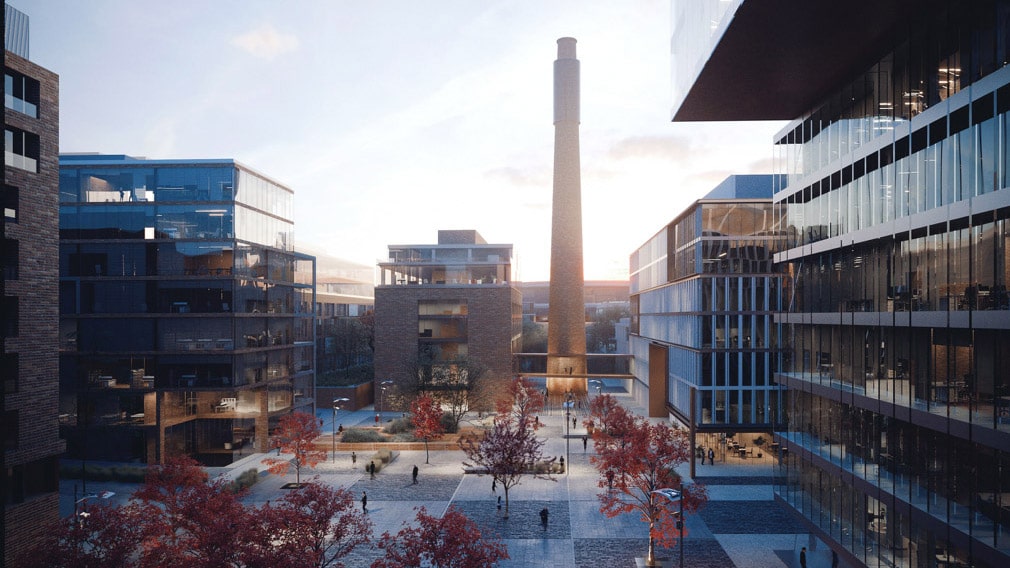
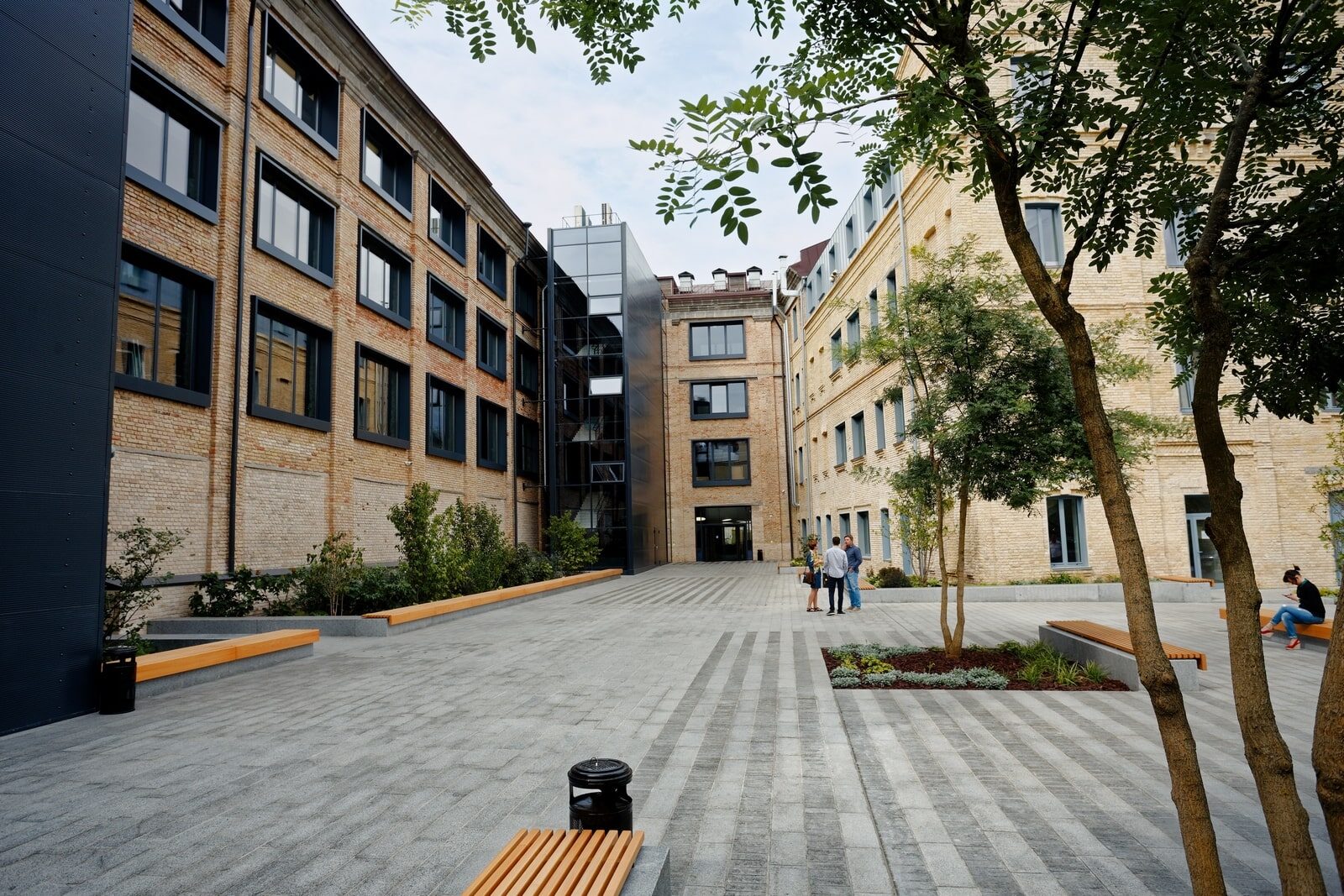
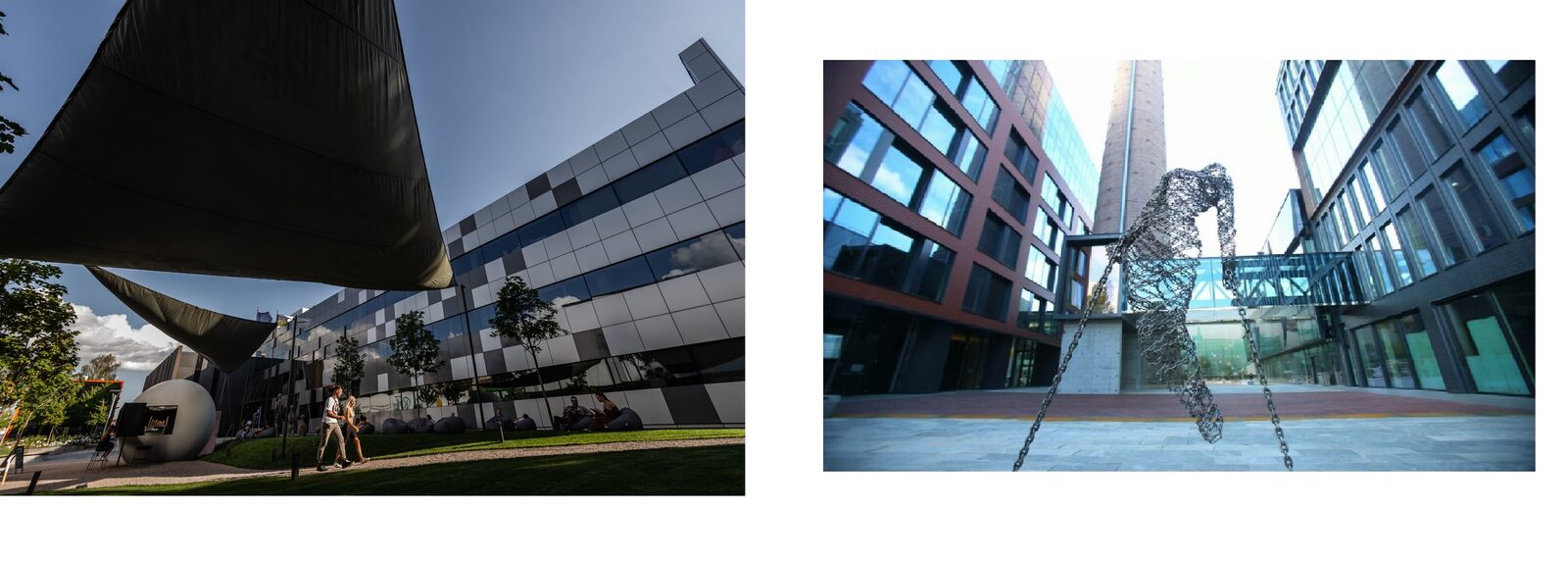
Unit City opened in 2017 on the site of the former Kyiv Motorcycle Factory, becoming Ukraine's first dedicated innovation park. At the time of the ranking it held 108 resident companies, four labs, several business campuses and coworking spaces, eight accelerators, and three investment funds supporting Ukrainian startups.
The project is designed to feel almost like it's emerging out of the ground itself. The grounds are paved throughout in fine-grained cobblestone, and the architects leaned heavily on natural stone and translucent plastic as material choices. The overall approach echoes Google's campus in spirit - a similar transformation of an industrial zone into an IT cluster.
Chaplinsky calls Unit City a diamond in the rough - a project built on genuinely revolutionary decisions that prove Ukrainian architecture keeps moving in the right direction.
A Snapshot, Not the Full Picture
This list reflects a specific moment - the state of Ukrainian architecture as assessed by a respected jury a few years back. Since then, the country's architects have kept working, including through genuinely difficult circumstances. Our own Copper Hall project in Kharkiv is part of that same continuing story - proof that Ukraine's contemporary architecture scene keeps evolving in ways worth watching.
What Has Changed Since 2021
After Russia's full-scale invasion in 2022, Ukrainian architecture found itself working under completely different conditions. Many studios shifted toward reconstruction: temporary and modular housing, shelters in schools and hospitals, and the restoration of damaged buildings and entire communities. The Kharkiv School of Architecture, founded by Oleg Drozdov, continued teaching from Lviv. Safety - shelters, protected rooms, energy autonomy - has become a standard part of every new brief, from private houses to office campuses.
At the same time, the principles the jury highlighted in 2021 - functionality, restraint, dialogue with context, and respect for history - matter even more now. Reconstruction is a chance to avoid repeating the mistakes of Soviet-era mass housing and to build spaces that are well made, energy-efficient, and humane. Unit City and Roshen Plaza remain in operation, while plans for the innovation park's second phase depend on the situation in the country.
Source of the ranking: LIGA.net (in Russian).


