We tend to think of rust as damage - ugly and structurally bad news. A few architecture projects make the case otherwise. It turns out rust can actually protect metal from further oxidation, and from a distance, its color reads almost like wood. Here are two projects worth a look - one in Germany, one in Belarus (Minsk). We're also close to unveiling our own rusted-steel facade project in Kharkiv, Ukraine.
The "Rusty" Facade of the Haus der Geschichte, Essen (Germany)
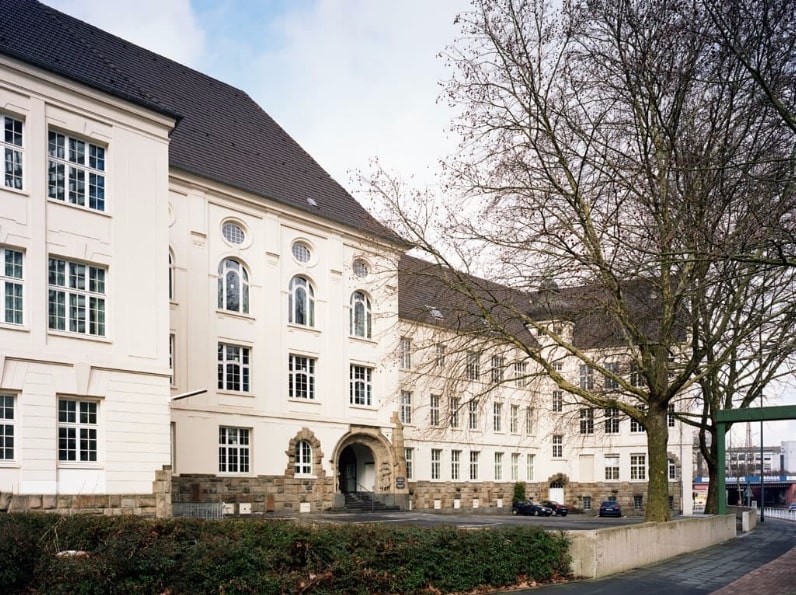
Essen is one of Germany's larger cities, and was named European Capital of Culture in 2010. Landmarks in the surrounding area include the Museum Folkwang, the Zollverein coal mine converted into a creative hub, and the Haus der Geschichte - designed by architects Ahlbrecht Felix Scheidt Kasprusch - which is our focus here.
City authorities needed a new home for their archive. The existing storage building had grown overcrowded as the archive kept expanding, so officials decided to repurpose the former Luisenschule, a girls' school that opened back in 1906 before eventually closing.
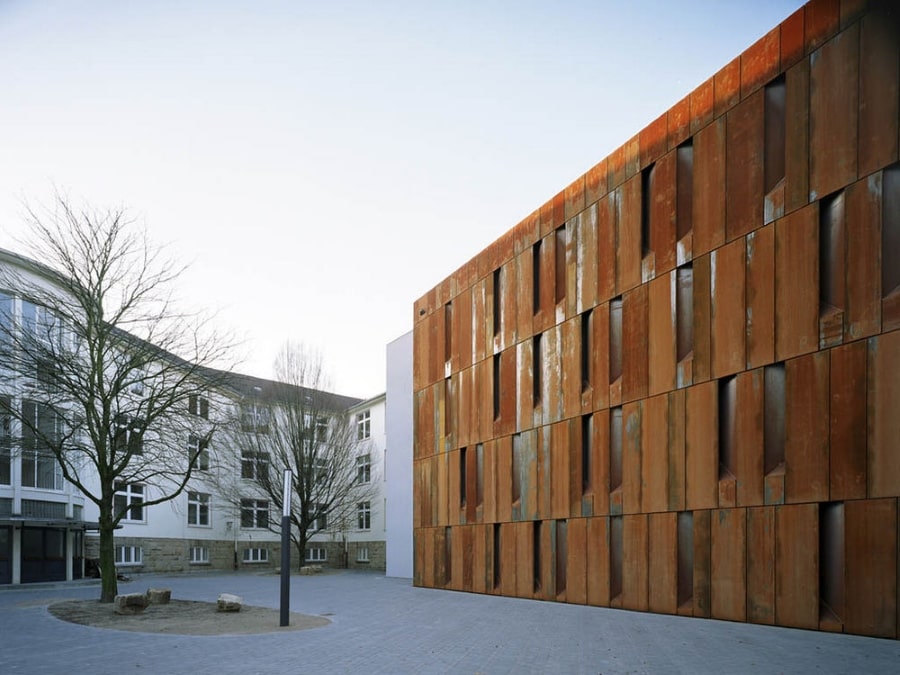
The school consisted of two buildings, so the project's designers filled the gap between them with a new structure to house the archive. The primary facade material is Corten (weathering) steel - a material that develops a protective oxide layer alongside its rust, which shields it from further degradation. It was a genuinely smart material choice: durable, requires no painting, and has an appealing velvety texture.
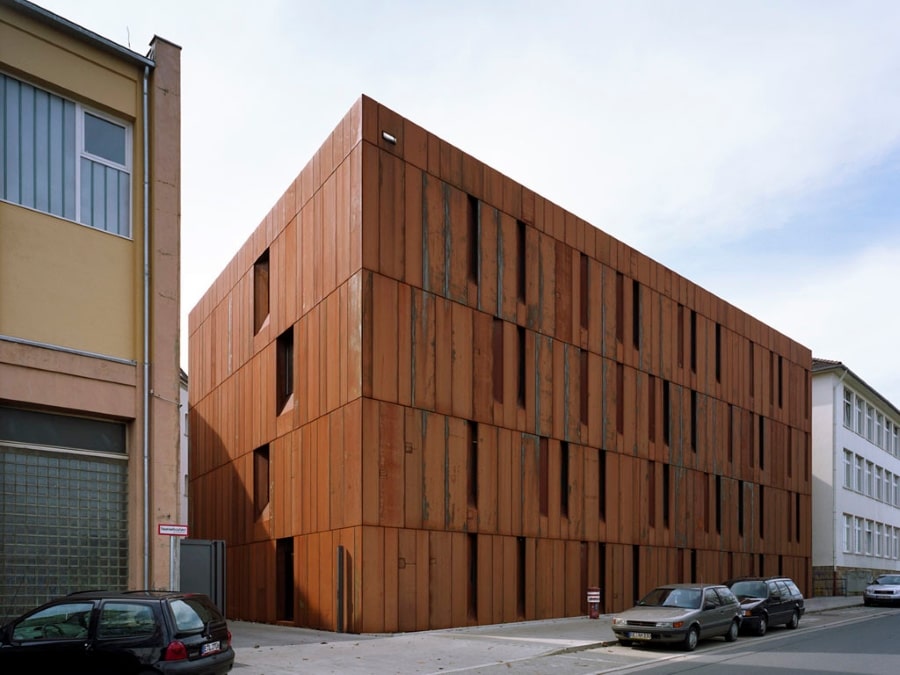
There's another reason Corten steel made sense for the Haus der Geschichte: it's a nod to the history and tradition of the Krupp works, one of Germany's largest metallurgical companies.
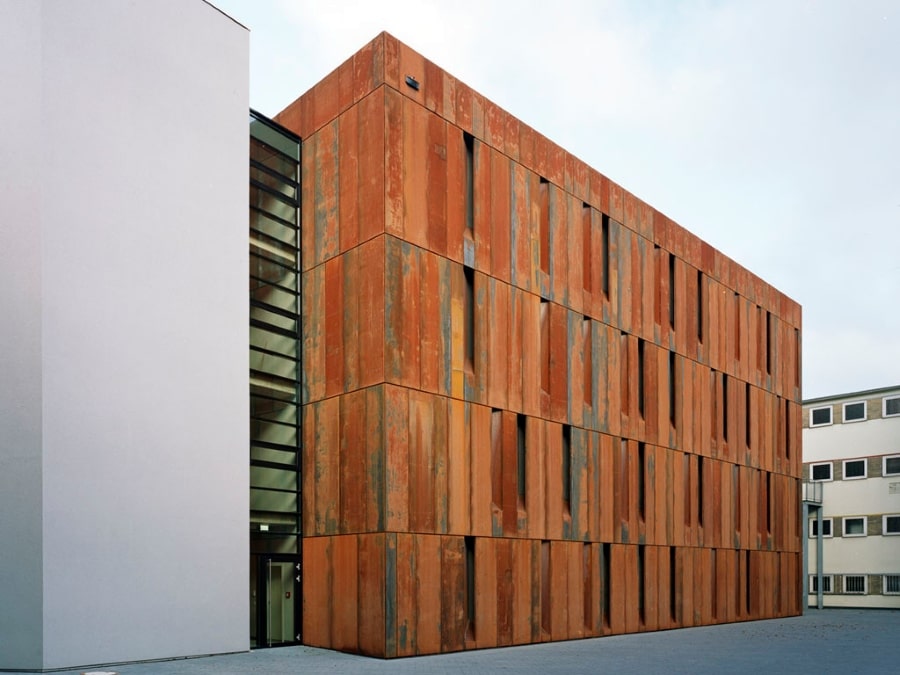
Oddly enough, the rust on the facade reads as genuinely attractive. Varying degrees of corrosion set the building apart from its neighbors and give it real visual presence.
The Haus der Geschichte is a four-story building holding decades of history, safely stored on mobile shelving units. The design skipped mechanical air conditioning entirely in favor of natural ventilation - refined, of course, for the purpose. Vents are positioned so direct sunlight can't enter and overheat the building, with smart controls regulating the window openings.
To stabilize interior humidity, the walls and ceilings were treated with highly hydraulic lime. Maintaining a specific microclimate matters enormously here, since it's what keeps the archived documents intact - the oldest of which dates back to the 13th century.
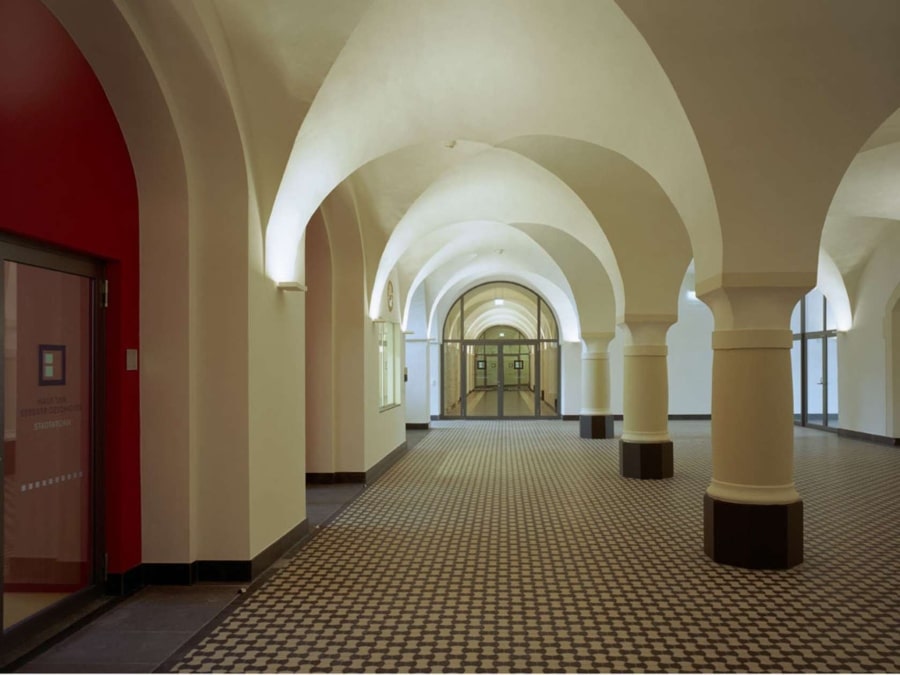
Every room in the building was restored and repurposed for museum use. The former school now houses a state library, a conference hall, and the archive's administrative offices.
A Rusted Facade on a Major Shopping Center, Minsk (Belarus)
Energy efficiency and natural materials were the core brief for architecture firm Green City on this project - despite the name, greenery has nothing to do with its look. Aside from a few decorative touches, there's no visible plant life on the facade at all.
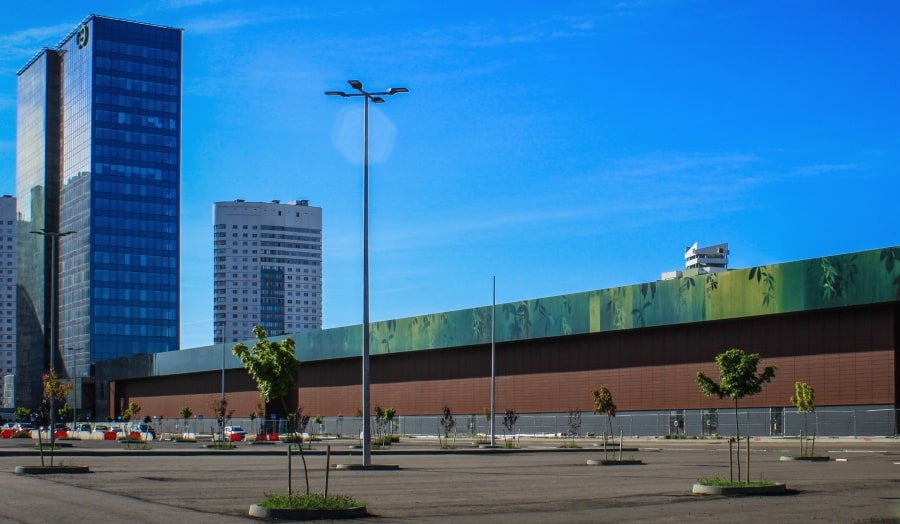
The client initially requested a glass facade, but discussion made clear that glass wouldn't hold up against severe cold, and its performance would degrade over time. To meet the energy-efficiency brief, the architects proposed a solid, windowless facade for the boutique zone instead.
That raised the obvious question: what material? Wood was the first idea - Scandinavian countries use natural wood extensively, and it holds up well in cold climates while aging gracefully. But wood was ultimately rejected on fire-safety grounds. After an extended search for the right material, the architects settled on steel - specifically, a rusted-steel facade.
The remaining step was sourcing the material from Finland's Ruukki, one of the established producers of weathering steel. The technology's defining feature is that the rust itself functions as a protective layer. The material arrives clean, gets treated by Ruukki, and only then is each panel mounted to the facade.
How Weathering Steel Works
Weathering steel, often known by the trade name Corten, contains small additions of copper, chromium, and nickel. As it is wetted by rain and dries again, a dense oxide layer forms on the surface and slows further corrosion. That patina needs repeated wet-dry cycles to develop properly, so the steel performs poorly wherever water sits.
What to Get Right in the Design
- in the first years, rust-stained runoff will mark paving, stucco, and glass below unless drainage is planned;
- details should keep water from collecting in joints and on horizontal surfaces;
- near salt water, and in climates that stay damp without drying, the protective patina forms less reliably.
Around Seattle, with long damp winters and salt air near the Sound, weathering steel works best on well-drained, vertical elements away from the shoreline. For other metals that age well, see our articles on copper buildings and RHEINZINK titanium zinc, and our material selection service.
FAQ
Does Corten rust all the way through? No; when properly detailed, its dense patina protects the steel from further corrosion.
How long does the patina take to form? Usually from a few months to a few years, depending on climate.