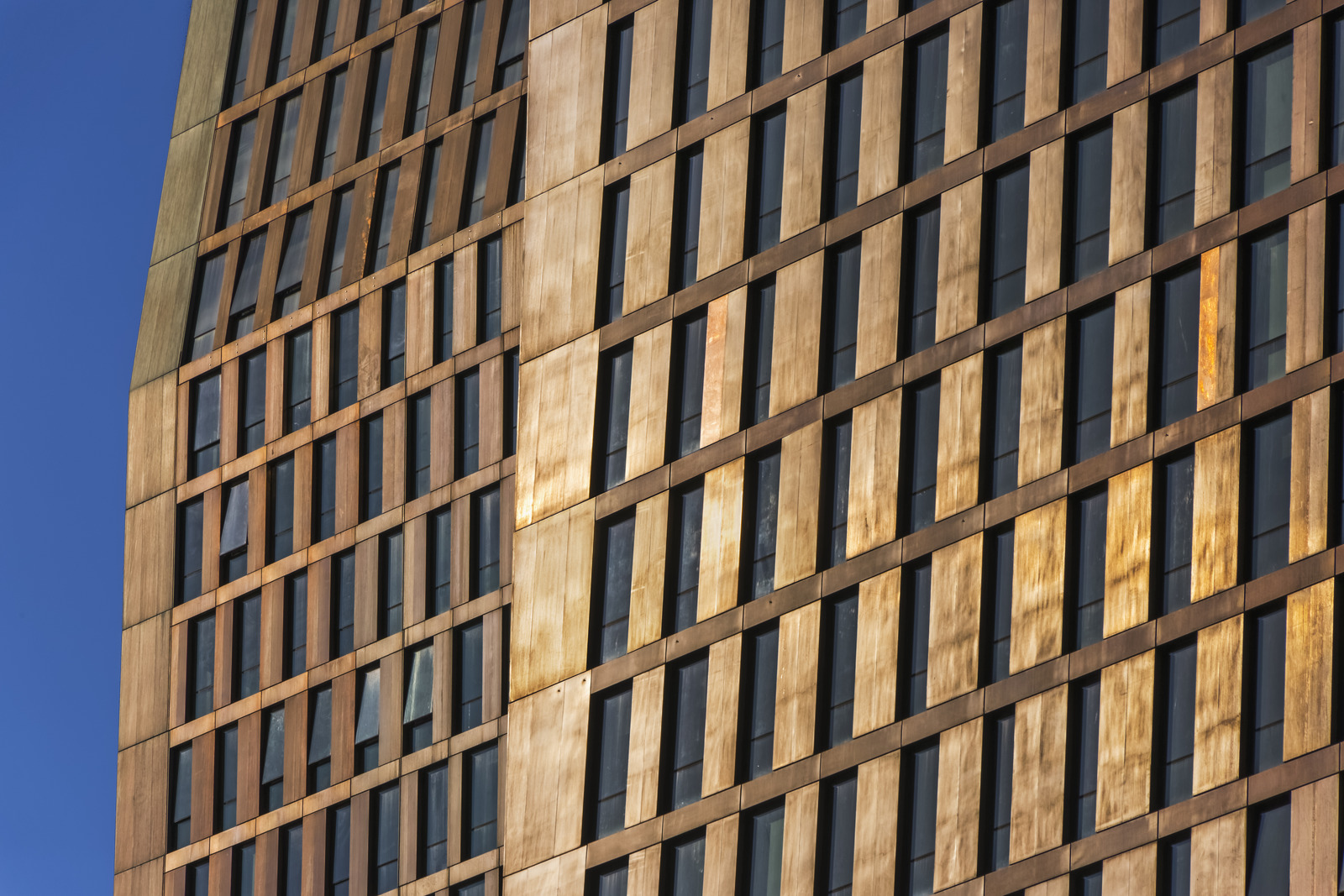
Copper buildings become the hallmarks of the cities they stand in. Copper lives alongside us, aging with dignity - the metal patinates over time, and much like counting the rings of a felled tree, its shifting color can tell you roughly when a building went up.
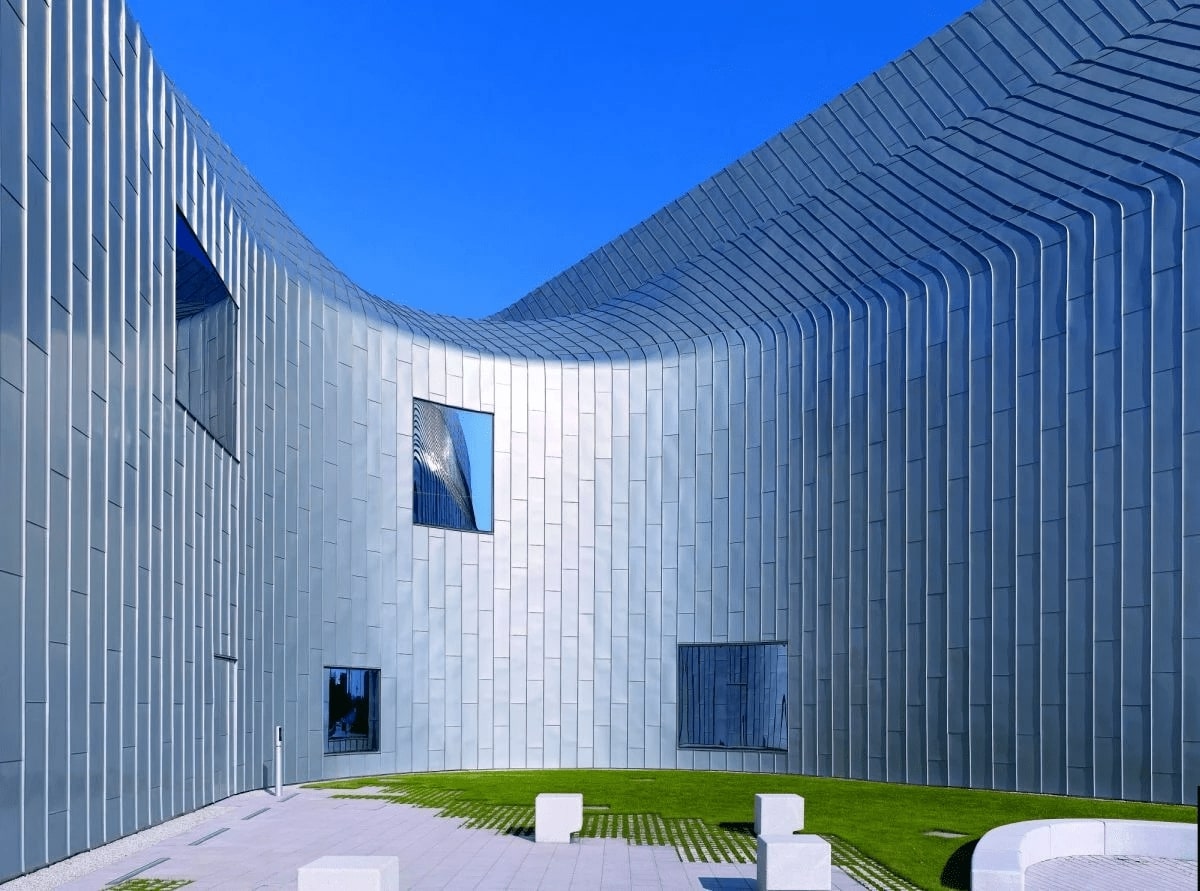
We're drawn to this kind of architecture, and it's a material philosophy we've brought to our own work - several deZZign projects, including a rusted-steel facade we're preparing to unveil in Kharkiv, take a similarly patina-forward approach to metal cladding. Below are a few of the examples from around the world that first got us thinking this way.
The American Copper Buildings
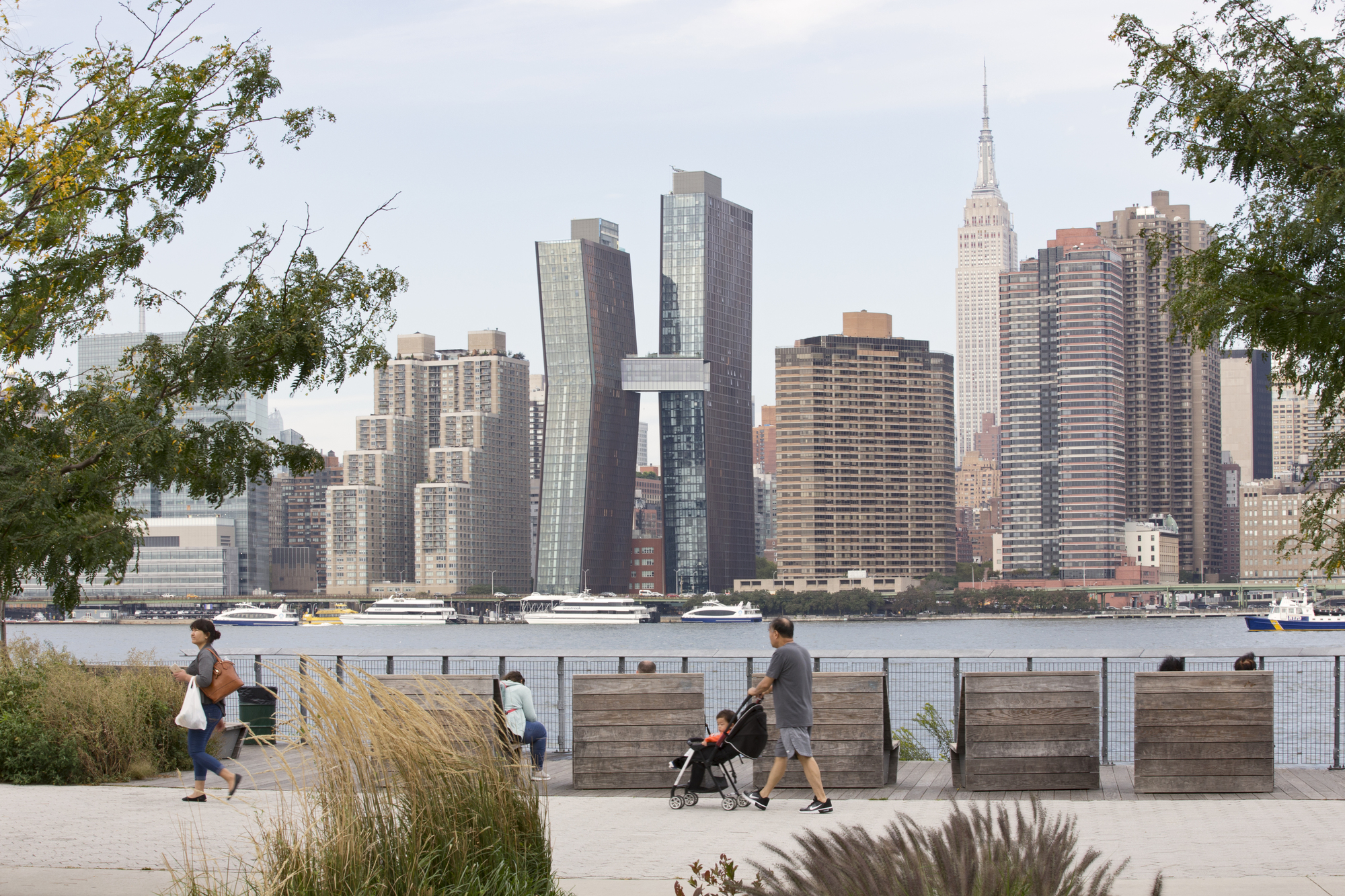
American architecture firm SHoP Architects has completed construction on twin towers in Manhattan - technically two connected skyscrapers in New York, USA. Both are clad in copper and finished with curved silhouettes, joined by a suspended bridge more than 90 meters above the ground.
The Copper Buildings, as their architects nicknamed them, sit on First Avenue and 36th Street along the East River. Facing the two towers required as much as 4.25 million pounds of untreated copper - and beyond the unusual cladding, the skyscrapers' curved profiles are just as atypical for the neighborhood.
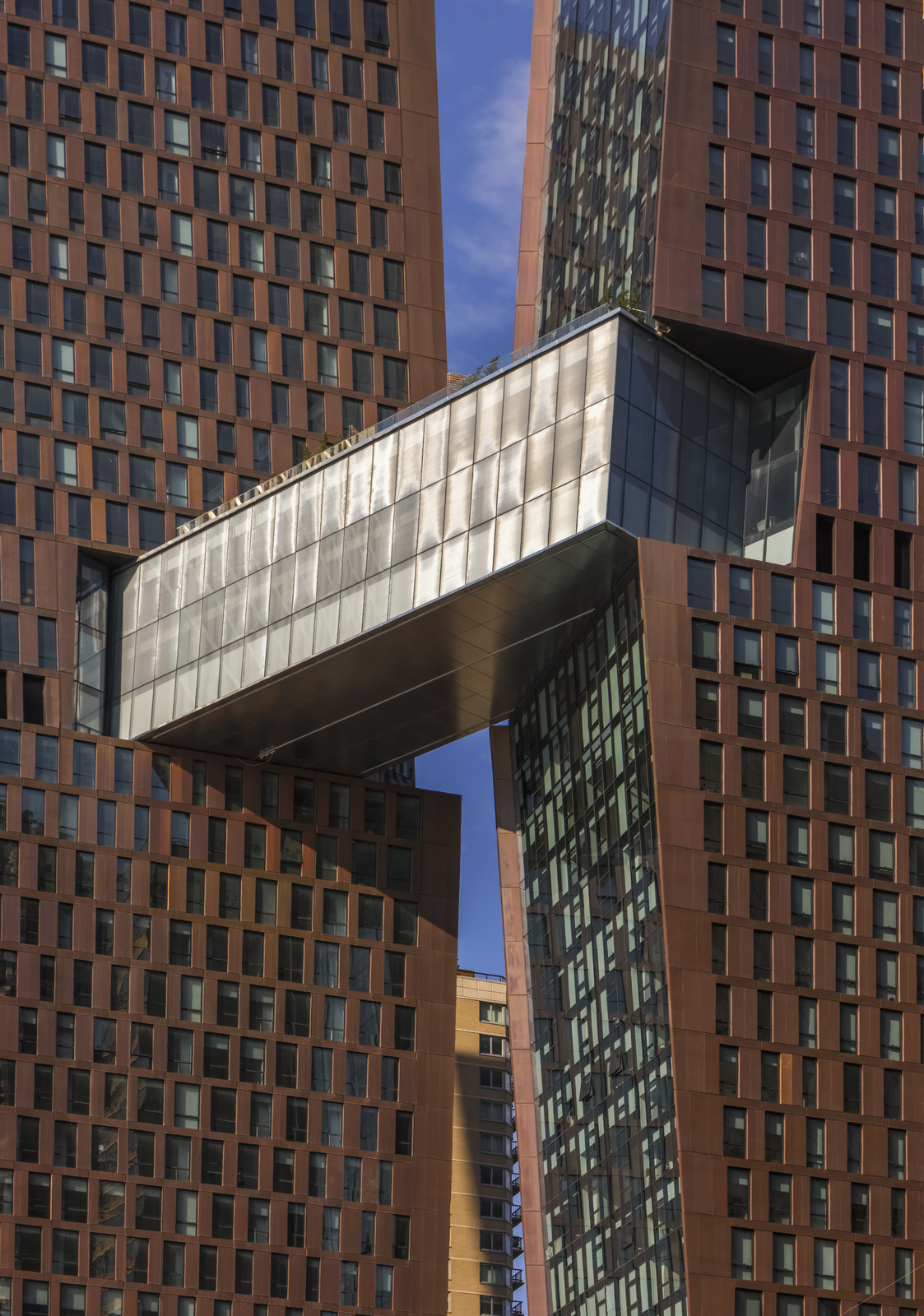
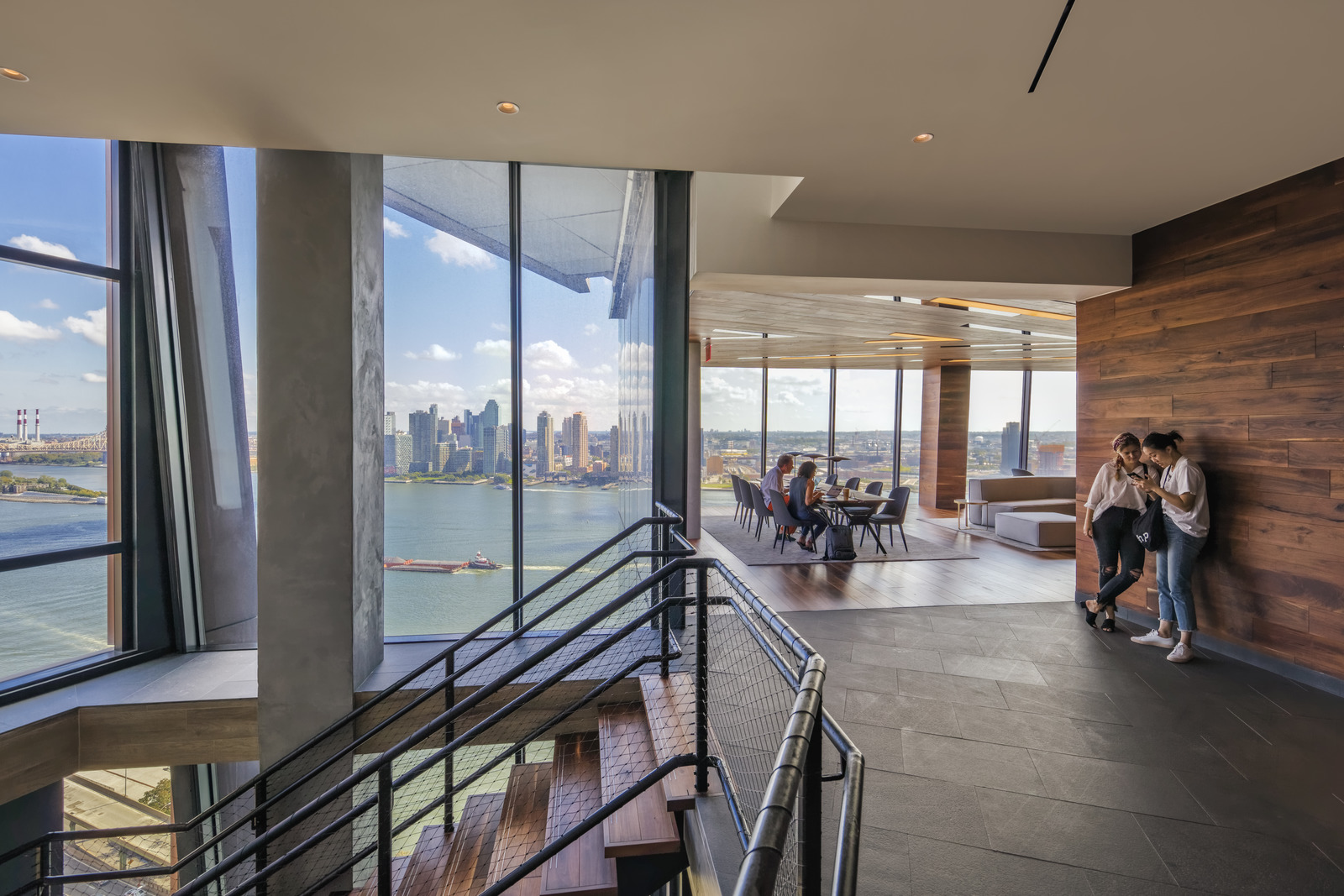
The "Sky Bridge" connecting the two towers houses an indoor pool, massage baths, a bar, and a lounge area. The buildings themselves are residential - apartments for sale and rent with sweeping views - and each tower includes a two-story fitness center with a climbing wall, yoga studios, spa treatment rooms, a Turkish marble hammam, a small auxiliary pool, a kitchen, a bar, and a children's playroom.
The apartments' oversized, naturally premium windows open onto the Empire State Building, the East River, and Manhattan itself. SHoP co-founder Gregg Pasquarelli noted, even at groundbreaking, that the decision to clad the towers in copper was inspired by the Statue of Liberty just across the harbor.
These towers bring an extra layer of dynamism to what's already the most dynamic metropolis in the world.
Copenhagen's Architectural Dominant, in Copper
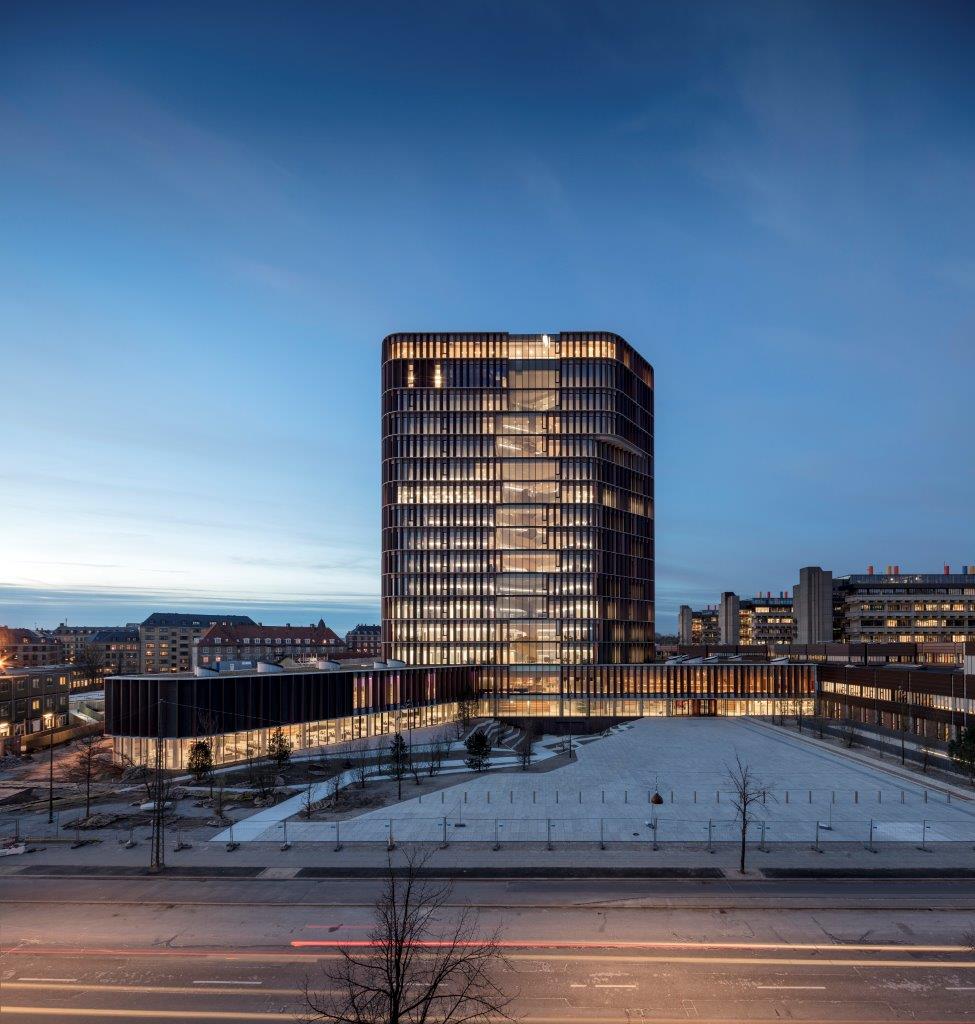
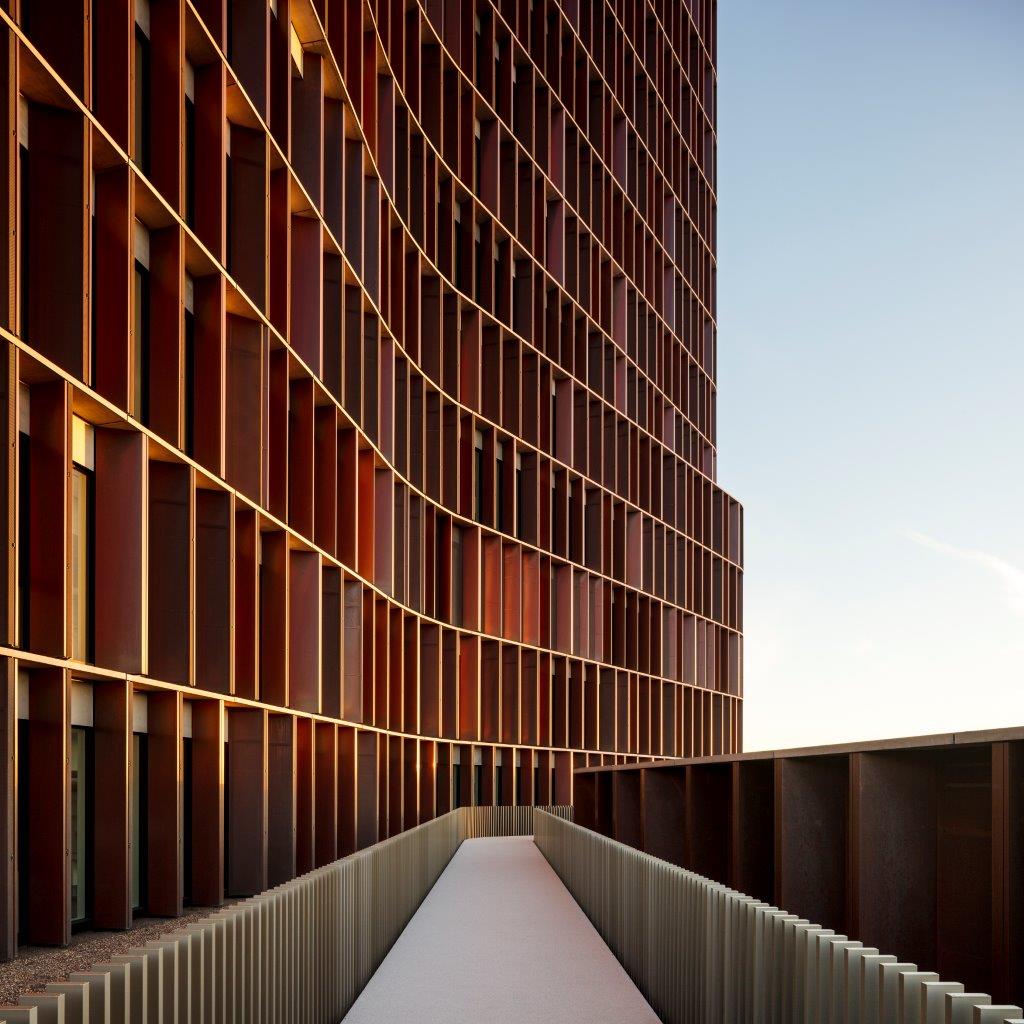
In Copenhagen, Denmark, a new copper-clad Maersk Tower has become the University of Copenhagen's new architectural dominant - and, doubling as an ultramodern teaching and research center. The 42,700 sq m building was designed by C.F. Møller in a distinctly unusual style.
The choice of form and material was dictated by a design brief that had to hold a dialogue with its surroundings rather than contradict them - including the copper-clad spire of Skt. Johannes Kirke and the existing university complex at Panum.
TECU(R) Classic_bond and TECU(R) Classic_mesh were selected for the building's intricate facade, fitted with precisely-shaped window openings. The facade elements are triangular, built from 7 distinct "contours" that became the basis for individually customized solutions across all 15 floors. The copper elements were fabricated at the factory and skillfully installed alongside the rest of the construction work, producing a striking copper skin for a building that's become a new architectural dominant - not just for the university, but, we'd argue, for Copenhagen itself. Copper is a notably reactive metal, so preventing corrosion in the surrounding materials and frame beneath the cladding required serious engineering and some genuinely atypical solutions for the contact materials involved.

Copper buildings and facades like these are steadily gaining ground, and they consistently become part of what makes a city visually distinctive. A building like this isn't just a landmark - it's the result of some genuinely complex engineering decisions. In an upcoming article, we'll look at one of Norman Foster's most interesting projects: a building with a copper facade of its own.
If patinated metal is a material story you're drawn to, it's worth noting that copper isn't the only metal that ages into character - our piece on rust-finished facades covers Corten steel projects with a very similar design logic. And if you're curious where this material philosophy shows up outside architecture, our piece on Art Deco covers the movement's own love of aged, oxidized metal - the Chrysler Building's iconic crown, one of Art Deco's most recognizable silhouettes, chosen specifically for how it would age.
More on this from our practice: Copper Hall. Exterior.
How Copper Ages
New copper shines salmon-pink, darkens to brown within months, and over the years develops a green patina as moisture and air act on it. The speed depends on climate: in damp, marine air the green appears within years, while in dry climates copper can stay brown for decades. Around Puget Sound, frequent rain and salt air from the water push copper toward green faster than in drier parts of Washington. If you want a particular color from day one, manufacturers offer pre-weathered copper in brown or green.
What to Get Right in the Design
- keep copper separated from zinc, aluminum, and galvanized steel with isolating layers to prevent galvanic corrosion;
- plan drainage carefully, since runoff from copper can stain stone and stucco green;
- copper costs more than zinc, but it can last well over a century with almost no maintenance.
For more patinated metals, see our article on RHEINZINK titanium zinc.
FAQ
How long does copper take to turn green? From a few years in wet, marine climates to several decades in dry ones.
Can copper be kept shiny? It can be lacquered, but the coating needs renewing, so most architects let copper age naturally.