3D Visualization of a Design Project Saves Time and Budget
When ordering a design project, it is difficult to imagine the final result based solely on drawings and sketches provided by the designer. To visualize the future look of the space, one needs a good imagination and experience. Only then is there a chance that the image or rendering of the project will accurately "fit" into the space.
An error in visualization can be very costly, not just in money but in additional work for visualizers, which is far from cheap. This is assuming that changes are even possible at the final stage. Otherwise, one would have to settle for what has been produced or start all over again. That's why it is crucial to determine the concept and references (examples) at the earliest stage.
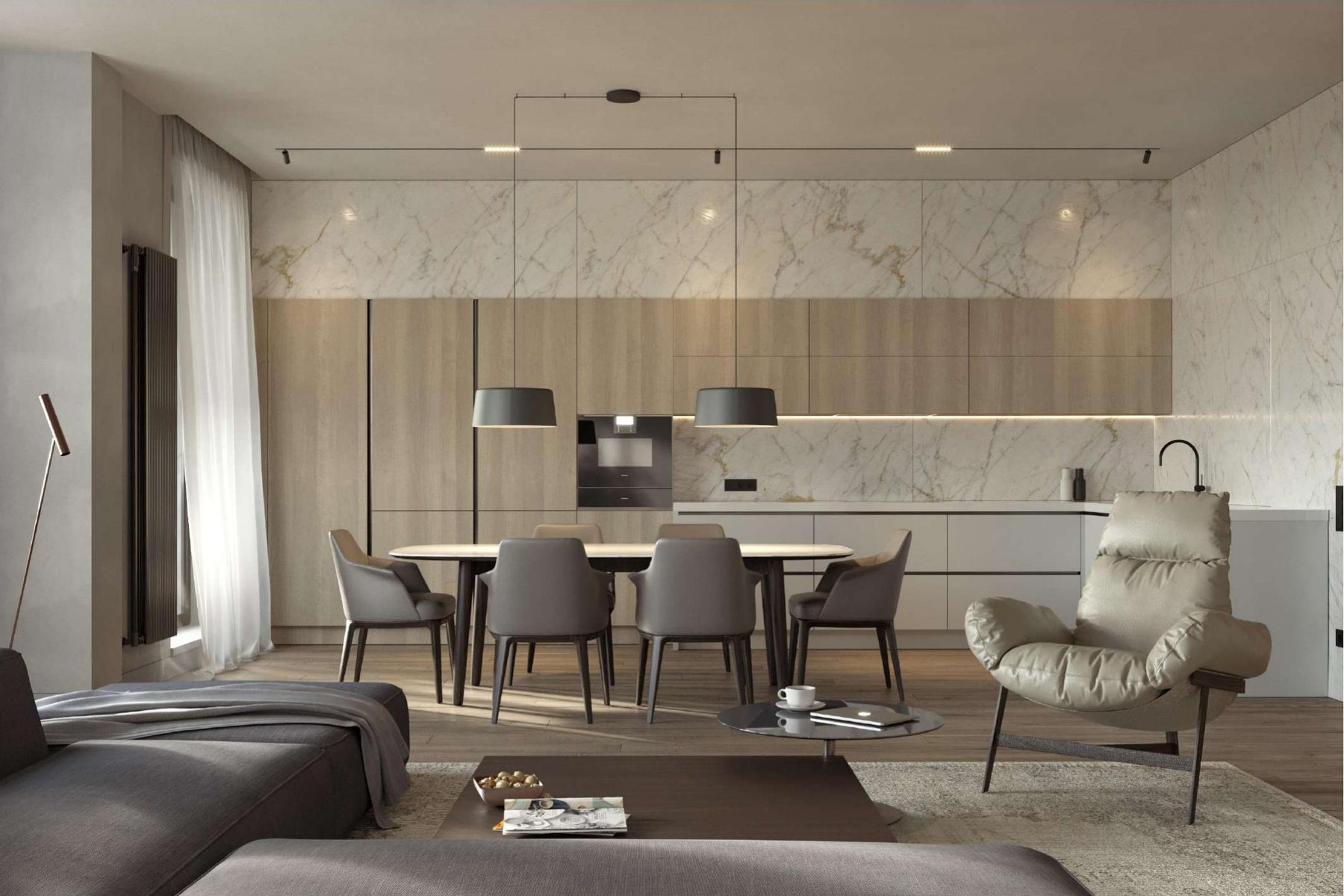
To avoid such situations, there is a tool that helps combine visualization and provide it in the form of realistic images: 3D visualization. It can save you from unnecessary costs and allow you to see the finished project even before construction/renovation begins.
The purpose of 3D interior visualization
3D interior visualization is performed by an experienced specialist who can recreate a specific space in a three-dimensional model using shape and color. A 3D model is useful for any space, but it pays off most in larger homes, open-plan layouts, and offices, where the cost of a mistake is highest. It's a good way to see how selected materials, decor, furniture, and overall environment blend together. The result of the 3D model can be adjusted according to the client's expectations.
It is important to remember that 3D visualization aims to recreate a real living and working space. It's not advisable to rely solely on the designer. While an experienced specialist can "draw" a beautiful and functional space, it is difficult to anticipate how well it will align with the client's expectations. That's why it's essential to carefully plan every detail before starting the work and to thoroughly check the layout from A to Z.
In cases where the specialist lacks sufficient competence (which often occurs in small firms or when prices are low), they may immediately start working without asking unnecessary questions. Such eagerness may be appealing, but as mentioned before, the project is likely to be unsuitable for implementation. This is especially important considering that it is necessary to consider not only the texture and material but also the "depth" or, in construction terms, the "material layers." This approach is often used by inexperienced designers trying to attract clients, and unfortunately, many people fall for the low price.
As an example, here are some errors from a real project provided by a young specialist:
Poor placement and inadequate calculation of the number of lighting fixtures. With only two windows in the office space, they won't be able to illuminate the entire area. As this is an office setting, such an error is critical. Always rely on lighting calculations.
Incorrect calculations of ceiling height. The project suggested adding a wooden structure to the ceiling without considering that the height is insufficient.
Failure to consider the "material layers" of the floor and walls, resulting in the bathroom not fitting properly.
A beautiful staircase turned out to be impractical due to excessively high costs and maintenance expenses.
We propose three stages to go through before starting 3D visualization. This will help create a space that is comfortable to work in and enjoyable to be in.
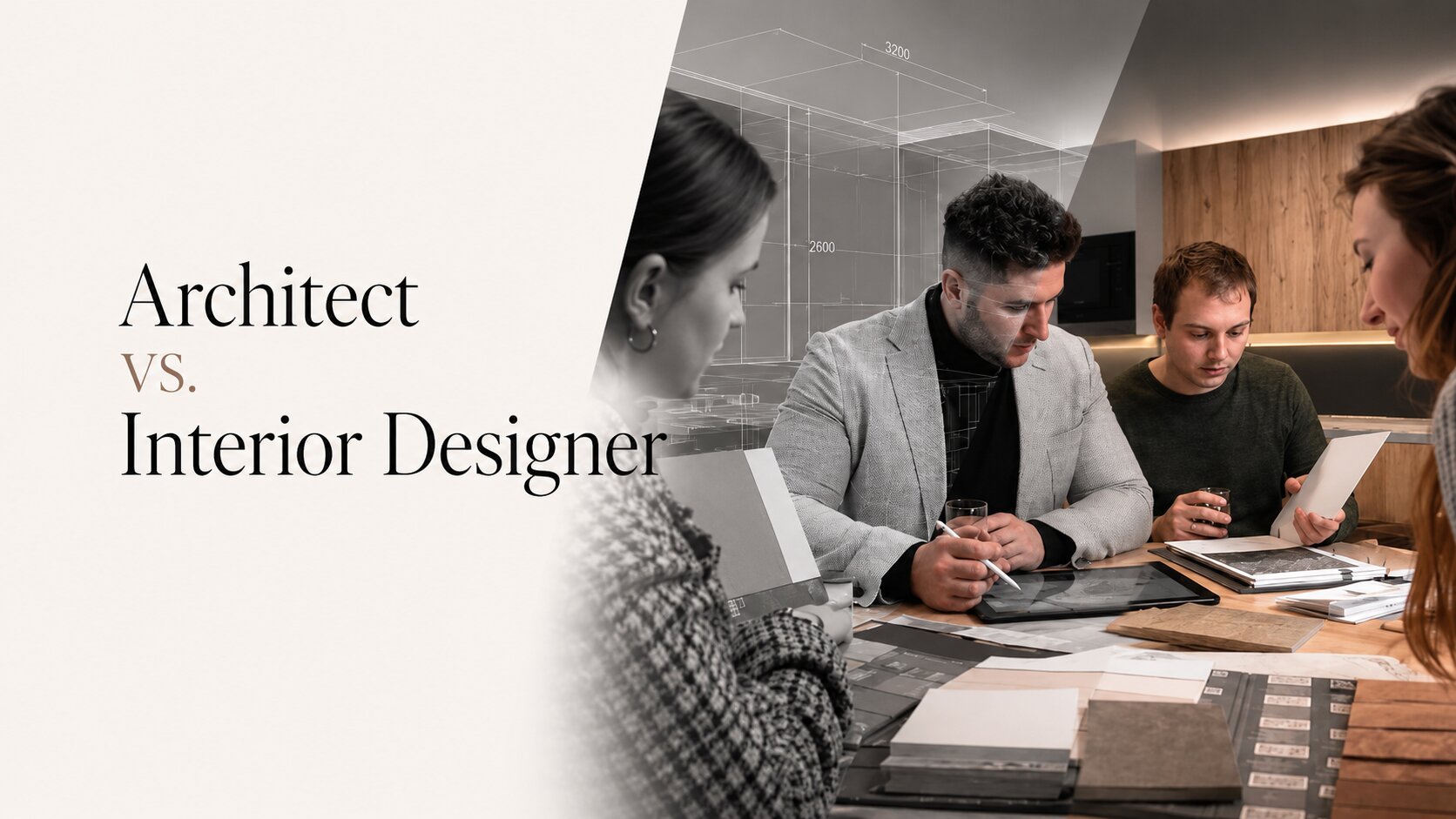
First: Fill out the technical assignment with our designer.
We always create reference albums based on your preferences and desired ergonomics. We also suggest answering all (or most) questions regarding materials and functionality together. Take measurements of the space, which, in the case of Author's Support, should be done multiple times to supervise the work of builders.
Second: Coordinate and approve all plans for furniture layout and space division. Check all "material layers," coordinate and select materials and furniture dimensions.
Third: Consider and discuss the comprehensive concept of the future office/apartment/house/building with deZZign specialists.
After the discussions and concept development, we provide you with:
Collages and color schemes - coloristics.
Ceiling and floor plans that indicate all materials and lighting fixture placements.
Samples of selected materials.
Sketching and prototyping.
Reference album.
Furniture layout plan.
Sketches of main areas.
During this time, designers will already start working on 3D visualization.
The approved documentation and visualization will subsequently become supporting elements for contractors who will be implementing the project. This reduces the risk that the end result will not match the original intent.
Alternatives to 3D Visualization of a Design Project
If there is no opportunity to dedicate time to 3D visualization, there are other options for creating a spatial model.
Sketch or Collage Visualization. This option involves combining ready-made images of interior objects. This method provides a general understanding of how the interior will look in the end.
Sketch. The simplest option, where the designer sketches the space without showing colors and textures. It is usually difficult to understand from a sketch how a specific print will look or how color schemes will harmonize. 3D visualization works best for displaying these details.
For photorealistic images, designers most often use 3ds Max with the Corona or V-Ray renderers, while real-time tools such as Twinmotion, Enscape, or D5 Render are used for quick walkthroughs of the space. As a result, the client can receive a photo-like image of their space after all the work has been done, even before its completion.
The main advantage of 3D visualization is its realism. With a detailed 3D model, one can examine every detail, see the texture of all materials, and assess the true colors in the interior.
How 3D Visualization of a Design Project Helps Achieve Idea-Result Alignment
The main goal of a design project is to align the concept with its implementation. Unfortunately, there are cases where even the use of 3D visualization may not prevent errors in the final result. This can happen for several reasons:
Color Reproduction: Different devices often display colors differently. For example, on a computer, it may appear as a rich dark green, on a phone as green, and in reality, it may be an entirely different shade.
Decor: Typically, when creating visualizations, decor is necessary to complete the image and create a cohesive interior. During project implementation, decor becomes the final stage. Therefore, it often relies on the already completed interior, disregarding the visualization. As a result, minor details can slightly alter the appearance of the project.
Additionally, there are cases when a designer needs to meet a deadline, but the previously selected decor elements are not yet available. This requires improvisation and finding alternative options, which also affects the result.
However, there is no need to worry. Changes in a project are an integral part of the work. Any discrepancies with your expectations can be discussed and compromises reached. To avoid misunderstandings, it is essential to remember two essential stages: procurement and author's supervision.
3D Visualization of an Office: Briefly about the Key Points
To achieve the desired result, it is important to follow a sequence of actions and observe certain rules. Do not neglect filling out the technical assignment and discussing your expectations with the designers.
Mind that discussions and planning in interior design increase the chances of achieving the result exactly as you envisioned it. If you do not participate in the discussions, you may end up with a beautiful but overly expensive project. Alternatively, you may receive a project that is impractical for your space.
For convenience, we have compiled a list to help you achieve exactly what you want for your office interior:
Involve deZZign designers at the stage of choosing the premises.
Coordinate and approve all plans.
Discuss the overall space concept.
Request 3D visualization.
Receive feedback in the form of drawings.
Trust the specialists.
3D Visualization in 2026: What Has Changed
Today a client doesn't just receive a set of still renderings; they can "walk through" their home. 360-degree panoramas open on a phone, and real-time walkthroughs and VR headsets let you feel the ceiling height, the width of a hallway, and the scale of the furniture. Generative AI helps explore moods and color options quickly at the concept stage, but it doesn't replace an accurate 3D model: an AI-generated image knows nothing about real dimensions, materials, or construction details, so nobody can build from it.
Visualization for Seattle-Area Projects
Renderings are also practical tools here. Exterior renderings help neighbors and design review boards understand a project, and in Seattle some projects go through design review where the massing and materials have to be presented clearly. For remodels and additions, a 3D model built from accurate measurements of the existing house shows how new spaces connect to old ones before any wall comes down. We use visualizations alongside construction documents throughout project support.
Frequently Asked Questions
How many views does one room need? Usually two to four, enough to see every wall and the main zones. Complex spaces may need more, or a 360-degree panorama.
Can changes be made after the renderings? Yes, revisions are a normal part of the process, but the earlier the concept and references are agreed, the fewer rounds you need.
Do I still need drawings if I have great renderings? Yes. Renderings show what the space will look like; drawings tell the builders how to build it.
Related Reading
What actually belongs in the minimum drawing set for an interior design project
By following these stages, you will obtain an interior that fully meets your expectations and avoid wasting money. We will solve all your headaches and not only provide a high-quality design project and visualization but also bring it to life!
Renderings are only a third of a complete project. We walk through what else it includes, and which trade uses each sheet, using a real example: a 68-sheet interior design drawing set.