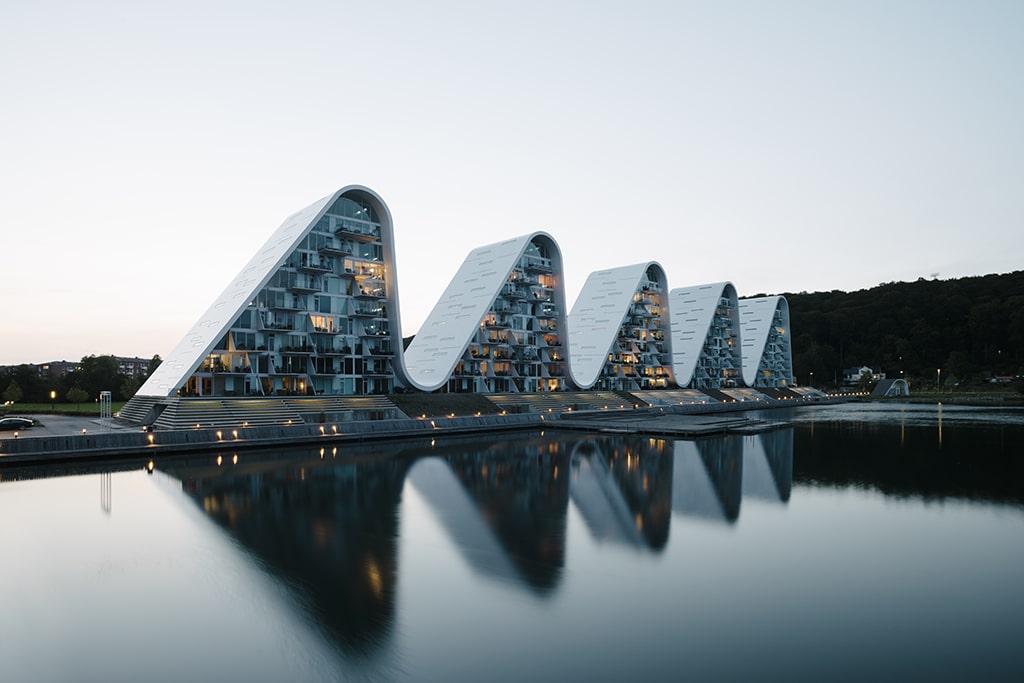
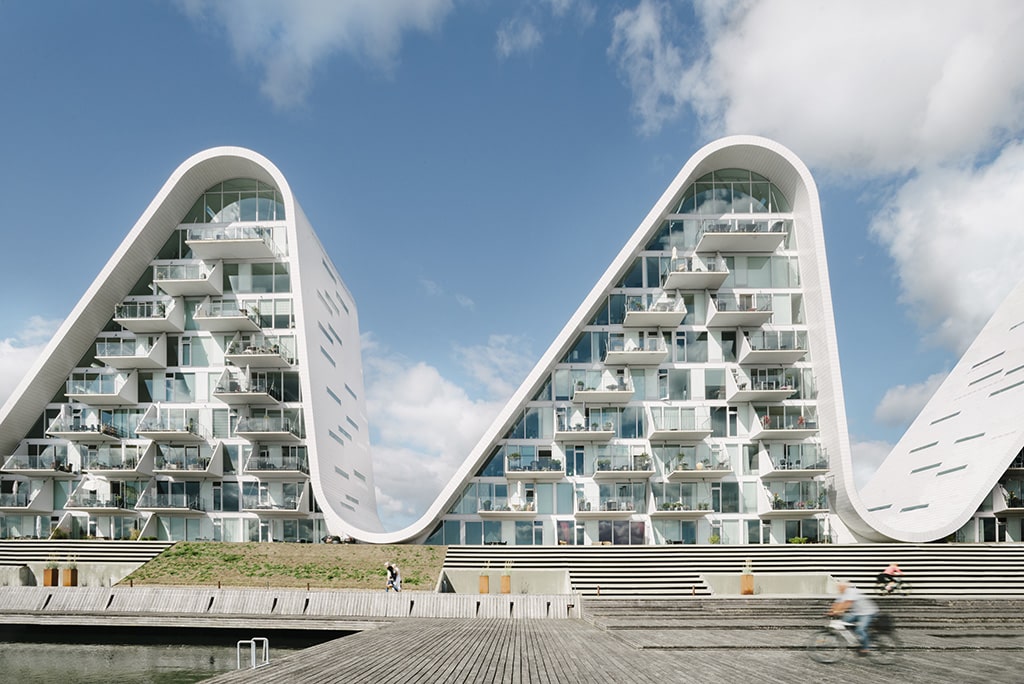
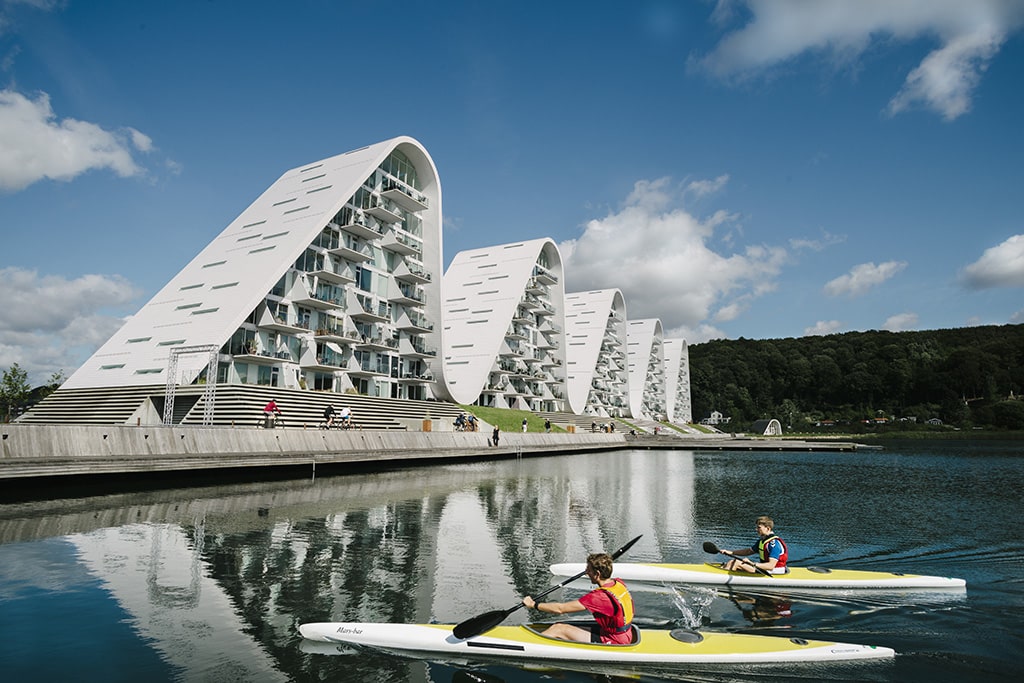
In the port city of Vejle, Denmark, a new residential complex called Wave has appeared on the shores of the fjord it takes its name from. Construction started in 2006, but the first two of the five towers were finished in 2009, and then the financial crisis stopped work. Construction only restarted in 2015, and the last three towers were completed in 2018. Danish firm Henning Larsen Architects has now announced the project is finally complete.
Wave has already become an important architectural landmark for the city - the project picked up a couple of architecture awards even before it was fully built. Nearby in the harbor stands Fjordenhus, the first building designed by artist Olafur Eliasson's studio; between the two, this stretch of fjord-side development has quickly become a destination in its own right.
Why the Shape
A building with this unusual form and clear water motif works as an intermediary between the city and nature. The architects drew inspiration directly from the surrounding landscape and hills - terrain that's distinctive to this particular stretch of coast but genuinely atypical for Denmark as a whole, where the land tends to be flat.
Scale and Layout
The complex covers 14,000 square meters across five nine-story towers. Altogether the complex holds 100 apartments, with two-level penthouses on the top floors. A white terracotta ventilated facade wraps the whole structure, unifying the five towers visually and creating the illusion of continuous wave-like movement across the building - but it isn't purely decorative. That "canvas" functions as a genuine canopy, shielding the recessed rooms and projecting balconies from weather. The final piece of the project was a fully developed promenade and pier, which handles both public water access and the site's broader civic role.
Waterfront Design Done Right
What makes Wave work as more than a striking silhouette is how deliberately its form answers to its site. A waterfront building has to solve for wind exposure, glare off the water, and the way a shoreline changes how light moves across a facade throughout the day - problems a standard tower elevation doesn't have to think about. It's the same category of design challenge we work through in our own waterfront home design projects: a strong site-specific concept only earns its place if it also holds up as a genuinely livable building, not just a photogenic one.
Awards Before It Was Finished
The first two towers won recognition right away: the Danish trade magazine Byggeri named them Residential Building of the Year in 2009, followed by an ABB LEAF Award for innovative architecture in 2012 and a Civic Trust Award in 2013. It is rare for an unfinished project to collect prizes while its city waits years for the rest of it.
Lessons for a Home on the Water
- Let the form answer the place. The Wave echoes the hills around the fjord, so it reads as natural rather than as an arbitrary gesture.
- Make the facade work. The white terracotta skin unites the towers and also shelters balconies and recessed rooms from wind and rain.
- Treat the shoreline as part of the project. The public promenade and pier made the complex part of the city instead of a closed enclave.
Around Puget Sound and Seattle's lakes, the same lessons apply: plan for wind, rain, and glare from the first sketch, and check shoreline rules and setbacks before buying the lot. See our waterfront home design service and our article on the architecture of Lake Tapps, where the shoreline itself is managed by engineers.
FAQ
How many apartments are in The Wave? 100 apartments in five towers, about 14,000 m² in total.
Who designed The Wave? The Danish firm Henning Larsen Architects.