One of the most important parts of your future home is its roof. Today the market offers roofing systems for every need and budget, and each type has its own strengths and weaknesses, which are discussed when the design brief for the house is written. The type of roofing determines the design of the roof structure, its thermal performance (heat loss), sound insulation, the look of the house, and how it behaves in use - reliability and ease of maintenance.
There are seven main types of roofing:
- ceramic (clay) tile;
- metal tile;
- copper;
- corrugated steel sheet;
- stone-coated composite tile;
- standing-seam metal;
- asphalt (bitumen) shingles.
The choice depends on the material's properties and structural calculations, cost and availability, and how easy it is to install and maintain.
Ceramic (Clay) Tile

Clay tiles come in a wide range of shapes, colors, and finishes, including natural fired clay, colored glazes, and engobes. Their service life is around 100 years. They are environmentally friendly, inert, quiet in the rain, and resistant to fire and frost. The big drawback is weight - roughly 40 to 60 kg per square meter - which demands a strong rafter system, walls, and foundation, and installation should be entrusted only to experienced roofers, which raises labor costs.
Metal Tile

Metal tile is galvanized steel sheet with a polymer coating, shaped to look like tile, usually 0.4 to 0.6 mm thick. It is roughly ten times lighter than clay, about 4 to 6 kg per square meter, durable, and affordable, and typically lasts 20 to 30 years or more depending on the coating. Its main drawback is noise in heavy rain unless the roof is well insulated.
Copper

Copper is one of the most premium and expensive roofing materials. It looks impressive and develops a patina over time, aging with real nobility. Its service life is well over 100 years: as copper oxidizes, the patina protects the metal for decades, if not centuries. The drawbacks are that it is hard to predict exactly how the color will change, it must be kept away from other metals to avoid galvanic corrosion, and the price.
Corrugated Steel

Corrugated or ribbed steel sheet is essentially a simpler, cheaper relative of metal tile, without the decorative transverse profile. It suits owners who value practicality, low cost, and durability over appearance, and it is among the fastest roofs to install.
Stone-Coated Composite Tile
Composite tile is a steel sheet, sometimes multilayer, coated with stone granules. It offers a long service life of about 50 years, moderate weight, and good sound insulation, but it is not the cheapest option.
Standing-Seam Metal

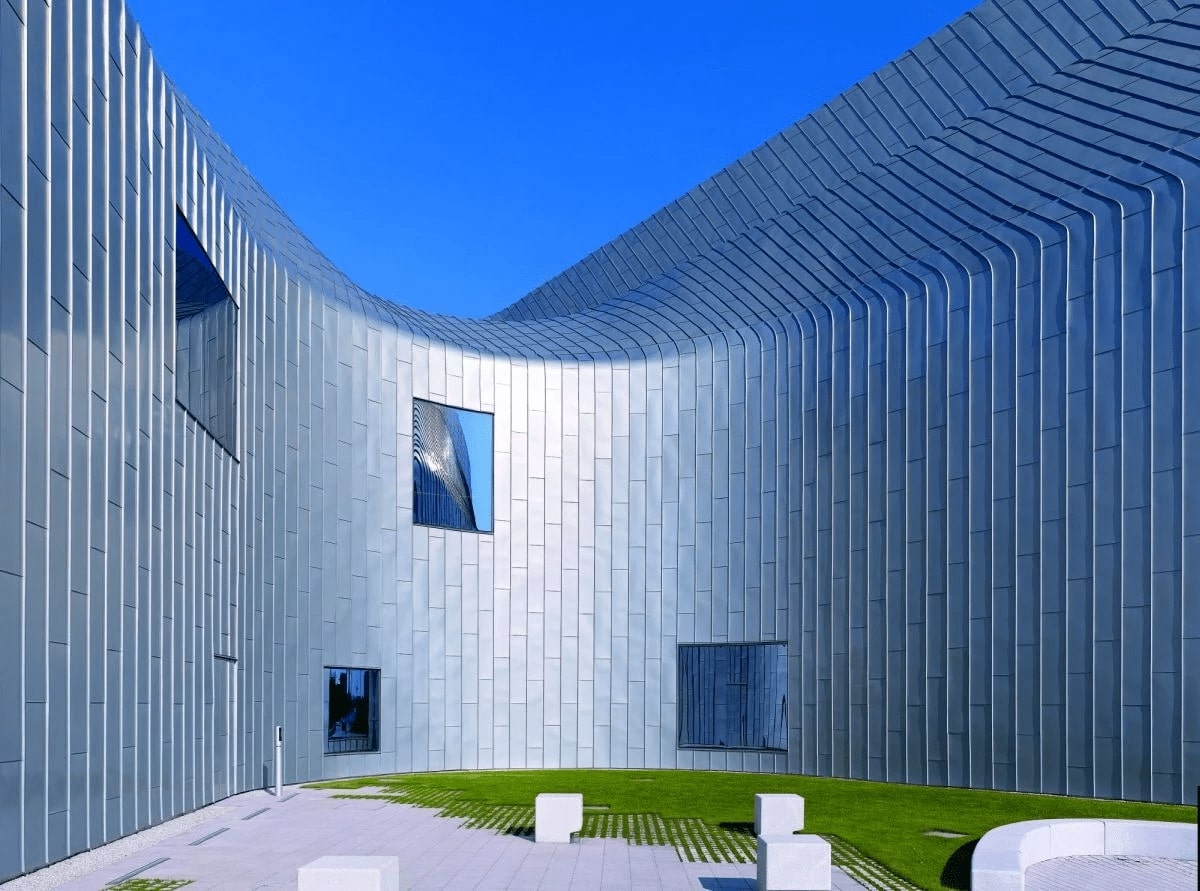
Standing-seam roofing is a premium system made from galvanized steel, copper, titanium zinc, or aluminum; copper and zinc are the longest-lasting. Flat sheets are joined by folded seams, and the system works on pitches down to a few degrees. Its weaknesses are limited sound insulation without proper underlayment and the need for careful detailing and grounding.
Asphalt Shingles
Asphalt (bitumen) shingles are flexible fiberglass sheets saturated with asphalt and topped with mineral granules. They are light, quiet, affordable, and suit complex roof shapes; they are installed on a continuous deck and usually last 20 to 30 years.
How to Compare Roof Options
- Pitch: clay tile needs steeper slopes, while standing seam and shingles handle lower pitches.
- Weight: heavy roofs need a stronger rafter system and walls, so the material should be chosen before the structure is engineered.
- Lifespan versus cost: a cheaper roof replaced twice can cost more than a durable one installed once.
- Ventilation and insulation: a well-ventilated deck and continuous insulation protect the attic from condensation and keep upper rooms comfortable.
Choosing a Roof in Seattle
In the Pacific Northwest, the roof's main job is shedding rain for nine months of the year. Asphalt shingles remain the most common choice, but metal and standing-seam roofs are increasingly popular because they shed water and moss well and last much longer. Whatever the material, good ventilation under the roof deck, ice and water barrier at eaves and valleys, and moss control are essential, and if you plan solar panels, design the roof structure and layout for them from the start.
In conclusion, the right roof depends on the design of the house, and the design depends on your wishes and brief. There is a wide range of materials and specialists today who can install a roof properly, so it will not worry you for many years. See also our articles on RHEINZINK titanium zinc and solar panels in Washington, and our custom home design service.