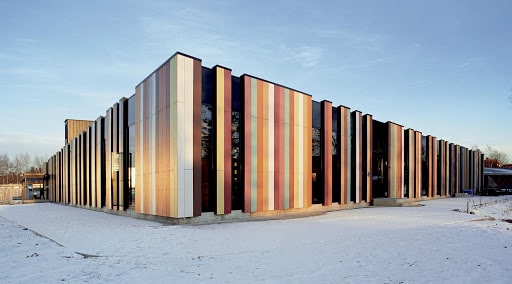
Fiber cement is a material used constantly in construction, made from cement, reinforcing fibers, and mineral fillers. Its two defining strengths are durability and flexibility. It appears most often in sturdy wall panels, cladding, and roofing, and its versatility means it rarely limits what a designer or builder can do.
An Invention From the Turn of the Twentieth Century
Around 1900, the Austrian engineer Ludwig Hatschek developed the first reinforced cement-based sheet material and patented it in 1901. He used asbestos fibers, which were widely available at the time, to fill a clear gap in the market: there was no durable, fire-resistant, lightweight building board. Hatschek owned an asbestos goods factory, where he spent years testing materials before arriving at something genuinely new, which he called Eternit.
The new material delivered what construction had been missing: it handled both high and low temperatures, it lasted, and its fibers let it withstand real structural stress. Production was relatively cheap, and Hatschek soon made roofing slates from it that were lighter, stronger, and more wear-resistant than traditional roof tiles.
The Move Away From Asbestos
Asbestos-cement was used worldwide for decades. From the 1970s, however, it became clear that asbestos dust is a serious health hazard. Asbestos is now classified as a proven human carcinogen, causing lung cancer, mesothelioma, and asbestosis. Europe moved away from it, manufacturers switched to asbestos-free formulas, and asbestos has been fully banned in the European Union since 2005; in the United States, the EPA banned the last form still in use, chrysotile, in 2024.
Because fiber cement was so popular, manufacturers did not abandon it; they replaced the fiber instead, testing more than 200 types of fiber and combinations. Cellulose, polyvinyl alcohol, aramid, and similar fibers won out, preserving the reinforcing properties without the health risk, and modern fiber cement contains no asbestos.
Where It's Used Today
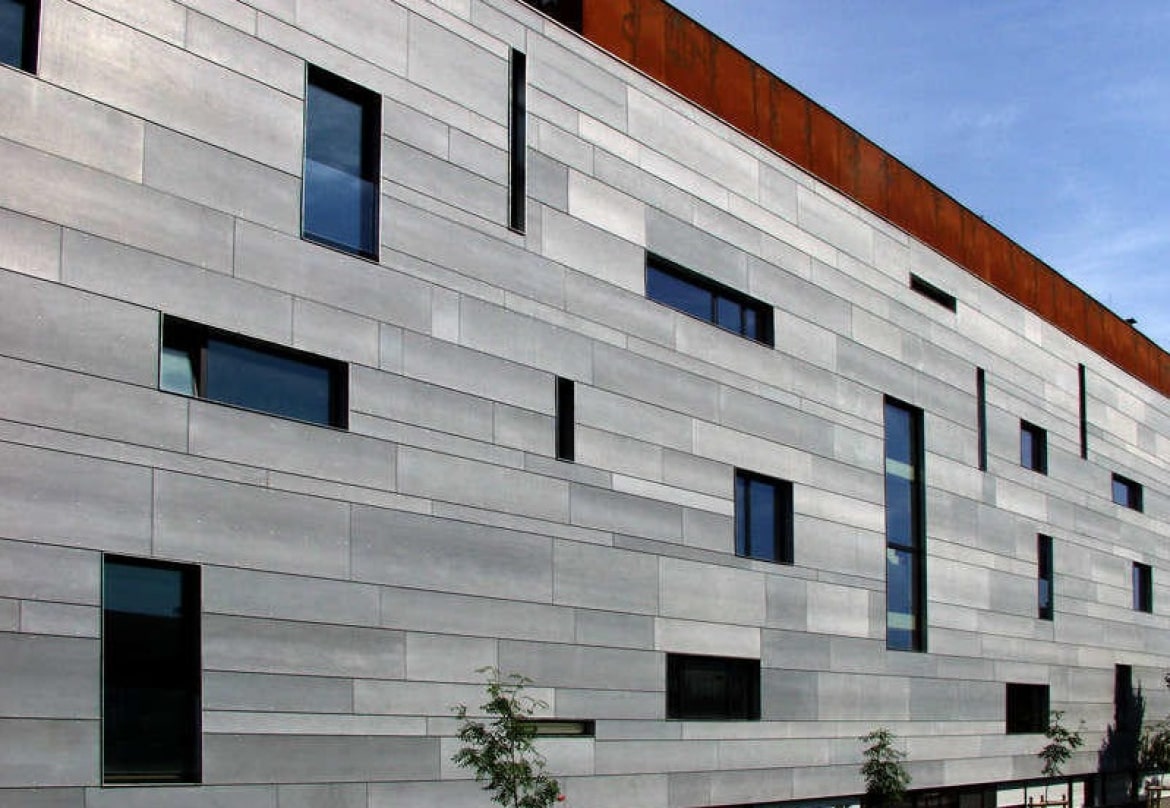
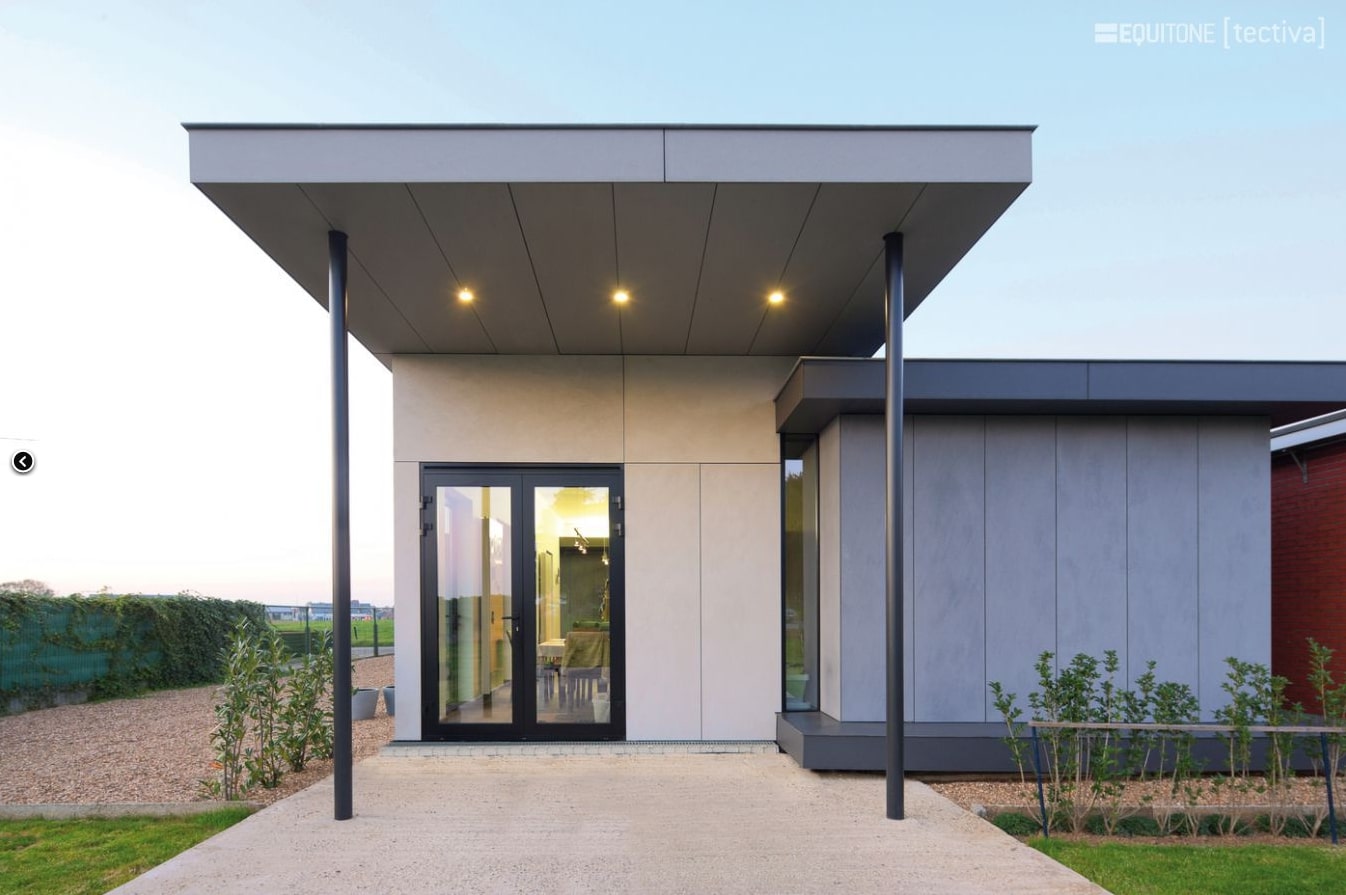
Fiber cement panels appear across construction and industrial projects, used by builders as well as architects and designers. Because they tolerate a wide temperature range and do not burn, they suit humid or fire-sensitive spaces. The micro-porous surface lets water vapor pass rather than trapping it inside walls.
Ventilated Facades and Siding
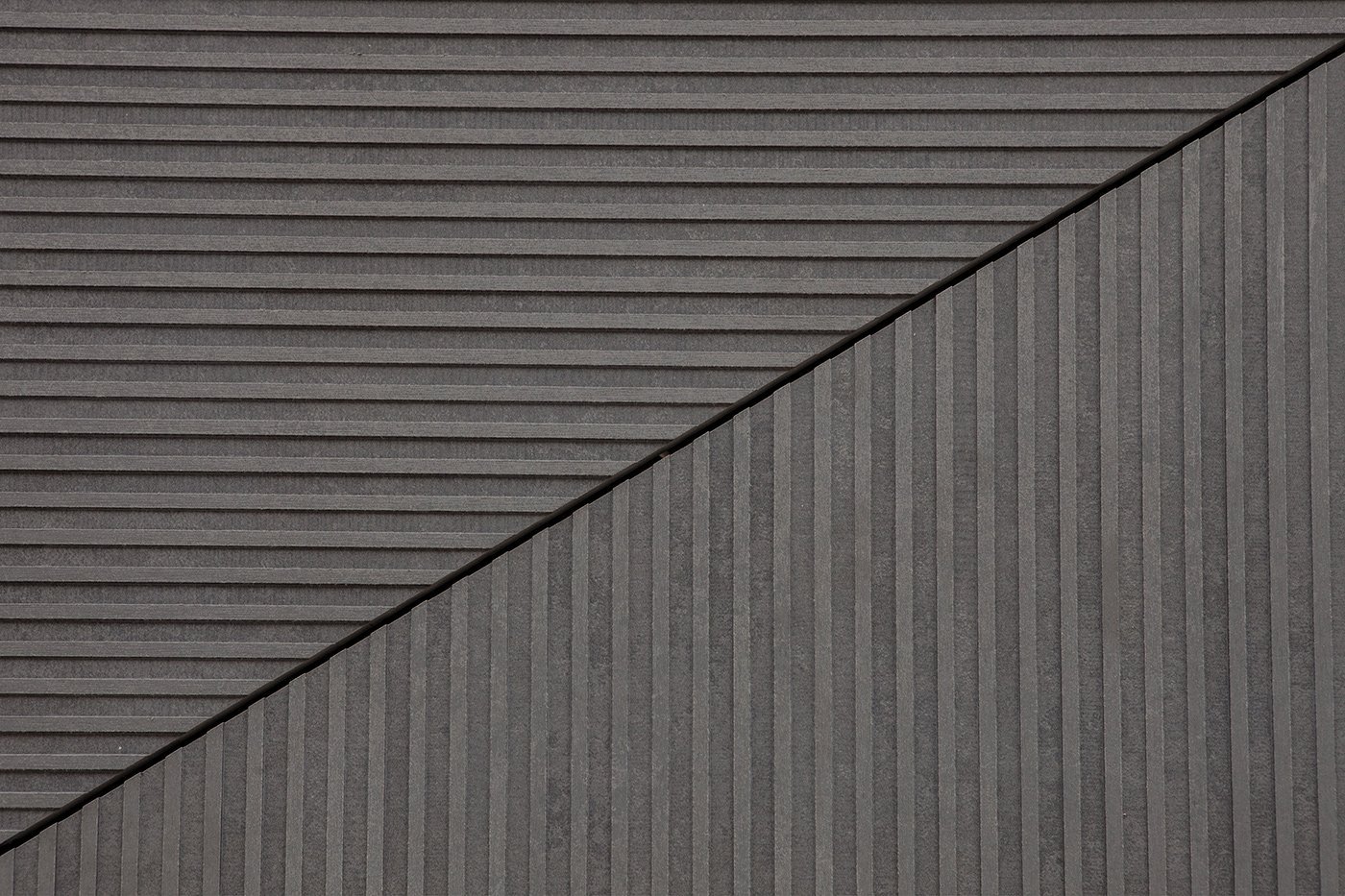
Fiber cement panels are a common choice for ventilated facades, which combine a metal or timber support system with decorative panels, with or without insulation behind them. The material comes in a wide range of colors and textures and works for interiors and exteriors alike. One of its most successful uses is lap siding - horizontal exterior boards - valued for wear resistance and durability, with textures from smooth to wood grain.
Pros and Cons
- Pros: noncombustible, rot- and insect-proof, dimensionally stable, available in many colors and textures, and long-lasting with periodic repainting.
- Cons: heavier than vinyl or wood siding, so installation takes more labor; cutting produces silica dust, so installers need dust control and respiratory protection; and edges must be sealed and detailed carefully to keep water out.
Weighed against wood, vinyl, metal, and masonry, fiber cement sits in the middle on cost and near the top on durability, which is why it is such a common default for residential facades.
Fiber Cement in Seattle
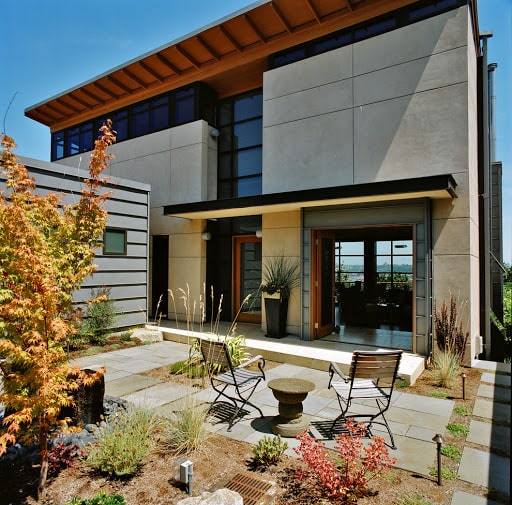
Fiber cement lap siding and panels are among the most common claddings in the Pacific Northwest, because they handle constant rain, resist rot and insects, and are noncombustible, which matters for homes near wooded areas. Installed over a rainscreen gap with proper flashing, they last for decades with only periodic repainting. A caution for remodels: siding and roofing on older homes may contain asbestos, so it should be tested before it is cut or removed. See our material selection service and our articles on clinker brick and weathering steel facades.