
As one year winds down, it's natural to look back at what actually mattered. In that spirit, here's our roundup of ten of 2021's most notable architectural moments, from retail interiors to parks, towers, and a stadium designed to disappear. For what happened to the year's most ambitious proposals, see part II of this roundup.
A Pearlescent Louis Vuitton in Tokyo
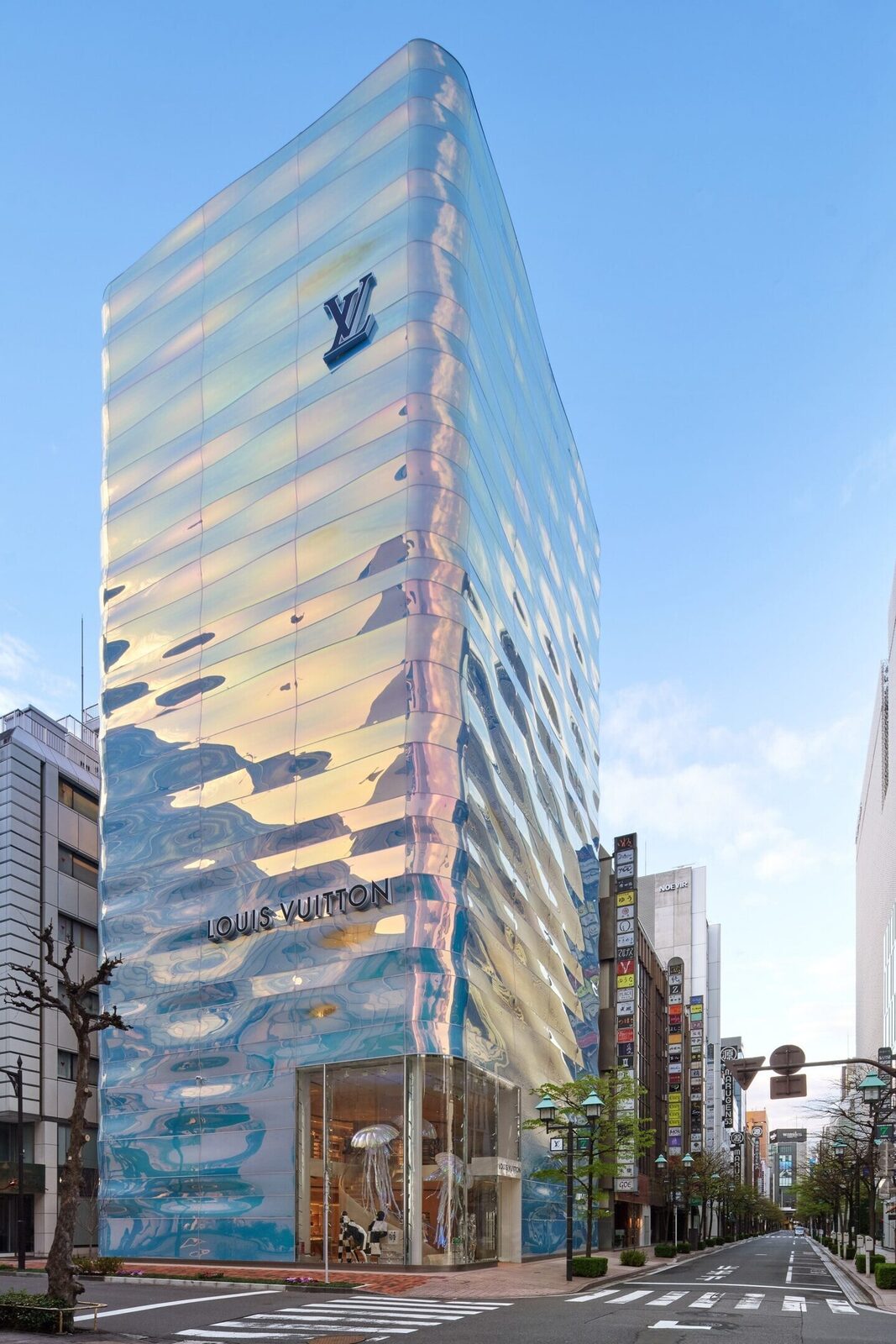
The Louis Vuitton store in Tokyo's Ginza Namiki district is, without exaggeration, a marvel. Reopened in March 2021 after three years of reconstruction, it has a new facade by architect Jun Aoki, who also designed the previous store on this site in 2004, and interiors by Peter Marino.
The store first opened back in 1981 and is a familiar landmark for longtime Louis Vuitton fans, but its new skin reignited public interest. Curved glass panels finished with a dichroic film make the building shimmer and shift color like the surface of water; Aoki has said he was inspired by the reflections in Claude Monet's La Grenouillere. On its street corner, it stands out sharply from its neighbors, especially at night.
Ferrari's New Flagship in Maranello
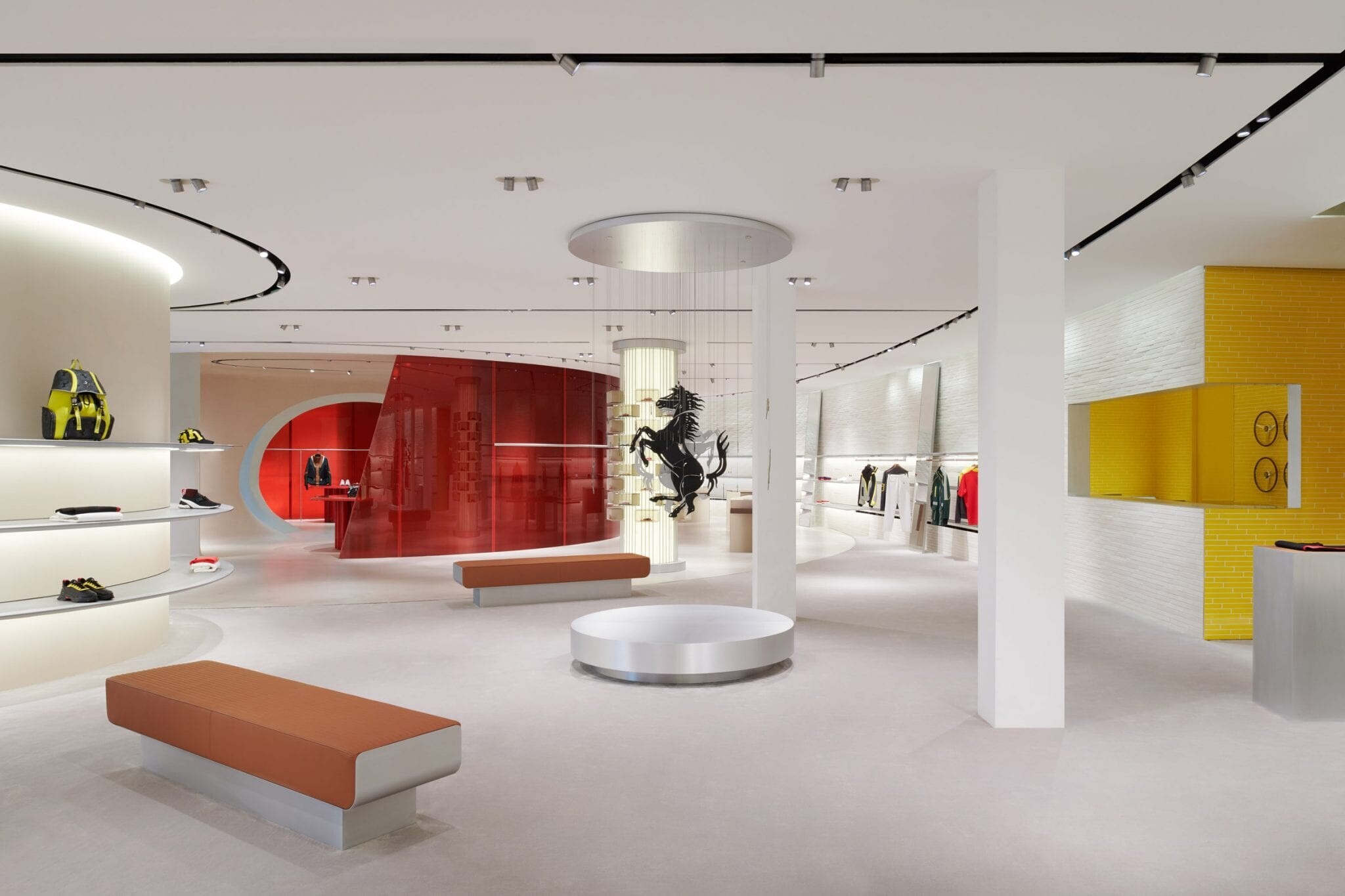
London studio Sybarite designed Ferrari's flagship store in Maranello, the brand's hometown, which opened in 2021 in a converted 1980s building. A colonnaded terracotta facade nods to Italy's classical heritage, while inside a red glass ribbon sweeps through the space, tracing the curves of Ferrari's Fiorano test track.
Behind the glass, a wall of handmade white bricks recalls the clay models used to shape Ferrari prototypes, and continuous brushed-metal shelving flows out of it. Glossy surfaces and the brand's unmistakable colors remind visitors what Ferrari is about, without turning the store into a museum.
Burberry's Checkered London Flagship
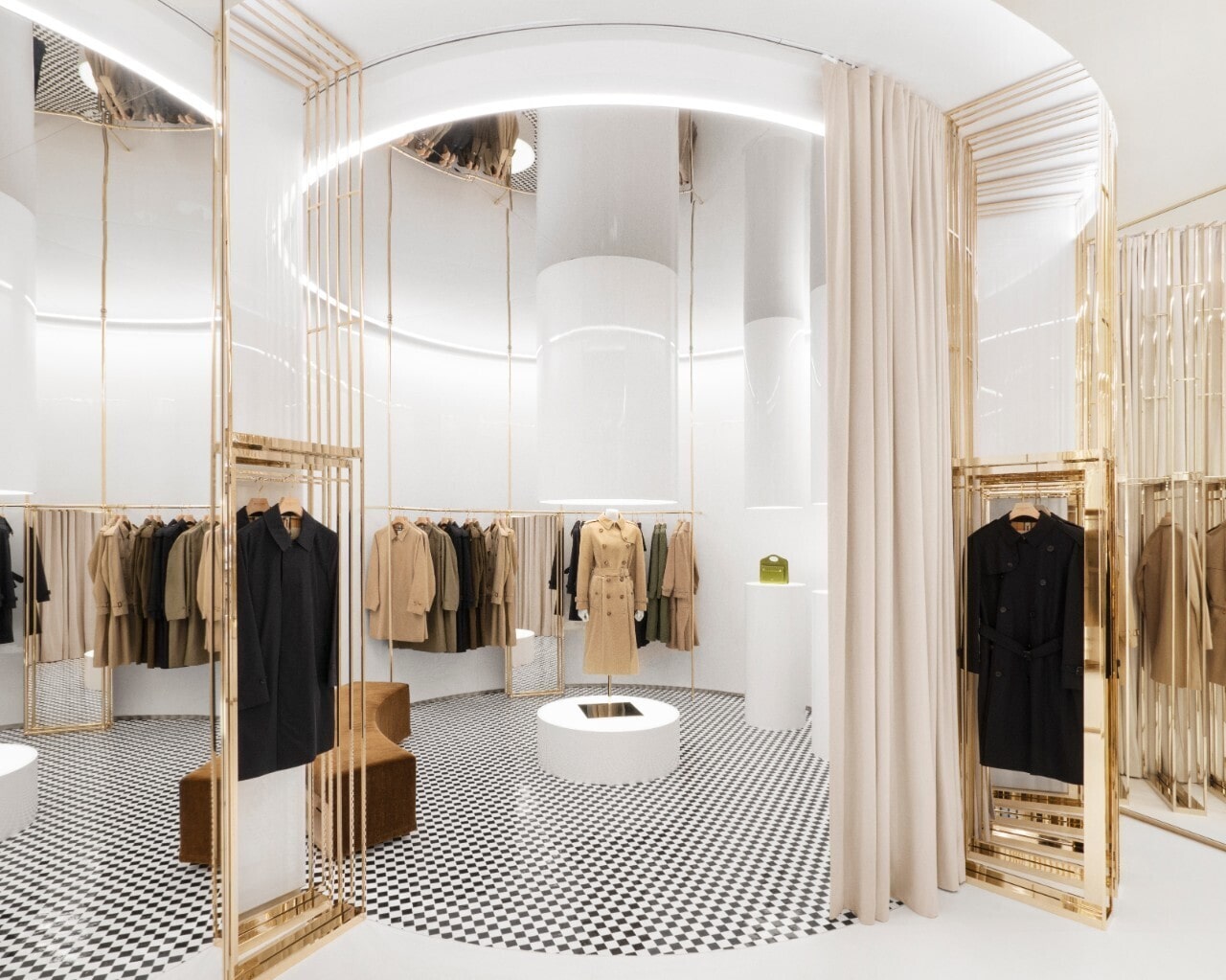
In summer 2021, Burberry opened a new flagship at No. 1 Sloane Street in London, the first store to show the brand's new global design concept. It was developed with Italian architect and designer Vincenzo De Cotiis.
The house check palette - beige, black, white, and red - runs through the space, and the famous pattern reappears as gridded floors and ceilings with chequerboard tiles and mirrored lighting grids. Brutalist touches meet luxurious materials across the store's 857 square meters on three floors.
Little Island Finally Opens
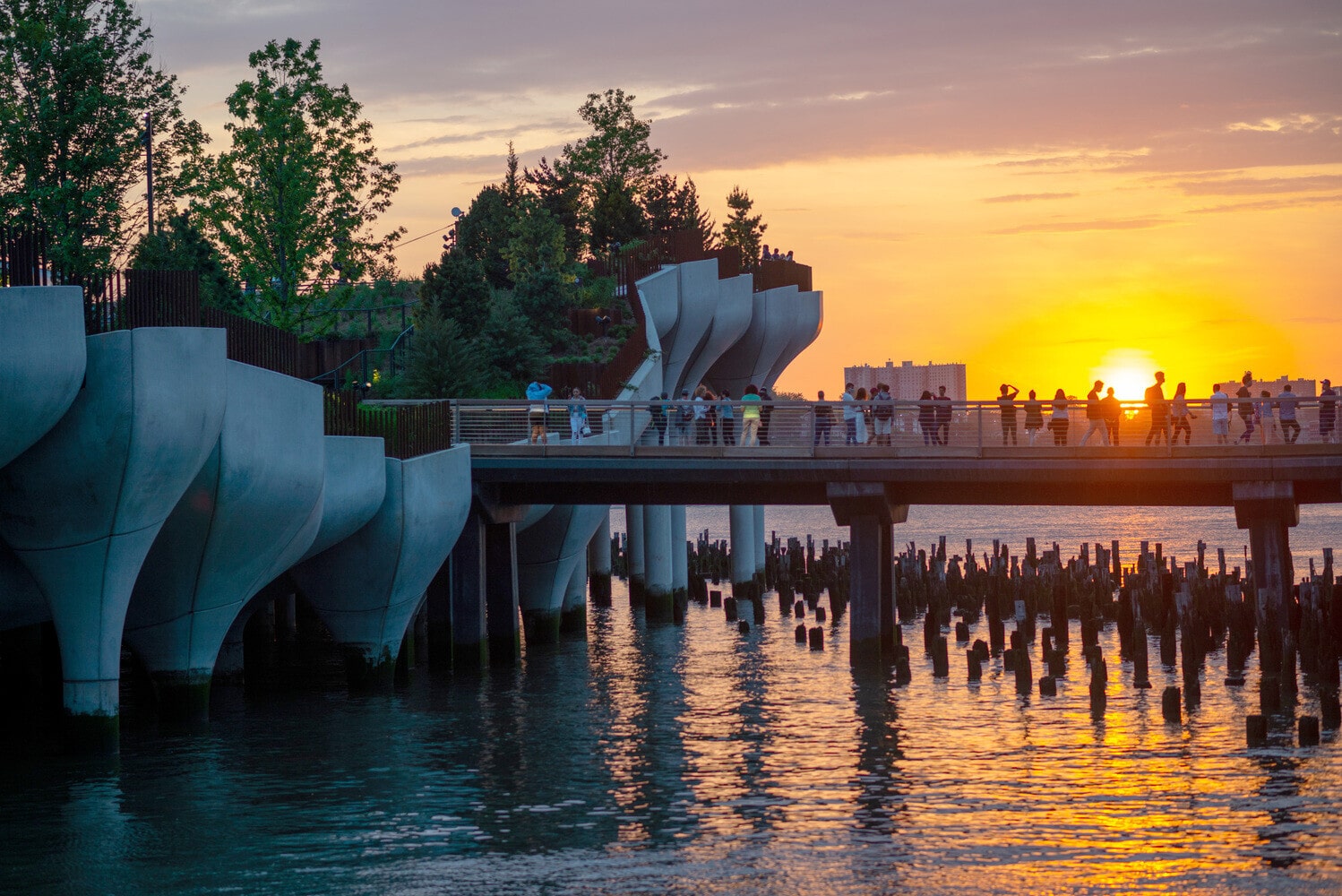
Global brands aren't the only ones with projects worth talking about. In May 2021, after years of anticipation and legal battles, Little Island - a park on the Hudson River designed by Heatherwick Studio with landscape architects MNLA - welcomed its first visitors.
The park rises from 132 concrete "tulips," precast pots set on piles at different heights to create rolling, hill-like terrain. It sits near the remains of Pier 54, where survivors of the Titanic came ashore in 1912. Visitors find their own favorite corners: quiet lawns for a slow walk, or steep paths, steps, and an amphitheater for something more active.
A Landscape Park in Taiwan
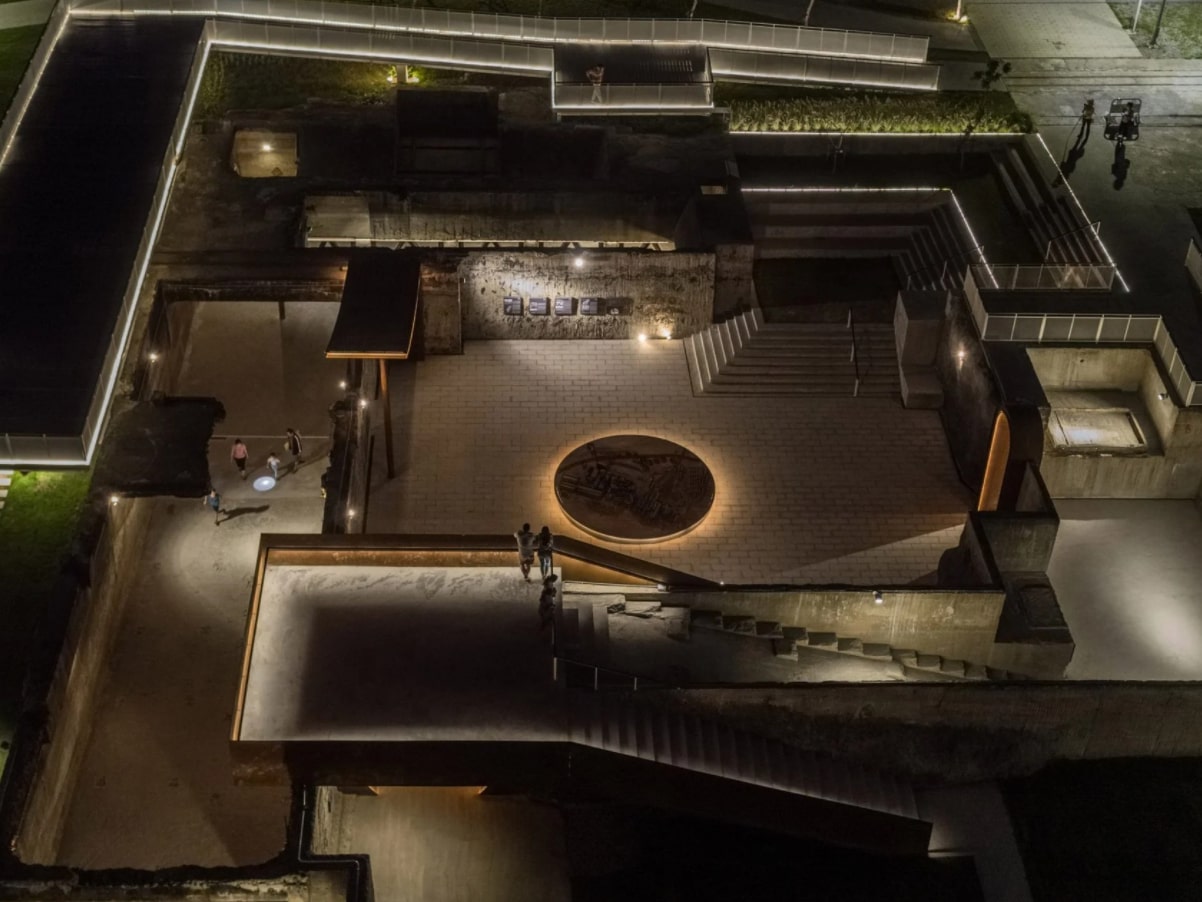
In Pingtung, known in the Japanese era as Heito, a former sugar factory site found new life as a landscape park. Rather than demolishing the old structures and starting over, the designers chose to work with what was already there.
The park keeps visible traces of its industrial past, a deliberate choice to preserve local history and reuse existing materials and spaces sustainably - a good example of adaptive reuse at landscape scale.
A Spiral Tower on the North Sea Coast
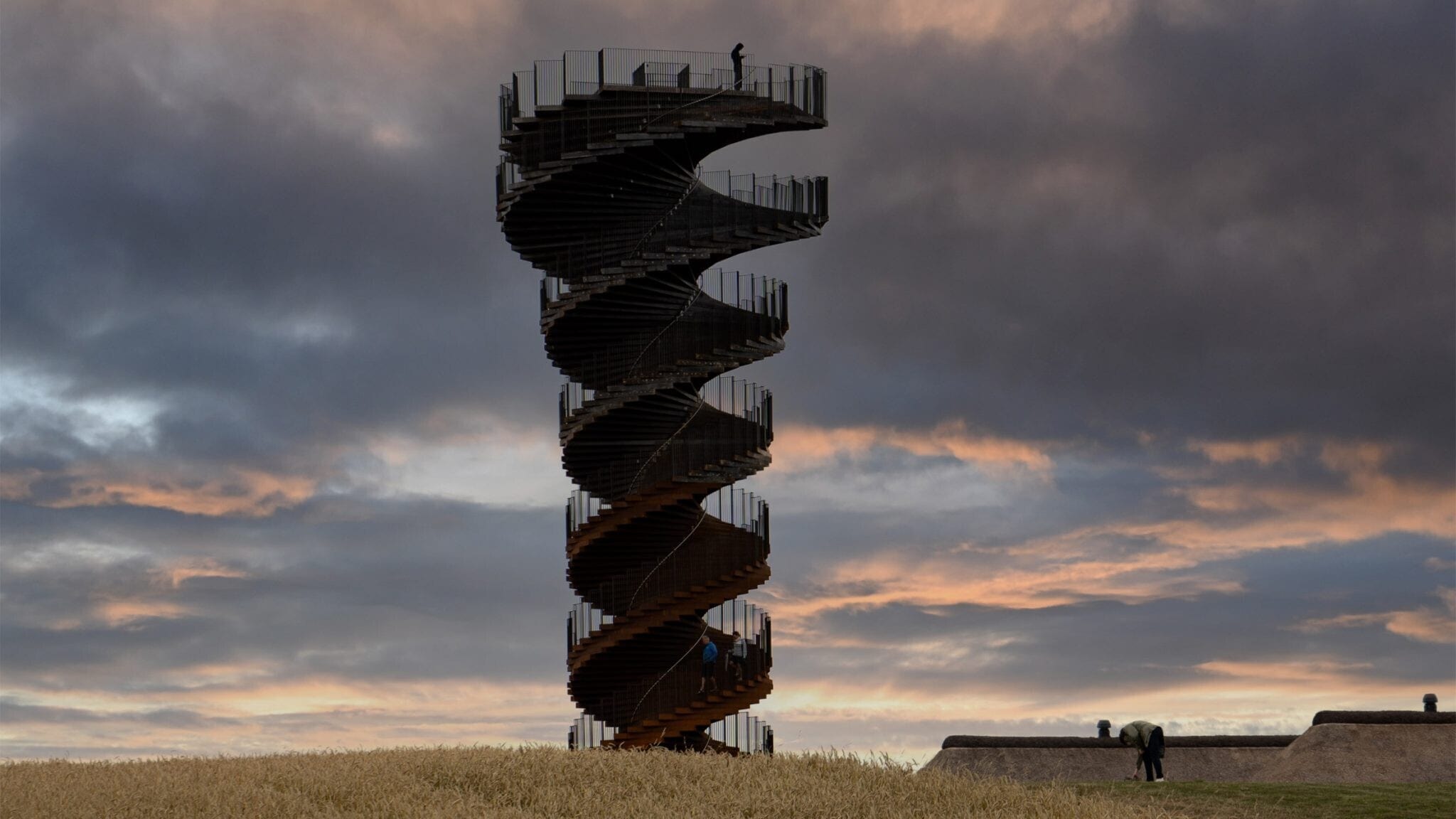
In August 2021, the Marsk Tower opened in Denmark's Wadden Sea National Park, part of a UNESCO World Heritage wetland landscape. Designed by BIG, it is a 25-meter double helix of two spiral staircases - one up, one down - built in weathering (Corten) steel that blends into the marsh. From the ground you can see about 4 kilometers; from the top, the view stretches some 18 kilometers to the islands and the North Sea.
Frank Gehry's Luma Arles
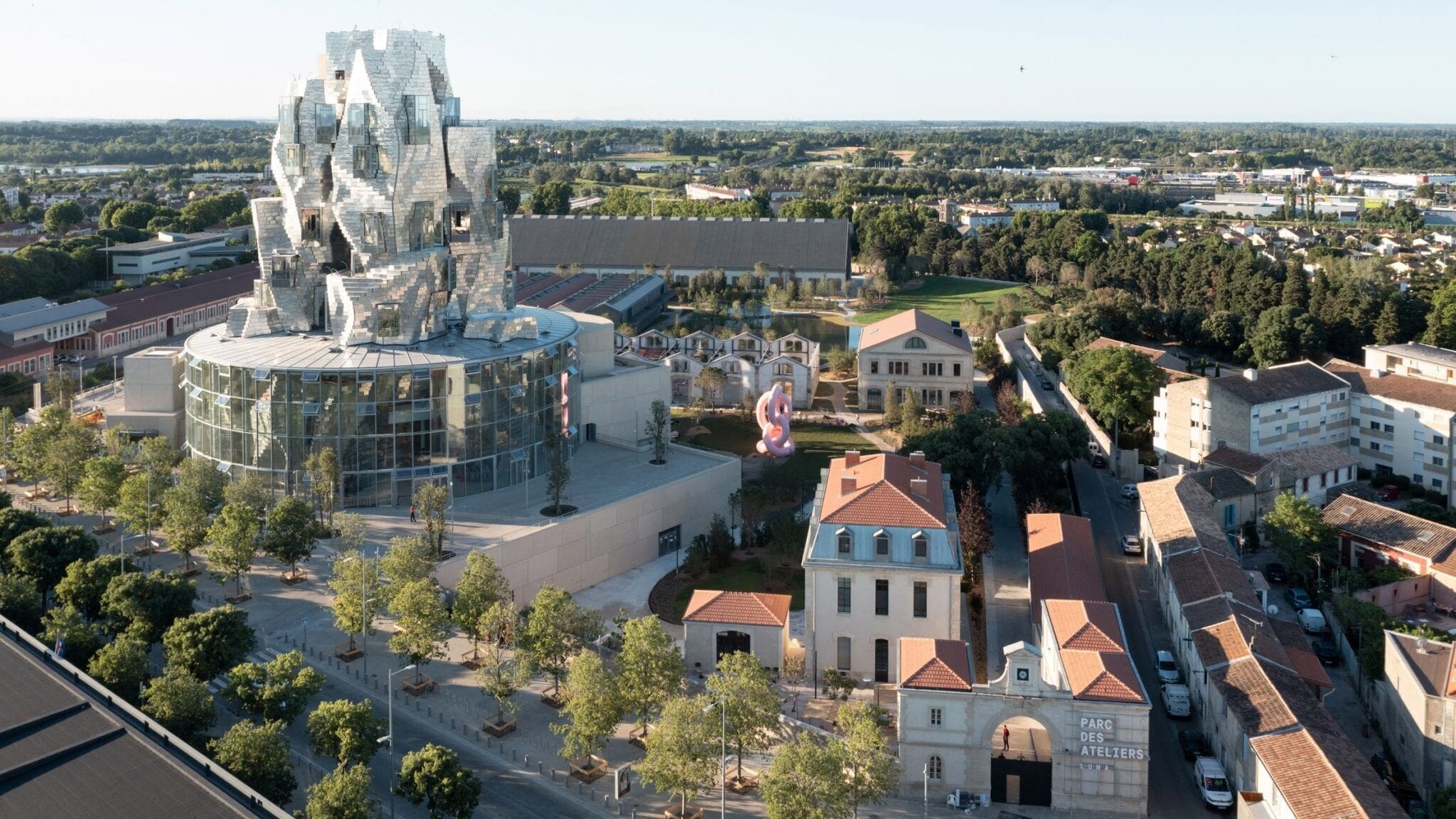
Another tower opened in 2021 in Arles, France: Frank Gehry's 56-meter building for the Luma Foundation's arts campus. It holds galleries, archives, workshops, and spaces for education and events. Its twisting facade is clad in about 11,000 stainless steel panels set at slightly different angles, so the building glitters and changes with the Provençal light - a reference, Gehry has said, to the region's rocky landscapes and Van Gogh's starry skies.
Shanghai's Astronomy Museum
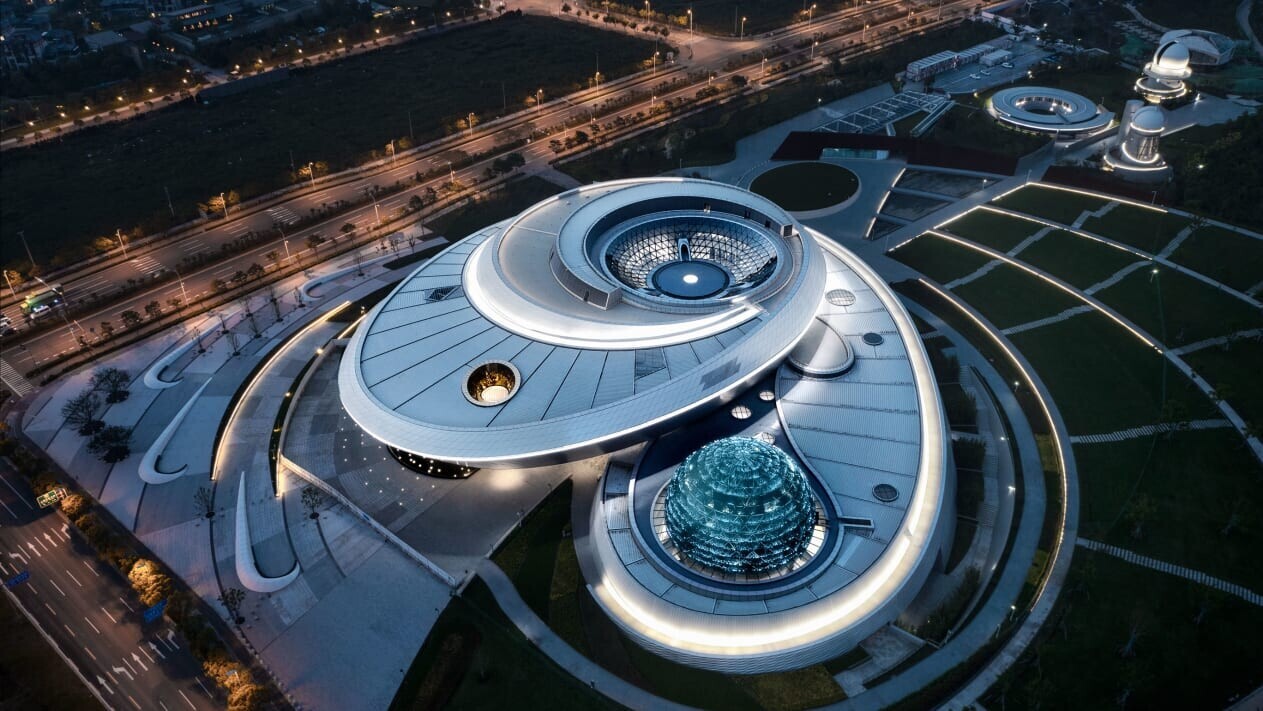
In July 2021, Shanghai opened one of the world's largest astronomy museums, a branch of the Shanghai Science and Technology Museum designed by Ennead Architects. The building has almost no straight lines: its forms follow orbital curves, and three key elements - an oculus that tracks the sun, an inverted glass dome, and a sphere housing the planetarium - turn the building itself into an instrument for watching the sky.
Cofco's Cultural and Health Center
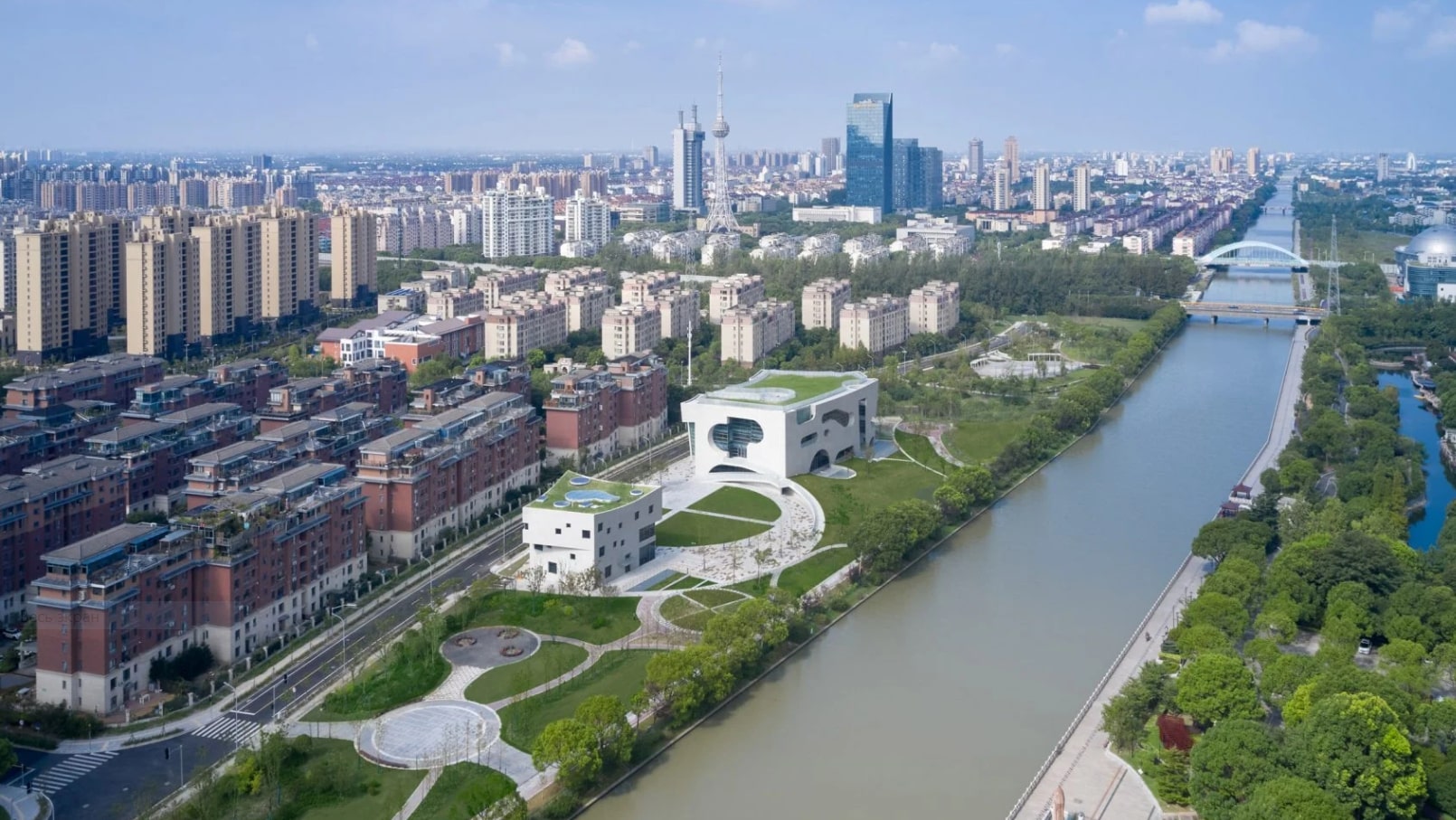
Shanghai also gained a cultural and wellness center designed by Steven Holl Architects for Cofco. The idea was to create a new public space that fits naturally into a typical residential district, with a cafe, a library, a play area, and places simply to spend time together. Transparent glass walls give the building lightness and openness, and its two main facades face one another across a shared public space.
A Modular Stadium in Qatar
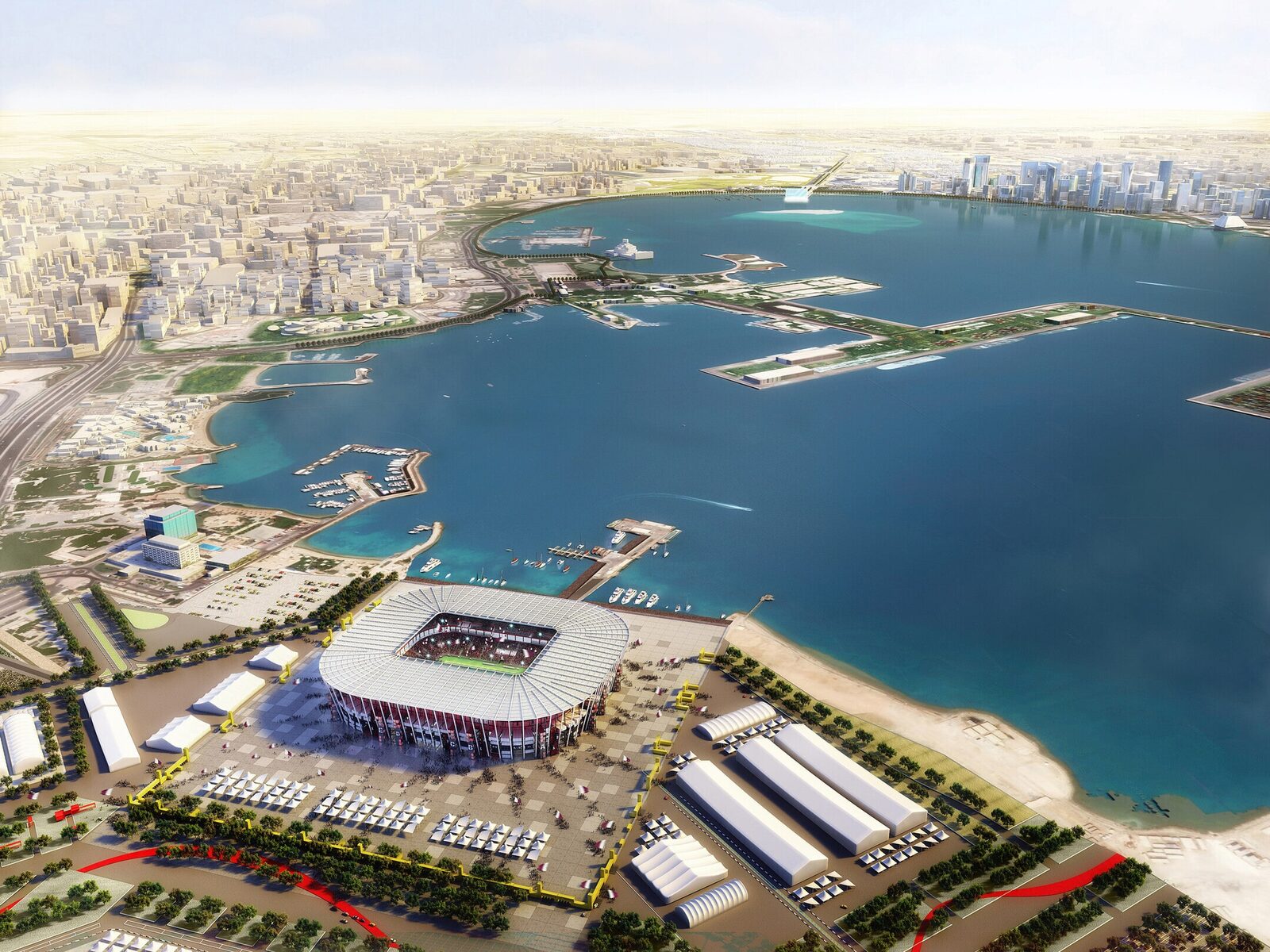
Ras Abu Aboud Stadium, designed by Fenwick Iribarren Architects, was built as a venue for the 2022 FIFA World Cup and was completed in 2021. It was designed to be demountable: its modular stands and staircases could be taken apart and reassembled elsewhere.
Update: the stadium hosted seven matches at the 2022 World Cup under its official name, Stadium 974 - for the 974 shipping containers used in its construction and Qatar's international dialing code. It was promoted as the first fully demountable stadium in World Cup history, with organizers planning to dismantle it after the tournament and reuse its parts.
What We Took From 2021
Looking back, the year's best projects share a few ideas: reuse instead of demolition (Maranello, Taiwan, Stadium 974), buildings that change with light and weather (Ginza, Arles), and public space as the real luxury (Little Island). In the Seattle area, the same thinking is visible on the new downtown waterfront that replaced the Alaskan Way Viaduct, including the Overlook Walk that opened in 2024 and reconnected Pike Place Market with the water. These are lessons that work at any scale, including a private home: keep and reuse what's good about an existing building, let materials respond to light and weather, and treat outdoor space as part of the living space rather than an afterthought.
That's our list of ten standout projects from 2021. In part II, we follow up on the year's most ambitious proposals.


