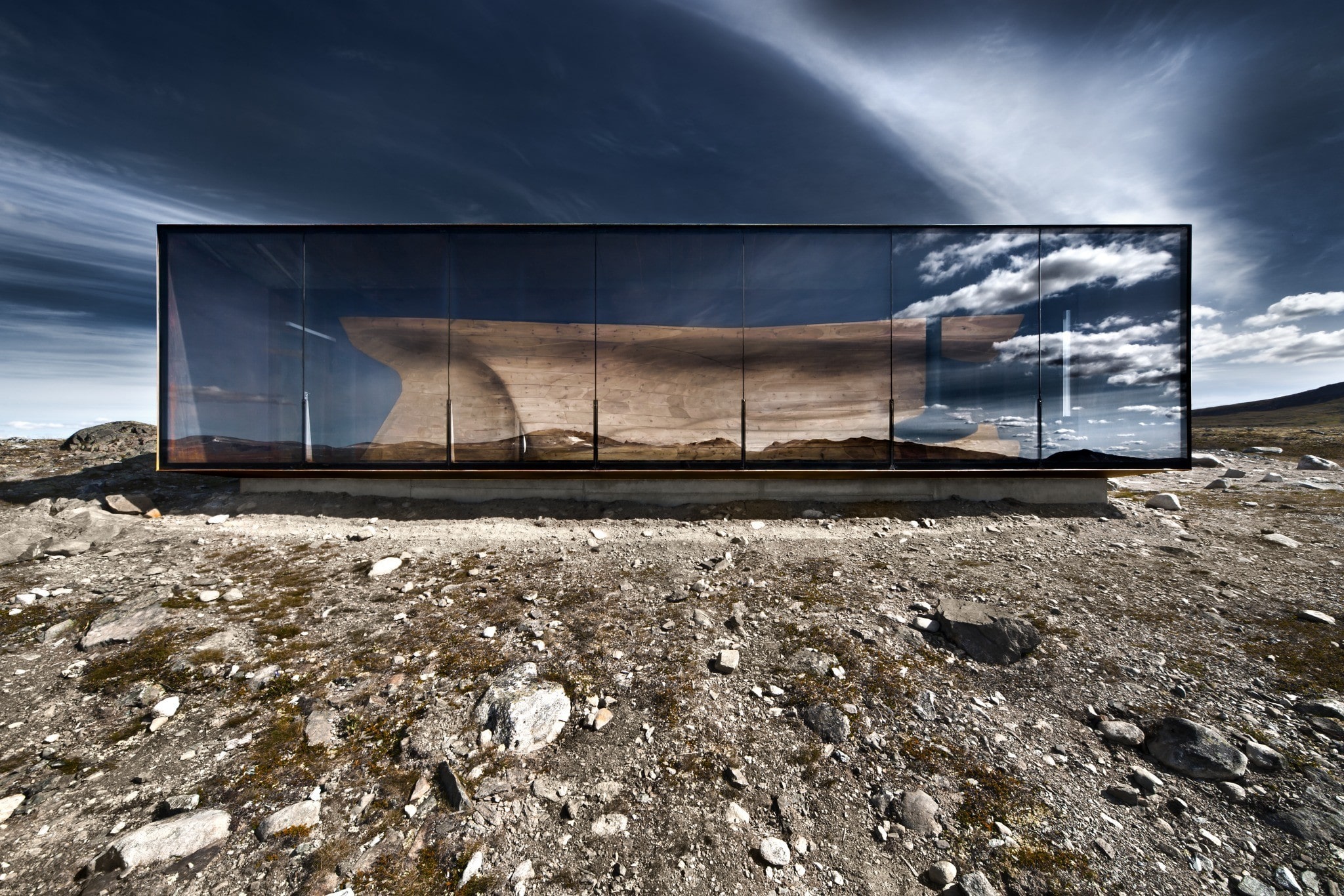
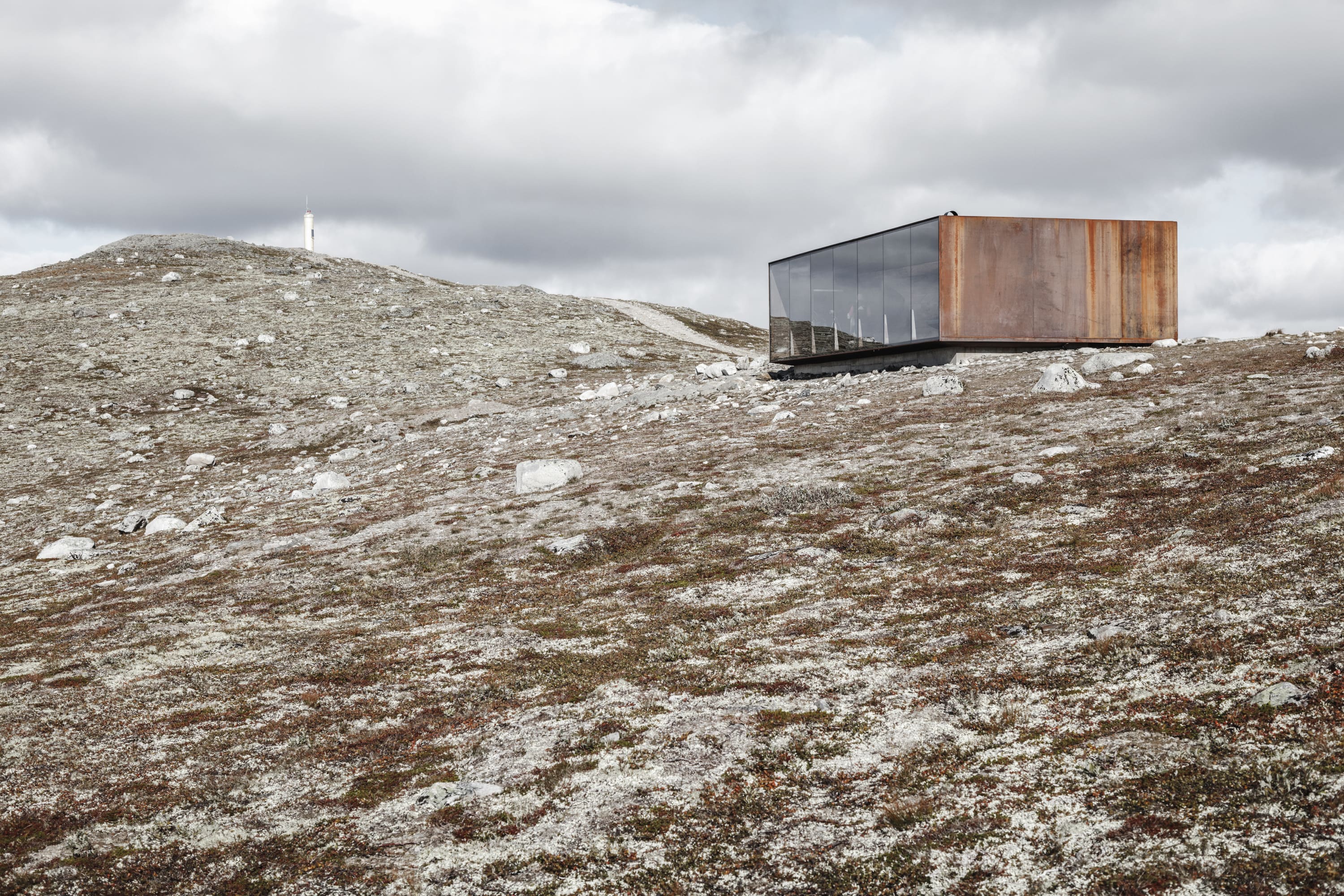
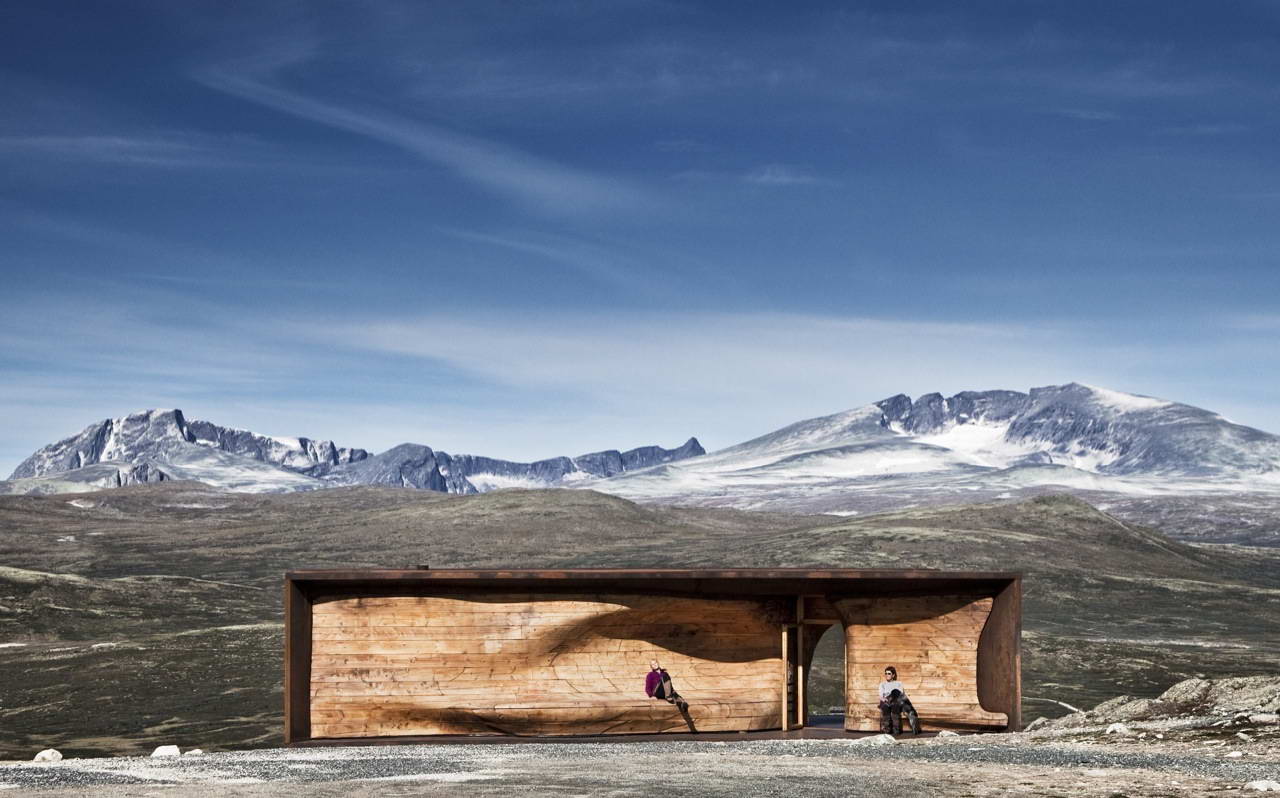
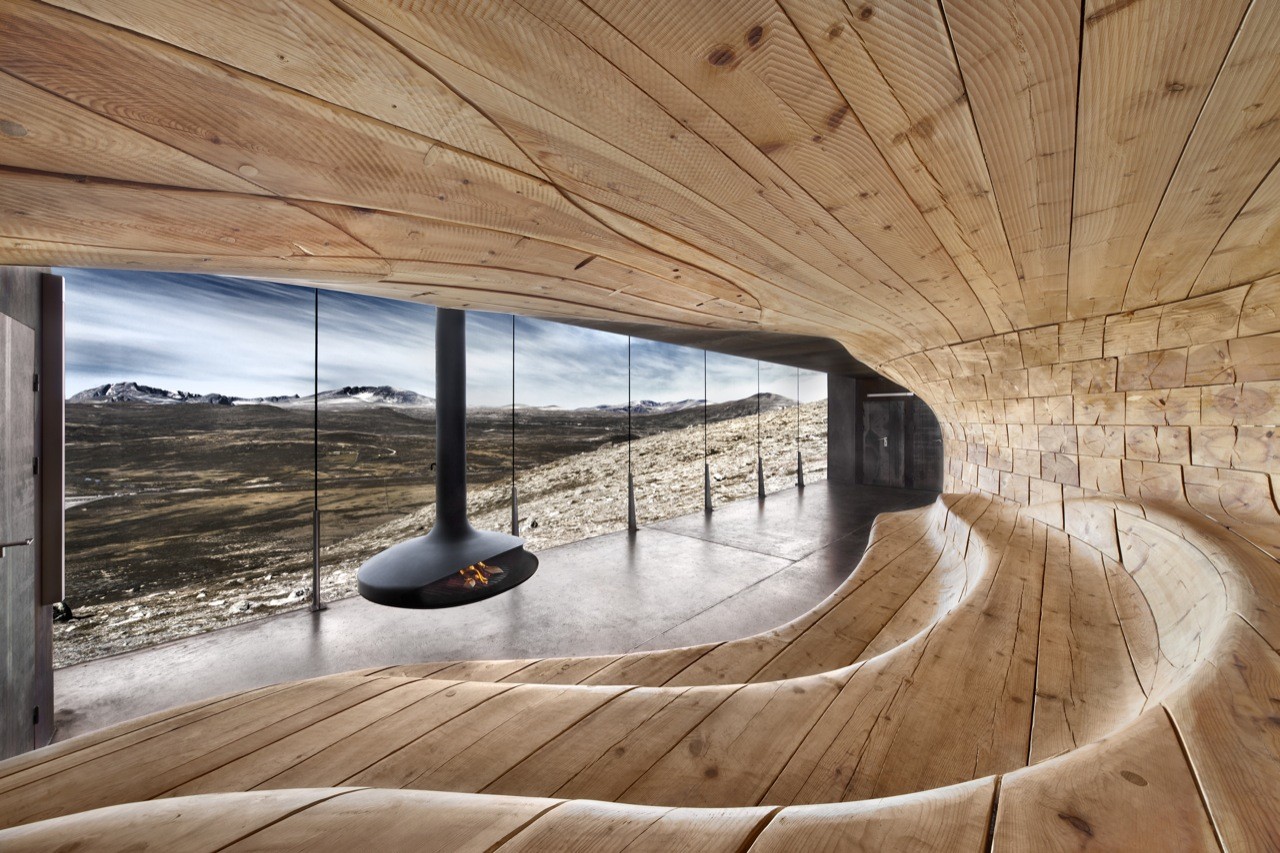
The architects at Snøhetta designed the Tverrfjellhytta pavilion and gave Norway a real gift: in Dovrefjell National Park, visitors can now watch rare wild animals without disturbing them or their habitat. The pavilion stands in a spectacular corner of the park, about 1,200 meters above sea level. It belongs to the Norwegian Wild Reindeer Centre and serves as an observation point for its research and education programs. To reach it, visitors walk more than a kilometer across the park.
Dovrefjell is home to animals that are hard to see anywhere else. Its wild reindeer are among the last wild mountain reindeer in Europe, and its musk oxen, brought from Greenland in the mid-twentieth century, are the only wild herd in mainland Norway. The place also matters to Norwegians for its history: Mount Snøhetta is surrounded by myths and folk tales, and important events in the country's past took place here.
Steel Outside, Wood Inside
The pavilion is built mainly of steel, wood, and glass, materials common in Norwegian architecture. The architects did not want the building to stand out from its surroundings: its raw steel shell has rusted to a color that matches the local stone. Large panoramic windows open views across the park to the mountains.
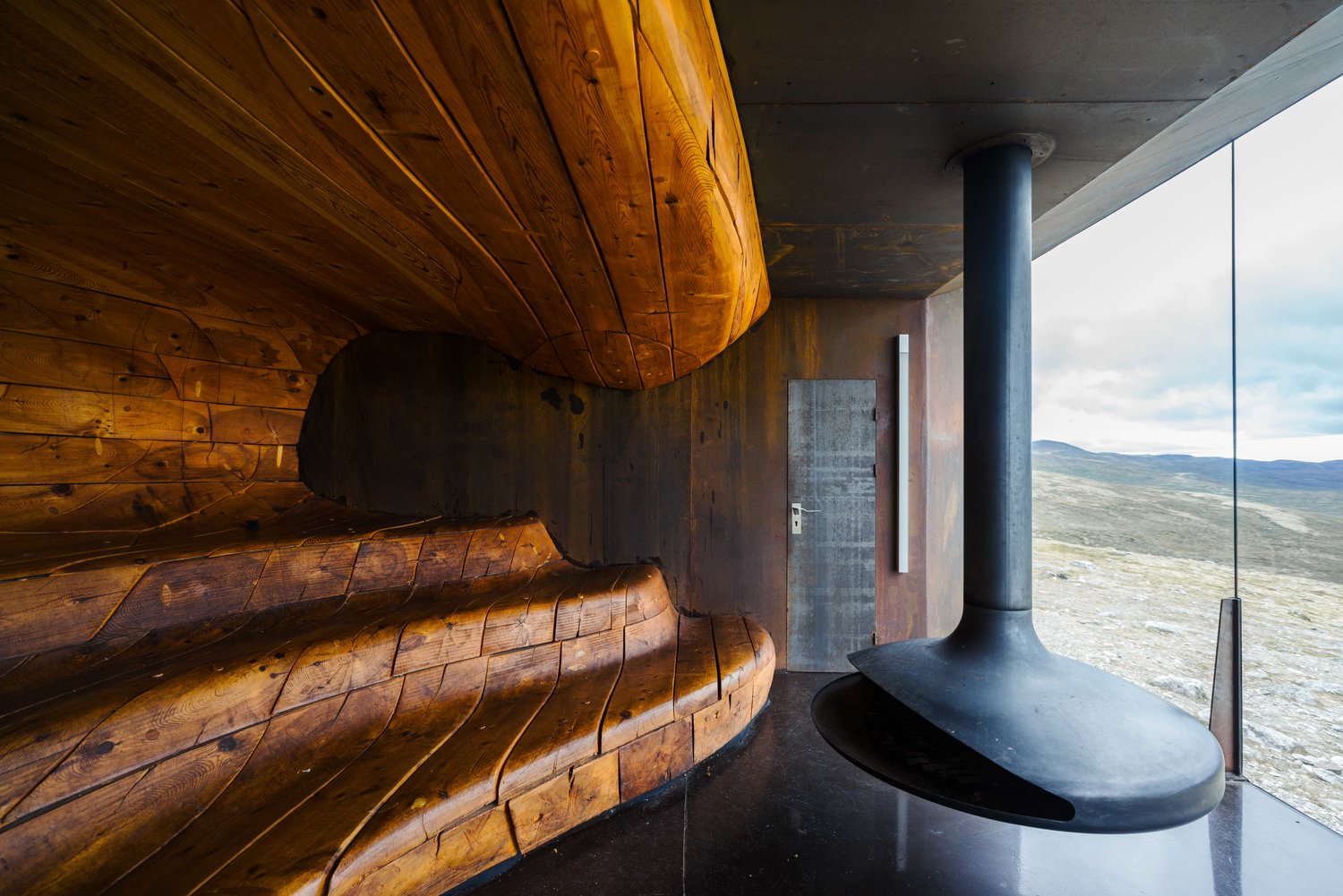
The heart of the pavilion is its wooden core. Snøhetta worked with shipbuilders from Norway's west coast, who produced the timber elements from the architects' 3D models, and the parts were joined with wooden pegs only, without nails or glue. The shape recalls rock or ice worn by wind and water. Inside, benches along the wooden wave and a fireplace let hikers rest in warmth while they enjoy the view. In Norway's harsh climate, resisting strong wind was a priority, which is why such durable materials were chosen.
About Snøhetta
Snøhetta was founded in Oslo in 1989 as a small studio combining landscape and architecture, and took its name from this very mountain. Decades later it has stayed true to that combination of disciplines, which helps it create distinctive buildings that blend Norwegian tradition with contemporary solutions. The pavilion opened in 2011 and remains one of the studio's best-known small buildings.
Material Choices That Do Double Duty
The pavilion's palette - steel, wood, and glass - is a deliberate response to what is most durable and most familiar in Norwegian architecture. Leaving the timber core exposed as the main structural and visual element required craftsmanship beyond typical construction, which is why boat builders were involved: they are used to shaping wood into complex curves under load. The peg-only assembly matters both structurally and as a quiet nod to traditional boatbuilding. Material choices like this are never purely aesthetic; getting them right is exactly what our material selection work is built around.
Lessons for a Mountain Home
In the Cascades, the same ideas apply: a tough outer shell for wind, rain, and snow, warm wood inside, windows placed for the best view rather than by habit, and local craftspeople who make a building belong to its place. See our compact mountain projects, a cottage settlement and the Minimalism House, and another Norwegian story, the Woodnest treehouses.
Visiting the Pavilion
The pavilion is reached on foot from a parking area along a marked trail of about a kilometer and a half, which suits the purpose of the place: the walk slows visitors down before they reach the viewing point. It is open to everyone, and its large windows and sheltered benches make it usable in wind and cold, when the open mountain plateau is at its harshest. Visitors are asked to keep their distance from the animals, especially in calving season, because both reindeer and musk oxen are sensitive to disturbance; musk oxen can also be dangerous if approached too closely.
FAQ
Who designed Tverrfjellhytta? The Norwegian firm Snøhetta; the pavilion opened in 2011.
What animals live in Dovrefjell? Wild reindeer and musk oxen.