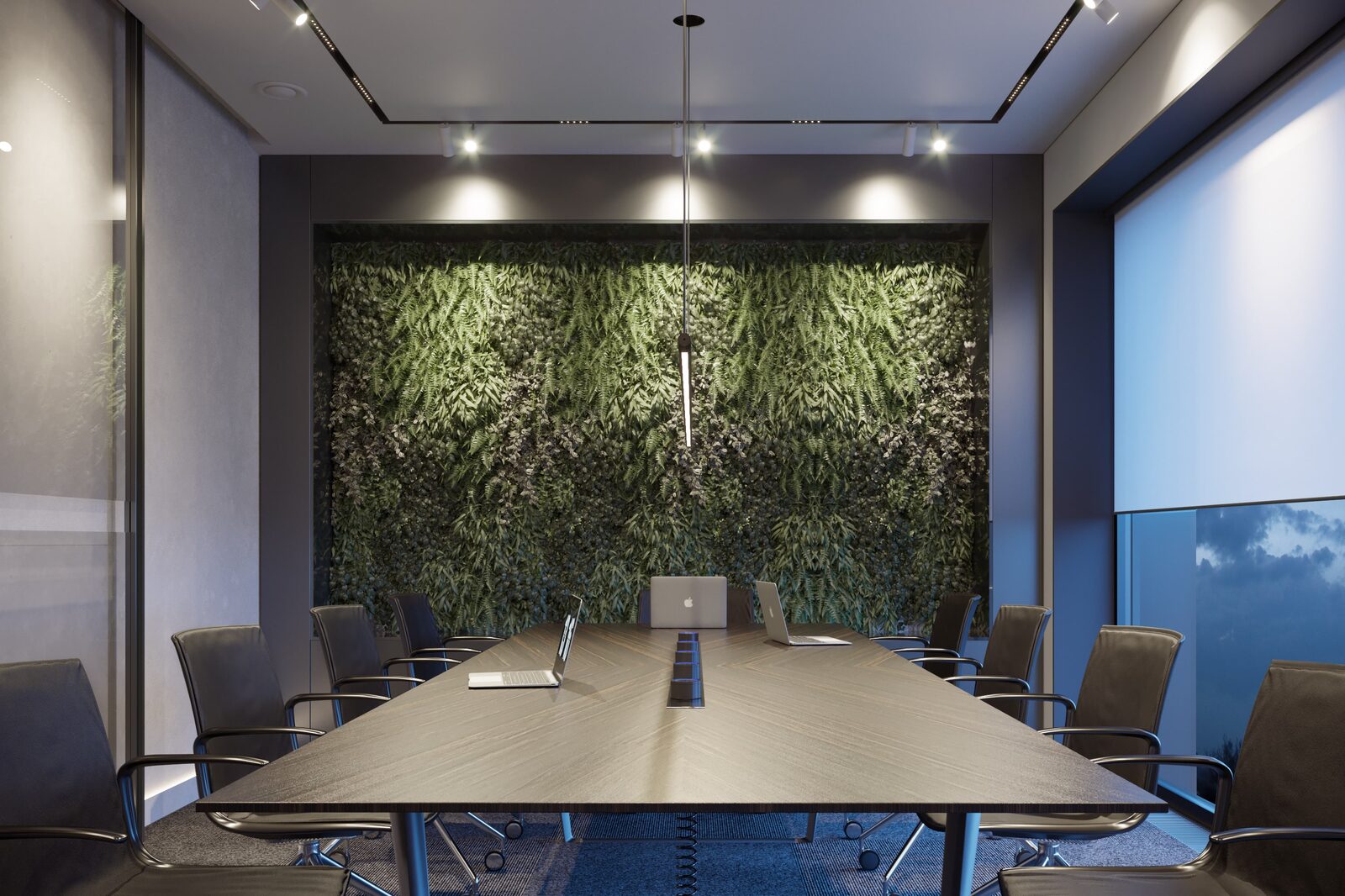
For several years now, houseplants have been one of the signature accents of the interiors we see on social media and in magazines. Ficus trees, exotic palms, and little succulents are only the best known; on Pinterest you'll find plants with far more unusual names, and you've almost certainly noticed them in the most beautiful rooms. Greenery works outdoors as well as in - for the bigger picture beyond the pots, see our article on landscape design. This article covers how to choose and place plants so they genuinely complement an interior, and which species work best in different spaces.
Start With the Pot
If you already have plants, take a closer look at them. Sometimes simply changing the pots transforms both the plant and the room. Choose planters as carefully as you would a lamp or a vase:
- Concrete, stone, and metal - gray concrete planters and cylinders or cubes in brass, copper, or anodized aluminum suit contemporary and minimalist interiors.
- Terracotta - for classic and Mediterranean interiors and anyone who loves natural materials. It breathes, so the soil dries faster, which suits plants that hate wet feet.
- Woven baskets in straw, rattan, or seagrass add warmth and a summery mood.
- Glazed ceramics - the widest choice, but also the biggest risk: a loud glaze or fussy shape can easily fight with the room. Pay attention to texture, color, and size; getting any one of them wrong can spoil the whole effect.
A practical tip: plant in a plain nursery pot with drainage holes and use the decorative planter as an outer cachepot. Excess water won't sit around the roots, and you can swap planters whenever you like. You can also make decorative covers yourself - DIY has become a whole subculture, and glass jars, handsome mugs, or kraft-paper bags that hide an old pot all work.
How to Arrange Plants
Once the planters are chosen, place the plants so they look natural and support the design. In a large room, don't be afraid of big, dramatic plants. Start with one "hero" plant that sets the tone; species with large leaves work best - a ficus, a palm, or a monstera. Choose the rest in a similar range of greens so the composition feels cohesive. Foliage plants that don't flower are a safe bet; they will fit almost any interior.
Group plants in odd numbers and at different heights: one tall, one medium, and a few low ones read as a deliberate composition rather than a random collection. Leave space around large plants so their silhouettes can be seen.
Plants for Large Spaces
Monstera. A big, lush plant that easily reaches 6 feet (2 meters) or more indoors. It's a fast-growing climber with large, split leaves, so it needs support: a bamboo stake, a moss pole, or a metal grid that can become part of the decor. Monstera grows in bright or partly shaded spots, but in low light new leaves come in without the famous splits that designers love it for.
Ficus. There are many species, but for interiors we recommend the large-leaved ones. The rubber plant (Ficus elastica) in near-black varieties like 'Burgundy' or 'Abidjan' looks superb with metal and glass, while variegated forms such as 'Tineke' bring a softer, cozier feel and keep their pattern in a bright spot. Rubber plants are easygoing: water when the top inch or two of soil is dry, more often in summer and less in winter, and wipe the leaves once a month to keep them glossy. The fiddle-leaf fig, with its big violin-shaped leaves, is just as popular but dislikes being moved and hates drafts.
Palms. Among indoor palms, look at the kentia (Howea) and parlor palms (Chamaedorea). Both can reach about 6 feet but grow slowly. They need a little more care than the plants above: kentia dislikes direct sun and prefers humid air. To keep a room from feeling crowded, choose palms with large, feathery fronds and combine several at different heights. Thick-trunked palms such as the date palm set the tone for an entire room, so in a modern interior treat them as a sculptural statement rather than background greenery. If you want a touch of the exotic in a warm interior, a classic palm is a great choice.
ZZ plant and pothos. If you want large-scale greenery with almost no fuss, the ZZ plant (Zamioculcas) tolerates low light and missed waterings, and pothos (Epipremnum) can trail from a high shelf or climb a pole for a lush, jungle-like effect.
Plants for Small Rooms
In a small room, the plant's overall shape matters: you'll be living right next to it, so you should like everything about it - the leaf pattern, the pot, the color. Choosing only tiny plants or only big ones for a small room is a mistake. Tiny plants just add clutter; big ones take over and make the space feel heavy. Plants that grow upward work best: slim cacti, snake plants, and compact trailing plants.
Snake plant. Botanists now classify it as a Dracaena, but it's still sold as Sansevieria. It's extremely easy to care for and comes in many forms, from tall, narrow leaves to small rosettes. For a small room we recommend the tall types, such as Dracaena trifasciata 'Laurentii'. It grows in bright or dim light, though the leaves are more vivid with more light. Set it on a stool or plant stand and it draws a strong vertical line through the room.
Euphorbia. Tree-like euphorbias such as the African milk tree (Euphorbia trigona) can reach about 6 feet while keeping a narrow silhouette, which makes them ideal for tight spaces. They dislike high humidity and frequent watering and love sun. They look great with cacti and on their own in modern interiors. One caution: the milky sap irritates skin and eyes, so handle them with gloves and keep them away from children and pets.
String of hearts (Ceropegia woodii). A delicate trailing plant with tiny heart-shaped leaves on thread-thin stems, gray-green on top and pinkish-purple underneath. Put it on a high shelf and watch the strands cascade. It needs good light but should be shielded from harsh summer sun. Water when the top layer of soil dries, and keep it almost dry in winter.
Chinese money plant (Pilea peperomioides). Perfectly round leaves on slender stems make it an unusual accent in a small space. It wants bright, indirect light; direct midday sun can scorch the leaves. It's happiest at about 65-75°F (18-24°C). Rotate the pot weekly so it grows evenly, and pinch the top if you want a rounder, bushier plant.
Plants for the Desk
For a desk, choose small, compact plants that look tidy and won't distract you. Use a pot with a saucer so water never reaches papers or electronics. Small succulents that rarely need water are ideal; which one depends on whether your desk is by a window or deeper in the room.
Echeveria suits a desk that gets plenty of sun. Its rosette looks like a flower and comes in deep green, pink, and pearly gray. The more vivid the color, the more light it needs. It looks good in a neat terrarium-style dish or a concrete planter.
Haworthia is for anyone who wants the easiest plant possible. It needs little light or water and stays dark green with raised white markings for a long time. One unusual species, Haworthia cymbiformis, has translucent "windows" at the leaf tips.
Jade plant (Crassula ovata), often called the money tree, is a natural fit for a workspace. It grows like a miniature tree and is easy to care for. For something more unusual, try the 'Gollum' or 'Hobbit' cultivars, whose tubular leaves have earned them the nickname "Shrek ears."
Care Without Mistakes
- Light comes first. Before buying, check how much light the spot actually gets and choose the plant for the spot, not the other way around.
- Water by the soil, not the calendar. Overwatering kills more houseplants than drought.
- Kids and pets. Monstera, dieffenbachia, ficus, pothos, and snake plants can be toxic to cats and dogs, and euphorbia sap is an irritant for people too. If you have pets, check plants against the ASPCA's list of toxic and non-toxic species.
- About "air-purifying" plants. The famous 1989 NASA study tested plants in small sealed chambers. Later reviews found that in a real home, plants have a negligible effect on air quality compared with ventilation. What plants do reliably improve is mood and how a space feels.
Houseplants Through a Seattle Winter
The real challenge for houseplants in the Pacific Northwest is light. Around the winter solstice, Seattle gets only about eight and a half hours of daylight, often under heavy cloud, so even "low-light" plants slow down from November to February. Move plants closer to south- and west-facing windows for the winter, keep the glass clean, and consider discreet full-spectrum grow lights built into shelving or pendant fixtures. Forced-air heating dries the air, so tropical plants like palms and calatheas benefit from grouping and a humidifier, while the long, mild spring and summer are the perfect time to repot and let plants grow.
Plants as Part of a Full Interior Concept
Greenery reads best when it's planned into the space from the start. Lighting, pot placement, built-in planters, and the scale of the plants belong in the same conversation as the rest of the interior design, not added afterward. That way a big monstera gets a bright corner, hanging plants get proper ceiling anchors, and grow lights are hidden within a well-designed lighting plan.
Frequently Asked Questions
What are the easiest houseplants? Snake plant, ZZ plant, haworthia, and pothos all tolerate low light and irregular watering.
How often should I water houseplants? Not on a schedule, but when the top of the soil is dry: about an inch or two down for a ficus, and almost the whole pot for succulents.
Can plants live in a room without windows? Only with a grow light. Without daylight, even shade-tolerant plants gradually weaken.