
We all know their philosophy. For more than half a century it has shaped some of the most refined, graceful, and ergonomic interiors in the world, and their furniture has become a household name. Let's learn a little more about these design philosophers.
When you go your way through decades of trial and error, setbacks, and lack of recognition and still reach the result, you get the philosophy of Charles and Ray Eames. At a time when much of the furniture world was still producing heavy, ornate pieces, the Eameses arrived like a breath of fresh air and moved design into the mainstream. They created furniture, children's toys, films, and even a house that have lasted for decades and will last much longer, and their inventive, ergonomic design keeps surprising people today.
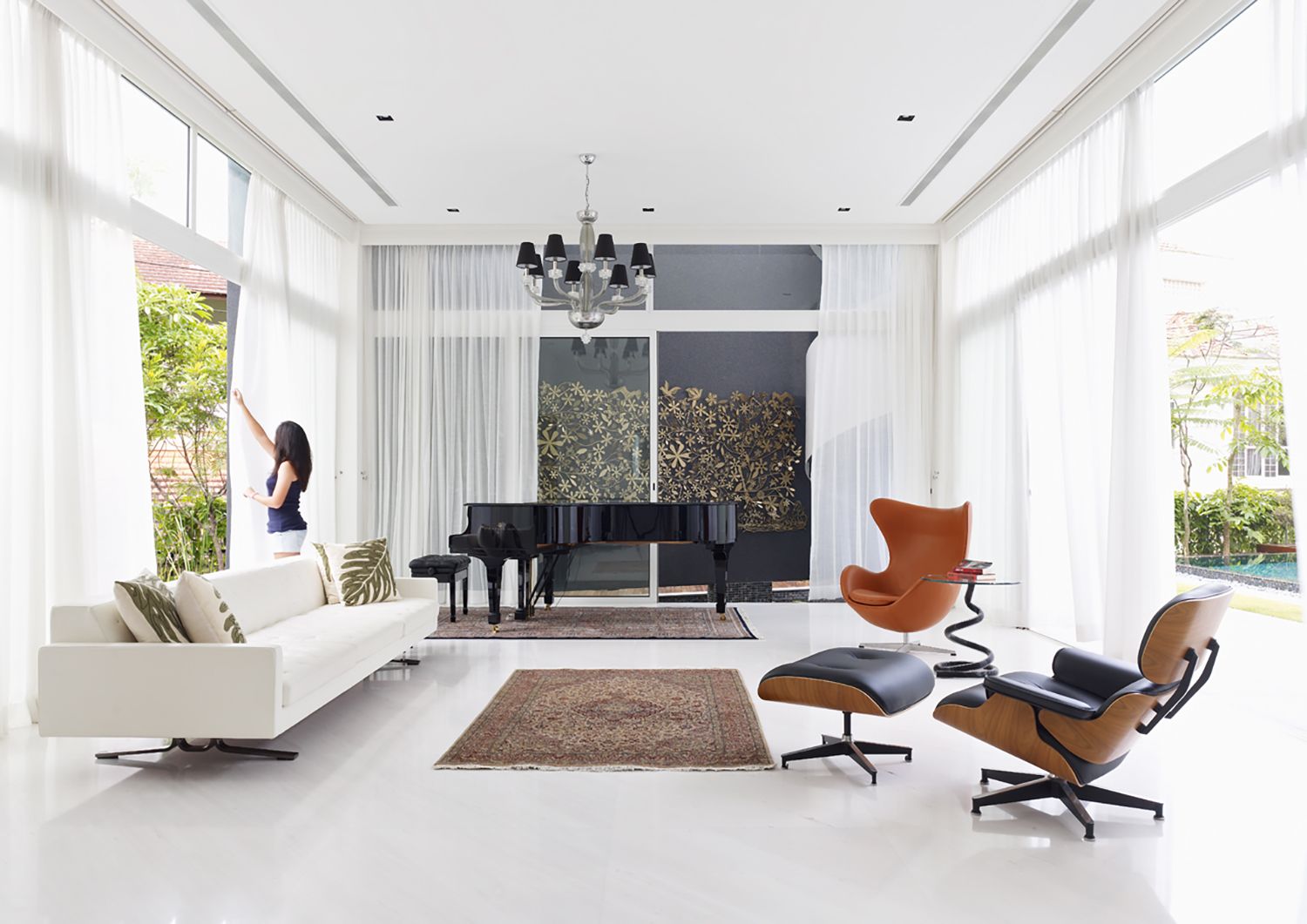
From a Spare Bedroom to the US Navy
It all started in a rented apartment in Los Angeles, where the young couple turned the spare bedroom into a workshop soon after moving in. There they built a homemade press for molding plywood, using wood, glue, and heat. Their first real product came out of it: a molded plywood leg splint, shaped on a cast of Charles's own leg. A year later the couple received a large order from the US Navy, which allowed them to move from the apartment to a bigger rented workshop in Venice, near Santa Monica. The techniques they developed for the splint later became the basis of their famous molded plywood chairs.
What Is Eames Design?
Eames design is a combination of remarkable ingenuity and ergonomic thinking: innovative furniture and an emotional, expressive approach to everyday life through design. Charles and Ray created not only some of the most innovative furniture of the twentieth century; through teaching, films, books, exhibitions, and experiments with furniture and sculpture, and through the life they shared in the house they designed in California, they defined a new, open, and expressive approach to design built on a love of materials and engineering ingenuity.
Their house and studio in Pacific Palisades, known as Case Study House No. 8, was completed in 1949 and became their home, workshop, and lifelong source of inspiration. The philosophy shows in the way Eames interiors never try to be a "perfect picture" from a magazine. They are warm, lived-in spaces full of smart, useful, comfortable things, collected over a lifetime. It is a philosophy about people who are curious about the world and interesting to it.
The Eames Lounge Chair
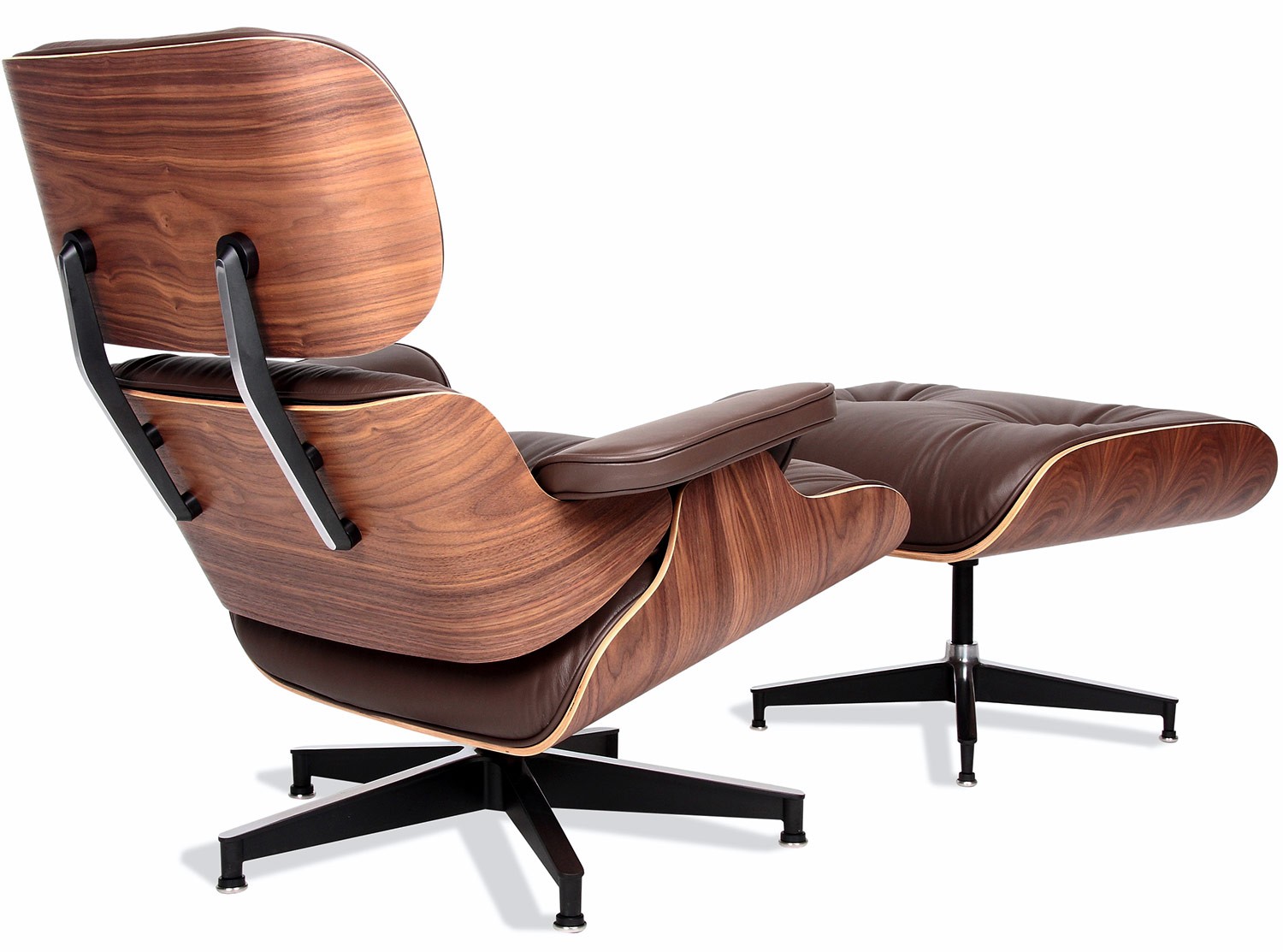
The quintessence of their work is the Eames Lounge Chair and Ottoman (models 670 and 671), introduced by Herman Miller in 1956. The chair is in the collection of the Museum of Modern Art in New York. Its shell is made of thin layers of molded veneer and consists of three parts: seat, back, and headrest. The back cushion and the ottoman are in proportion, roughly the same volume.
The Lounge Chair was conceived as a modern take on the comfortable English club chair and is one of the couple's most luxurious designs. For comfort, the shells are joined with rubber shock mounts, and the leather cushions are attached so they can be removed - an unusual degree of engineering for a piece of furniture at the time.
Today countless companies make copies of the Eames Lounge Chair, but authentic versions are produced only under license: by Herman Miller for North America and by Vitra for Europe and much of the rest of the world. An authentic chair costs several thousand euros, and versions in premium leathers and woods cost considerably more.
The Eames Elephant
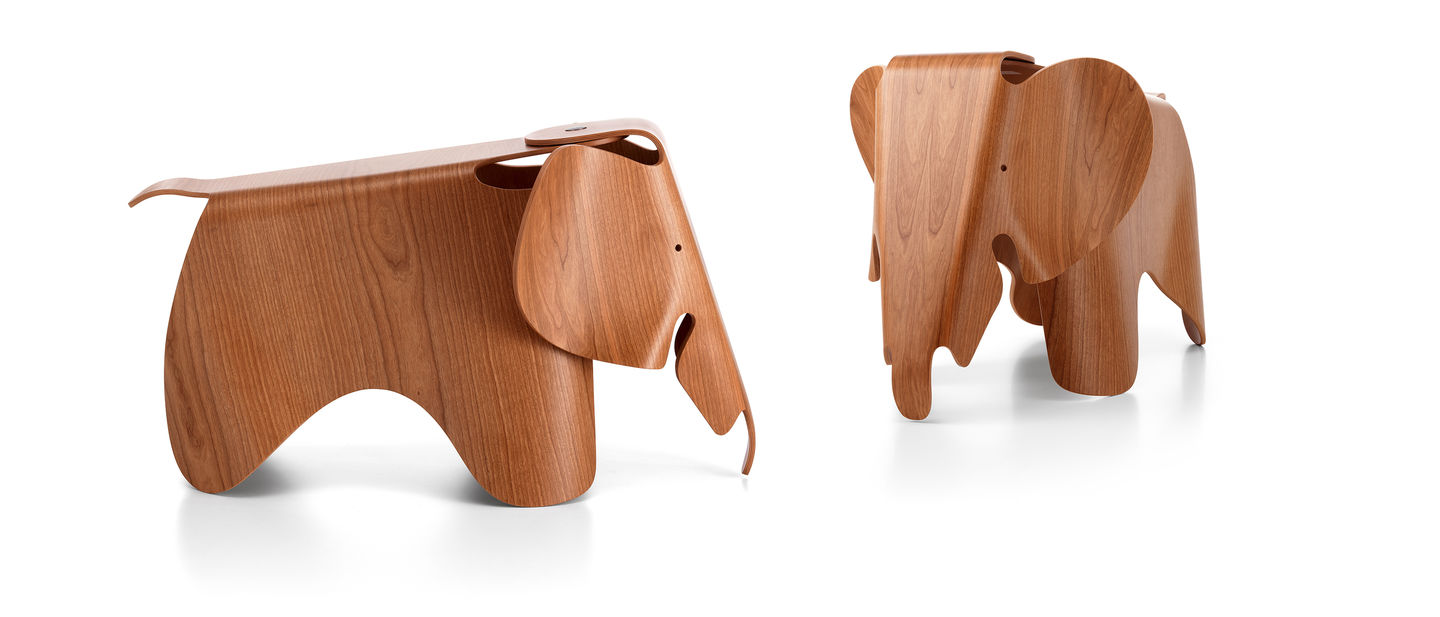
Another famous Eames object is the Elephant, designed in 1945 as a children's toy and, at the same time, a sculptural object for any space. In its time it never went into production; decades later Vitra began making it, in plywood and in plastic, and it has become one of the brand's signature pieces.
A Life Devoted to Work
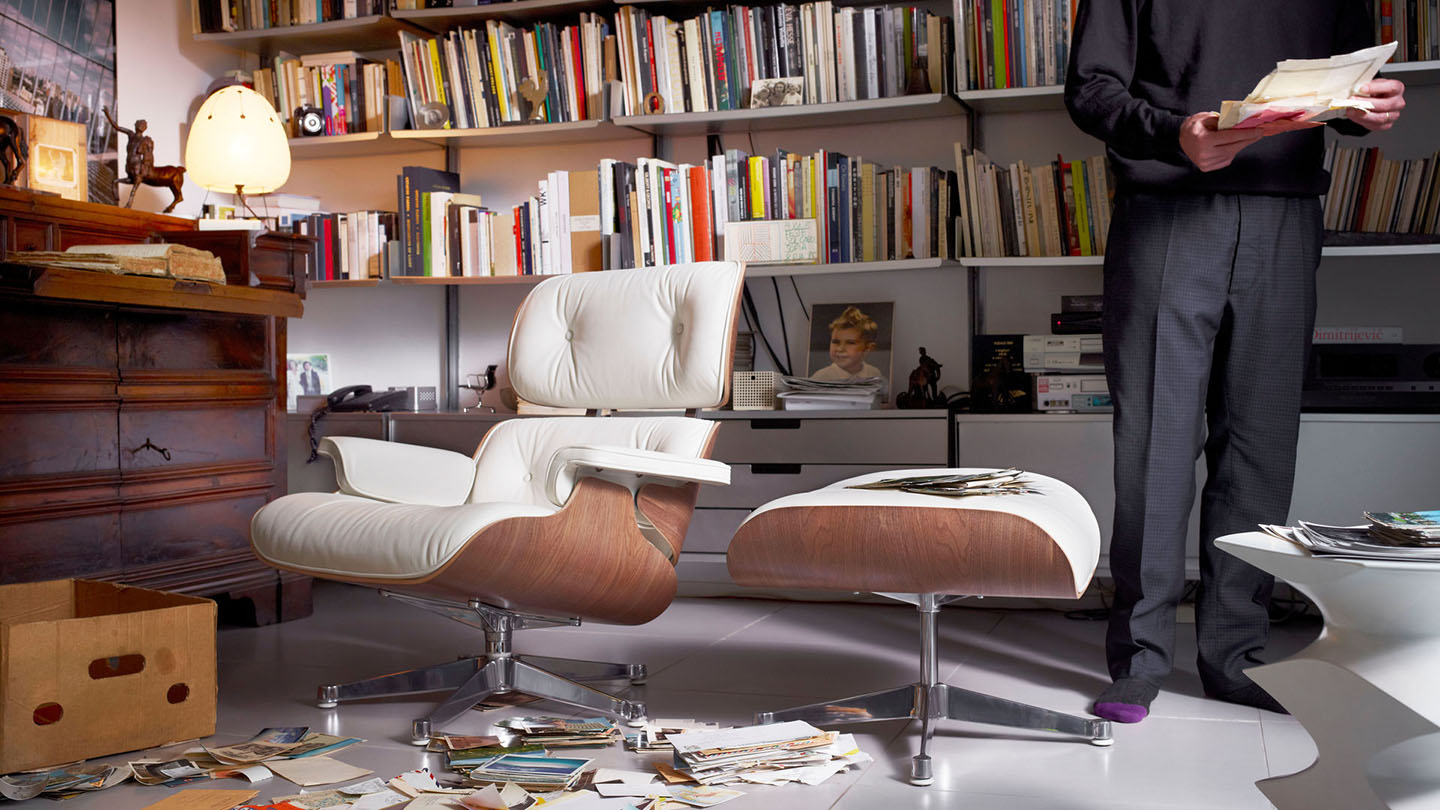
For the Eameses, work was the center of their universe. They worked from early morning until late at night for the rest of their lives. Charles died on August 21, 1978. Ray died exactly ten years later, on the same day in 1988, having spent that decade completing their projects and sharing their ideas through publications and lectures.
What the Eameses Teach Us Today
- Start from use, not from style. Their furniture began with a real need, from a leg splint to a comfortable chair for reading.
- Let the material lead. Molded plywood, fiberglass, and wire were chosen for what they could do, and the forms followed.
- Collect, don't decorate. Their house was filled with things they loved and used, not with decor bought to fill space.
That is the Eameses! We hope you found this article interesting and useful.
More Iconic Furniture Design
If the Eames legacy speaks to you, our pieces on Lema, Molteni&C, and Poltrona Frau cover more furniture design at the same level of craft. Our furniture selection service helps translate that kind of thinking into your own space.

