Architecture - an effective assistant in acquiring peace of mind
In this article, we will examine in detail how architecture should look in order not to cause a person's mental disorders.
Neuroscientists and psychologists believe that architecture should give a sense of complete security, create enough light, and not lead to boredom.
Contemplation - the first impression of architecture
Everyone feels great in those buildings where you can reflect well. Most often, such architectural objects are directly related to religion. Some varieties of architecture, no doubt, have a pacifying effect on a person. This fact was proved by studies conducted by American scientists. Empirically, people were shown photographs of various architectural structures and at that moment they did an MRI to measure brain activity. In the course of such an interesting study, it was found that when viewing photos of churches, libraries and museums, people felt relaxed and calm. After that, scientists called this architecture "contemplative."
Almost all buildings of this kind contain elements of religiosity. Julio Bermudez (professor) argues that people notice not only buildings, but also use them for other purposes, of course, good.
The study involved such unsurpassed objects as the Pantheon, Chartres Cathedral, the Alhambra Palace and secular buildings - Salk Institute (designed by Kahn), "House over the waterfall."
It is noteworthy that the above rule worked with the Salk Institute. This is due to the fact that Kahn did not know the difference between monks and scholars, so he wanted to make a structure that would remotely look like a monastery. At about the level where the 5th floor is located, he designed chic galleries with grandiose columns. Such were in the monastery courtyards. On an elevated atmosphere flaunts a channel turned to the western part. This channel divides all the enclosures. A chic horizon and sunset are set out of the building.
Extraordinary interest
A dispassionate, non-standout and boring architecture directly harms human health. This is justified by the fact that under its influence a person releases much more hormones responsible for stress. Of course, the structure must necessarily look pretentious. However, the building should not be monophonic and monotonous. Stamped and boring architecture can lead to emotional harm. Neuroscientist Colin Ellard of the University of Waterloo has managed to prove this theory. So, at Houston Street, he led the test subjects. After small shops and restaurants, people went into a large supermarket just built. The neuroscientist investigated the feelings experienced by a person leaving a small restaurant in a deserted room. The emotional state of people who became participants in the study was recorded by special sensors.
At that moment, when people passed a huge building, they were bored and not comfortable. In their brain, processes related to inhibition took place. In the survey process, these people primarily used the words "impassive" and "monotonous". Passing a rather busy street with many bars, restaurants and shops, people experienced joy and excitement. In the survey, they could characterize such a street as “lively”, “sociable”, “involving”. In the landscape, according to Ellard, there must always be changes. Simply put, one thing is immediately replaced by another. It is then for a person that this will not be boring and will arouse his interest.
Unfortunately, even the smallest moments of boredom can turn into tremendous stress. They significantly increase heartbeat and increase the level of stress hormone in the body. Ellard claimed it was unhealthy. This is reflected in the everyday life of a person who works every day in the same monotonous conditions.
The amazing Norman Foster skyscraper, which has 40 floors, is a prime example of fascinating architecture. The construction has a multifaceted facade, consisting of unusual sections. The building is made in Art Deco. That is why it is distinguished by its contrast, attractiveness and splendor.
Security
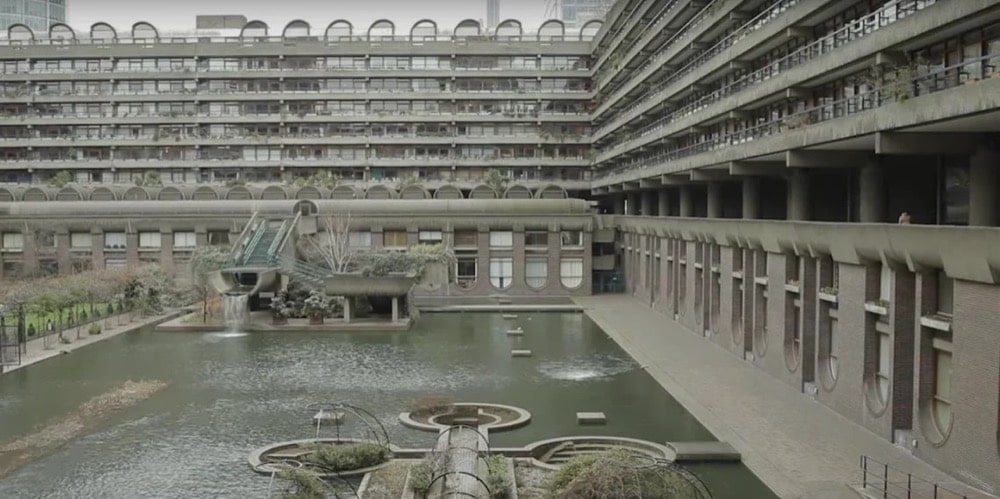
The well-known phrase that appearance is deceptive has every reason. The structure may have a nondescript appearance, but people will stand in line to live in it. A striking example is the Barbican neighborhood, which is located in London. Here architecture gives people security and confidence. Although, architecture itself, at first glance, is completely unsightly.
The director of the Center for Urban Design and Mental Health in Britain, Laya McKay, the following factors influence the well-being of people in the city:
Zones for society that allow people to actively spend time.
Work and living spaces in various spaces.
All these factors give a person protection from the outside world and a sense of security.
The construction of the Barbican neighborhood was completed in 1976. It consists of residential buildings that are built around the perimeter. The house has a length of 100 meters. Looking at them, it seems that this is a long wall of concrete. Many people believe that this neighborhood is the most unsightly and ugly place throughout London. The huge walls create the impression that there is a stone jungle around. The facades, as if, were covered with dirty drips and darkened. Despite this, a lot of people take turns to purchase or rent housing here. This excitement is justified by the fact that these concrete walls make people feel safe. According to psychologists, a person most often lacks precisely this feeling. The neighborhood has excellent lighting, it has a great overview. Barbican does not cause claustrophobia. Cars don’t enter the territory of the microdistrict, there are a lot of greenery and public buildings - a tropical greenhouse, music schools, cultural centers, gardens, a school for girls, a pond with wonderful fountains. This combination in the neighborhood makes it a space that minimizes stress.
Unity
Almost all doctors and psychologists agree that the lack of communication leads to a deterioration in a person’s physical well-being. This can be overcome by cohousings. This is a typology that encourages people to social contacts.
Residents of areas where the private sector predominates live much more cohesively. This stereotype is common among residents of multi-storey buildings who do not communicate well with neighbors, and sometimes are not familiar with them. Grace Kim argues the opposite, that one-story houses are not a panacea for loneliness.
Kim proposed an effective solution to the problem - these are the co-households. She designed one of these houses and lives in it herself. Such a house is a small apartment. It has spaces for social contacts. So, children play in the courtyard, in the huge dining room a couple of times a week, neighbors prepare dinner together. In total, 28 residents live in such a house. Cochouses are distinguished from other hostels by awareness. Simply put, people consciously abandon isolated houses, rather than under duress. Kim gives his neighbors as an example. They retired, but they still do not have their children. But these people look after the neighboring children while they go away on business or go to work.
Shine
One of the most common causes of spleen and depression is a lack of light and a lack of sun. As a result, a person has a vitamin D deficiency in the body. Very often those people who live in a poorly lit building suffer from this.
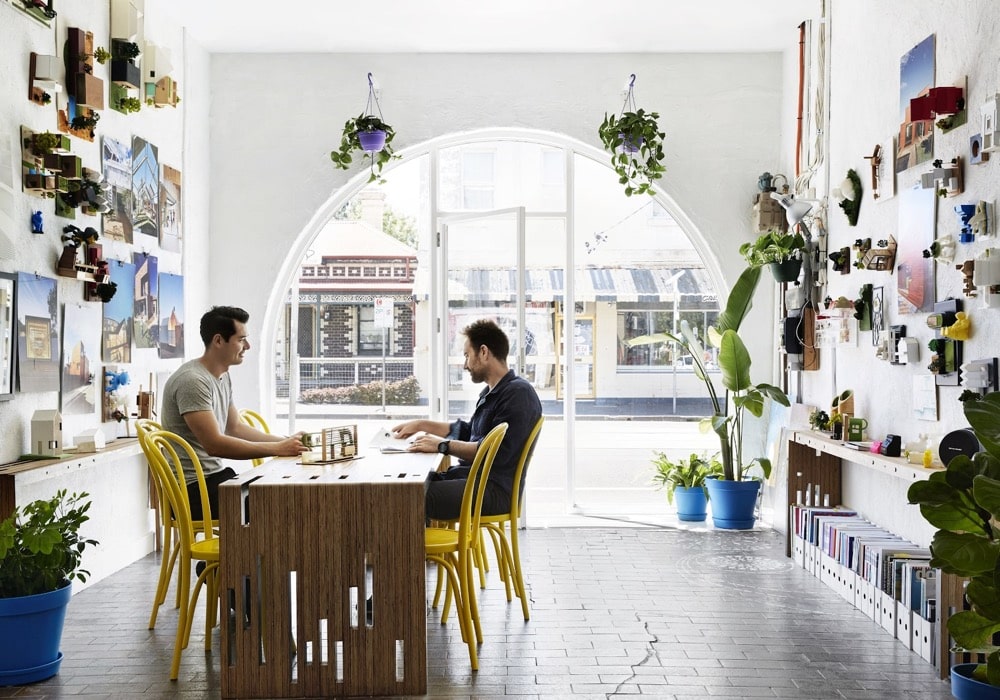
Architect Andrew Maynard quite often experiences fear and anxiety. When he came to the therapist, the doctor asked him a question about what the architect’s house looks like. The inability to cope with anxiety is a very serious mental problem, which is not easy to overcome. The therapist noted that people often deal with this kind of problem in winter. During this period of the year, daylight is short, so the body does not get the right amount of vitamin D. Of course, there were many reasons for this condition of Maynard. But, first of all, he decided to put his house in order.
The architect lives in Melbourne. In the winter, Andrew turned on the light in the house at 4 p.m. Moreover, some rooms lacked lighting in the summer. After receiving a doctor, Andrew made a large arch and changed the color scheme of the interior to yellow and white. He glazed the terrace, now it offers a beautiful view of the garden.
To date, Maynard does not consider his home a role model. It’s hard to be without sunglasses and because of the large windows it needs to be heated more often. However, this helped the architect to cope with various anxieties and get rid of stressful situations. He feels solitude and a tremendous connection with nature. This is very important for the emotional state of a person.